Record-breaking whale migration delights Costa Blanca researchers

More Than 120 Giant Whales Spotted Off Costa Blanca in Record-Breaking Marine Discovery

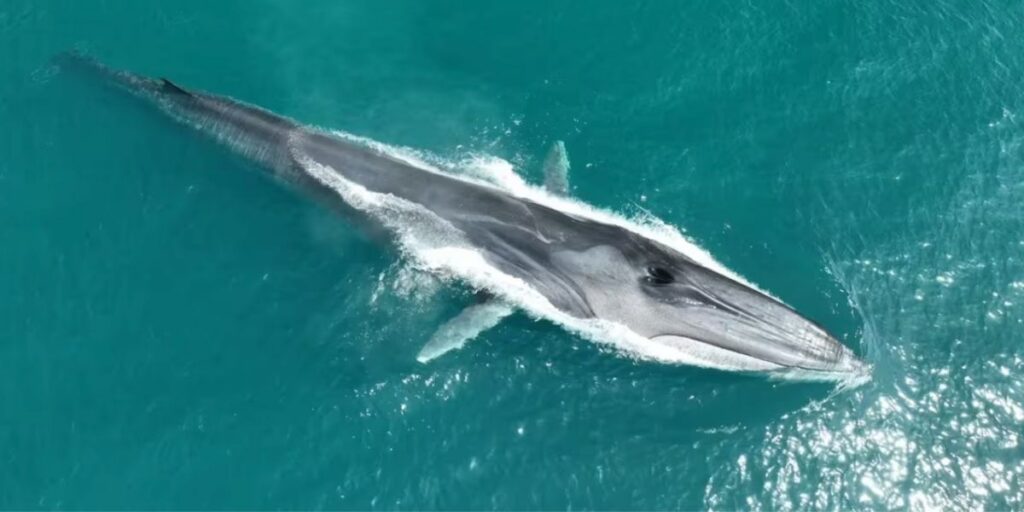
Most successful monitoring season since the project began Credit: Universitatde Valencia

One of the Mediterranean’s most spectacular wildlife events has unfolded just off the Costa Blanca, where researchers have recorded a record 127 fin whales migrating past the Marina Alta coastline.

The sightings were made during a scientific campaign led by the Universitat Politècnica de València (UPV) between May 25 and July 6, making this the most successful monitoring season since the project began. The fin whale is the second-largest animal on Earth, surpassed only by the blue whale, and is listed as endangered in the Mediterranean by the International Union for Conservation of Nature (IUCN).

Researchers say the results underline the importance of the waters off Dénia and the Marina Alta as one of the Mediterranean’s key migration corridors for these ocean giants.

Drone technology reveals new insights

The team identified more than 80 individual whales using drone photography, adding valuable data to an ongoing catalogue that helps scientists track the movements and health of the population.

For the first time this season, researchers also collected six non-invasive blow samples using drones. These samples will allow scientists to determine the whales’ sex and analyse hormone levels without disturbing the animals.

Another encouraging discovery was the presence of several females travelling with calves, suggesting successful breeding and offering fresh optimism for the recovery of the endangered Mediterranean population.

Lead researcher Víctor Gallego described the campaign as the most productive yet, with more whale sightings, more individual identifications and more calves recorded than in previous years.

The Costa Blanca’s hidden wildlife hotspot

Although many people associate whale watching with Iceland or Canada, scientists believe the Marina Alta coastline is among Europe’s best places to observe migrating fin whales from land.

Around 90 per cent of sightings during the campaign were first detected by researchers stationed on the cliffs of Cabo de San Antonio, who scanned the sea for the distinctive blows produced when whales surface to breathe. Once spotted, the marine team headed out by boat to document each animal’s behaviour, direction of travel and group size.

Over the course of the campaign, researchers completed more than 30 days at sea and logged around 250 hours of navigation following the whales.

Helping protect Mediterranean giants

The research forms part of the MYSTICMED project, which studies fin whales across several important migration areas, including the western Mediterranean, the Alborán Sea, the Strait of Gibraltar and Atlantic waters off Galicia.

Scientists say understanding where the whales travel and how they use these waters is essential for future conservation efforts. Protecting the species also benefits the wider marine ecosystem, as fin whales play an important role in nutrient cycling and maintaining healthy oceans while contributing to natural carbon storage.

Google News

Follow Euro Weekly News on Google News

Get breaking news from Spain, travel updates, and expat stories directly on your Google News feed.

Follow on Google News
Written by

Lottie Verrier

Lottie Verrier is a journalist and digital media specialist based in Mallorca. After a decade in London media, including a role as Deputy Editor for the MailOnline’s eCommerce division, she now combines her editorial expertise with a passion for the island to create engaging content that celebrates the best of life in Spain. Instagram @lottieinmallorca

Comments


    Leave a comment

    Your email address will not be published. Required fields are marked *