Spain’s wildfire nightmare deepens as heads turn to bushfire bunkers in the hope of saving lives
By Molly Grace • Published: 17 Jul 2026 • 7:00 • 4 minutes read
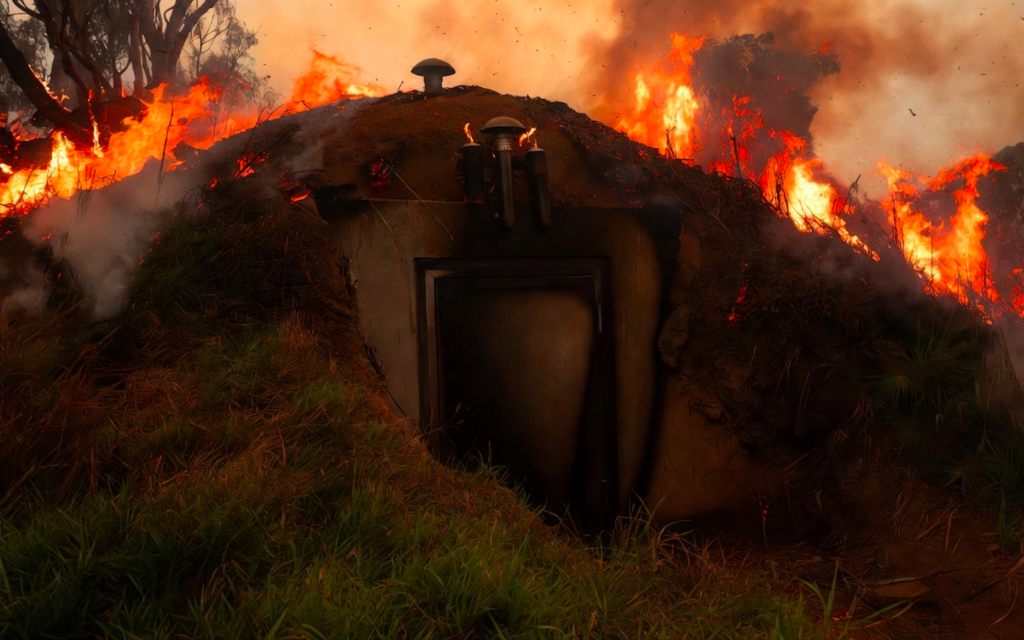
The bunkers would not replace evacuation plans, firefighting operations or better land management. Photo credit: AI generated illustration
As wildfires become faster, more destructive and increasingly deadly, could a last-resort shelter used in Australia offer another layer of protection for people living in Spain’s high-risk rural areas? For many people who choose to live in rural Spain, the dream is a peaceful life surrounded by nature.
A home with views across hills and valleys, space for animals, and a quieter way of life away from busy towns. But every summer, that dream comes with a growing fear: wildfires. For rural residents, including many expats who have made their homes in isolated areas, the biggest danger is not only the flames themselves, but how quickly they can arrive.
When wildfires arrive faster than people can escape
A fire that begins kilometres away can change direction within minutes, fuelled by strong winds, dry vegetation and extreme temperatures. The devastating wildfire around Los Gallardos in Almería has brought those fears into sharp focus.
The blaze became one of Spain’s deadliest recent wildfires, with multiple deaths reported and many residents forced to face a rapidly spreading fire that threatened homes and communities.
The tragedy has renewed questions about how people living in wildfire-prone areas can be better protected. And one idea already used in another fire-prone country is gaining attention: bushfire bunkers.
What exactly is a bushfire bunker?
Known officially in Australia as Private Bushfire Shelters, bushfire bunkers are purpose-built structures designed to provide temporary protection during a wildfire emergency. Unlike a normal basement or a makeshift shelter, these structures are specifically built to withstand the immediate dangers of a bushfire, including radiant heat, flames, embers and smoke.
Some are built underground, while others are above-ground structures made using fire-resistant materials. Their purpose is not to provide long-term shelter or replace evacuation plans, but to offer a last line of defence when leaving is no longer possible.
Australia’s Country Fire Authority warns that approved private bushfire shelters can provide temporary refuge from the immediate dangers of a bushfire, but they are not a substitute for leaving early when evacuation is possible. Research by Australia’s national science agency, CSIRO, has also examined how purpose-built bunkers can protect people from extreme fire conditions, while warning that poorly designed or unofficial shelters can create additional risks.
Could they work in rural Spain?
For people living in isolated parts of Spain, the idea may sound increasingly relevant. Many rural homes are surrounded by vegetation, located along narrow roads and far from emergency services. During a fast-moving wildfire, evacuation routes can become blocked, while elderly residents, people with mobility issues and those caring for animals may face additional challenges.
A professionally designed bushfire bunker could potentially provide an extra safety option for properties in high-risk areas. This could be particularly relevant in regions such as Andalucía, Valencia, Murcia and parts of Catalonia, where rural communities regularly face extreme summer heat and increasing wildfire threats. But the idea also raises a bigger question: could Spain take the concept beyond individual homes?
Could community bushfire bunkers protect entire villages?
While private bushfire bunkers are designed for individual households, a larger version of the idea could potentially offer protection for entire communities. Many rural villages across Spain have ageing populations, narrow roads and limited escape routes. When a wildfire changes direction quickly, evacuating every resident can become extremely difficult, particularly in areas surrounded by forests or dry vegetation.
Large community shelters designed as emergency refuges could provide another option for residents who cannot leave quickly or who become trapped as fire conditions change. These would not replace evacuation plans, firefighting operations or better land management, but they could form another layer of protection in areas where wildfire risk is increasing.
Creating such shelters would require strict safety standards, careful planning and consideration of local landscapes. However, as Spain faces more intense wildfire seasons, the idea of designing communities with fire emergencies in mind could become part of the wider conversation.
Not a replacement for prevention
A bushfire bunker cannot stop a wildfire, it cannot protect a home from being destroyed, prevent vegetation from burning or replace good forest management and early warning systems. Australia’s experience shows that these shelters only work when they are properly designed, correctly located and used as part of a broader emergency plan.
For Spain, the biggest challenge remains reducing the conditions that allow fires to become uncontrollable in the first place. That means improving forest management, maintaining firebreaks, clearing dangerous vegetation around properties and ensuring rural residents know exactly what to do when an alert is issued.
A new reality for Spain’s rural residents
For years, wildfires were often seen as a summer danger that happened somewhere else. That perception is changing. As temperatures rise and landscapes become increasingly dry, more people living in rural Spain are having to consider questions that once seemed unthinkable: how quickly could I evacuate? Where would I go? What happens if the road out is blocked?
Australia’s bushfire bunkers are not a magic answer, and they would not be suitable for every property. But they represent a different approach: accepting that extreme fires are becoming part of life and finding new ways to reduce the risk. For the thousands of expats and Spanish families who live in rural areas, the idea raises an important question.
If countries that have lived with devastating wildfires for decades are building another layer of protection, could Spain eventually need to consider the same? Because as every summer brings more dangerous fires, the challenge is no longer just fighting the flames, it is finding new ways to survive them.
Follow Euro Weekly News on Google News
Get breaking news from Spain, travel updates, and expat stories directly on your Google News feed.
Follow on Google NewsSign up for personalised news
Subscribe to our Euro Weekly News alerts to get the latest stories into your inbox!
By signing up, you will create a Euro Weekly News account if you don't already have one. Review our Privacy Policy for more information about our privacy practices.

Molly Grace
Molly is a British journalist and author who has lived in Spain for over 25 years. With a background in animal welfare, equestrian science, and veterinary nursing, she brings curiosity, humour, and a sharp investigative eye to her work. At Euro Weekly News, Molly explores the intersections of nature, culture, and community - drawing on her deep local knowledge and passion for stories that reflect life in Spain from the ground up.
Comments