Would you dare eat a maggot-infested cheese? Berlin’s Disgusting Food Museum wants to test your nerve
By Lucy Ramnought • Published: 18 Jul 2026 • 10:20 • 2 minutes read
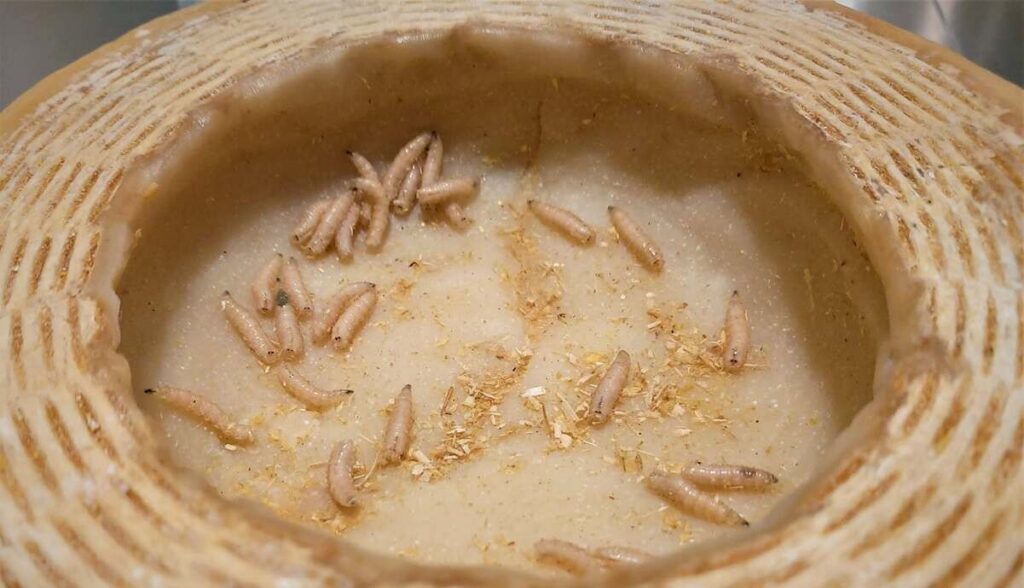
Dare to try Credit:Berlin's Disgusting Food Museum/FB
Some museums have Monets, some have gorgeous historic sculptures , this one has surströmming, cow’s blood and a cheese that’s technically still moving. Welcome to the Disgusting Food Museum Berlin.
How a Swedish idea turned into Berlin’s smelliest attraction
Every good museum starts with an idea, and this one started with one question, why do we find some foods repulsive while someone, somewhere, considers them a treat? The concept was dreamed up in Malmö, Sweden, before setting up permanent residence in the German capital in 2021.
You may think the exhibition is purely to gross people out, but it isn’t. Thee museum was built to unpack why our stomachs turn in the first place. Museum director Alexandra Bernsteiner has explained that disgust affects everyone, and that while it’s shaped by culture, it’s also wired into our evolutionary biology, and there’s no better way to explore that than through something we do several times a day, eating. In other words, it’s designed less as a horror show and more a mirror, held up to your own taste buds.
The bigger goal, according to the team behind it, is to nudge visitors past their knee-jerk reactions and towards a bit of cultural understanding. The museum sees itself as a place to shift perspective, breaking down prejudices and bringing different cultures and different attitudes to food closer together.
What can actually be seen (and smelt) inside
There’s a lot to take in. The collection runs to nearly 100 bizarre exhibits from around the world, ranging from the merely unusual to the genuinely eyebrow-raising. In amongst the star attractions is Sardinia’s infamous Casu Marzu, a pecorino cheese that’s deliberately left to mature with the help of live fly larvae, maggots and all, which are often eaten right along with the cheese. Then there’s Sweden’s surströmming, that notoriously pungent fermented herring so powerful that opening the tin is considered something of a rite of passage. If you fancy witnessing that moment of truth in person, the museum cracks open a fresh can every first Saturday of the month at 1pm.
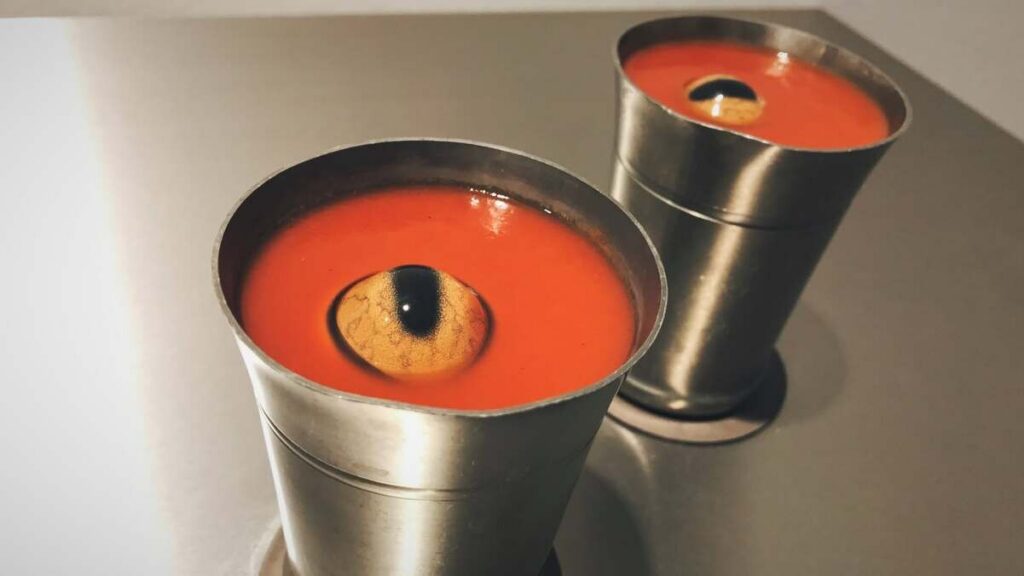
Credit:Disgusting Food Museum Berlin/FB
Germany features with regional oddities such as Saumagen (a hearty stuffed pig’s stomach from the Palatinate) and mite-ripened cheese from Saxony-Anhalt, whose distinctive tang comes courtesy of cheese mites. Outside of Europe, look out for durian, the so-called “stink fruit,” and Iceland’s hakarl, fermented shark meat traditionally chased down with a shot of schnapps to soften the blow.
For the properly brave, there’s a tasting bar where you can sample edible insects and other delicacies yourself, plus a 70-minute audio guide, for those who’d rather listen to rather than look. Interestingly, the crowd isn’t all thrill-seeking teenagers grossing themselves out. According to Bernsteiner, plenty of visitors, including young couples and children, come along driven by genuine curiosity rather than scepticism.
Whether you’re the sort who’ll happily tuck into a maggot or the sort who’ll be viewing everything from behind laced fingers, The Disgusting Food Museum Berlin is a properly fun and thought-provoking way to spend an hour or two in Berlin. Just maybe don’t plan on eating lunch beforehand.
Follow Euro Weekly News on Google News
Get breaking news from Spain, travel updates, and expat stories directly on your Google News feed.
Follow on Google NewsSign up for personalised news
Subscribe to our Euro Weekly News alerts to get the latest stories into your inbox!
By signing up, you will create a Euro Weekly News account if you don't already have one. Review our Privacy Policy for more information about our privacy practices.




Lucy Ramnought
Lucy Ramnought is a local news writer and mother of 4 from the UK who has lived in the Costa Del Sol for just over 4 years. With a background in content writing and social media for various companies, and with vast experience in PA and project management, Lucy is committed to producing accurate, engaging and reliable stories to her work at Euro Weekly News.
Comments