Spain moves closer to banning smoking on every bar terrace
By Harry Dennis • Updated: 21 Jul 2026 • 14:10 • 3 minutes read
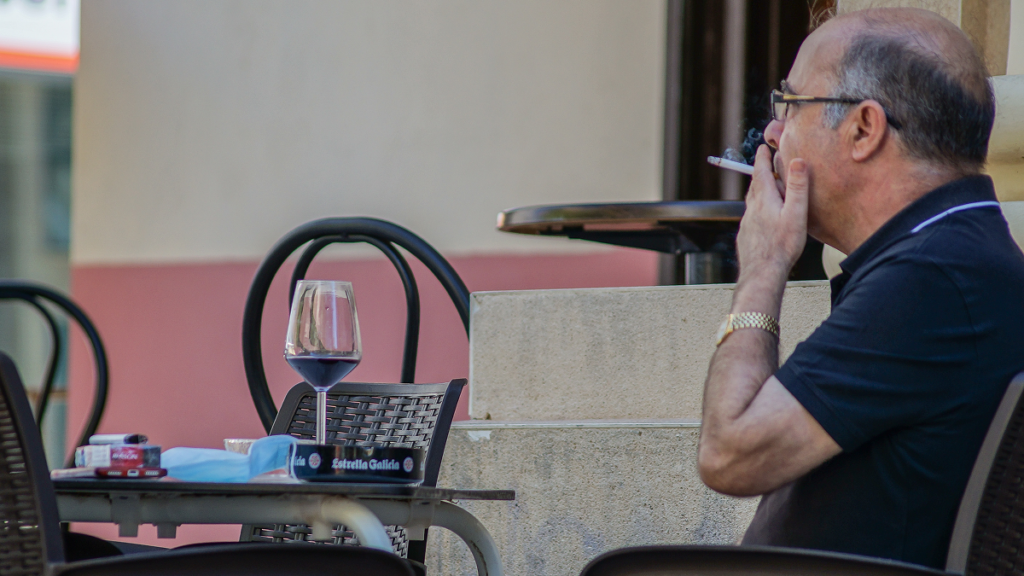
The terrace cigarette could soon disappear. Credit: Alex Castellon / Shutterstock
Smokers may eventually have to leave their table before lighting up anywhere on a Spanish bar or restaurant terrace. Ministers advanced the nationwide ban on Tuesday, July 21, but the rule is not yet in force and still faces a potentially difficult journey through Parliament.
Smoking on Spain’s terraces could soon disappear
The image of smokers gathered on Spanish terraces is getting closer and closer to disappearing. Spain’s Council of Ministers approved the final government version of its tobacco bill on Tuesday, July 21. The reform will now be sent to the Spanish Parliament for debate, amendments and voting.
Despite references to Spain’s “new smoking law”, there is no current ban on smoking across every bar or restaurant’s terrace. Individual venues and some local or regional authorities may impose tighter restrictions, but Tuesday’s expected decision would not make the national prohibition take effect immediately.
The government first approved the preliminary version of the reform in September 2025. This second approval would turn it into a formal bill ready to begin its passage through the Cortes Generales, Spain’s Parliament.
Smokers and vapers would have to step away from the table
Under the government’s published proposal, smoking would be prohibited in both the indoor and outdoor areas of bars, restaurants and other hospitality businesses. That means an open-air table would no longer provide an exemption. Smokers would have to leave the terrace before lighting a cigarette, although the previously published text did not establish a fixed exclusion zone around an ordinary bar or restaurant.
The separate 15-metre rule proposed by the government applies around entrances to places including hospitals, schools, universities, public buildings, sports centres, libraries and children’s play areas.
The terrace restriction would also extend to electronic cigarettes, including nicotine-free vapes, heated-tobacco devices and herbal smoking products. This could catch out residents and tourists who assume outdoor vaping will remain permitted.
Other proposed smoke-free spaces include collective-use swimming pools, university campuses, sports facilities, bus shelters and outdoor performances and events.
Bars could be penalised for allowing customers to smoke
The change would not only affect the people smoking. The earlier draft classified knowingly allowing smoking in a prohibited place as a serious offence. It also required affected premises to display visible notices explaining that smoking and covered products are prohibited.
For bar and restaurant staff, this could mean going through a painful transitional period of repeatedly asking customers to put out cigarettes or move away from the terrace. It wouldn’t be enough for businesses to just place signs outside and ashtrays around the corner and leave enforcement entirely to inspectors.
The definitive 2026 sanctions must be checked once the updated bill is published. The September draft proposed a fine of up to €100 for isolated cases of smoking in a prohibited place, but current reporting indicates that minimum penalties elsewhere in the revised law have been increased.
Under-18s would also be prohibited from consuming tobacco and related products, rather than only being barred from buying them. Reported fines would start at €200, with parents or guardians responsible for paying.
Why the government is targeting outdoor tables
The Ministry of Health argues that crowded or partially enclosed terraces can expose diners and hospitality workers to second-hand smoke even though they are technically outdoors. A 2024 systematic review found substantially higher concentrations of fine particles at outdoor hospitality venues where smoking was permitted. Smoke could also drift into adjoining non-smoking areas and indoor premises.
The hospitality industry has opposed a blanket restriction, arguing that Spain’s terraces are year-round social spaces and that businesses would carry part of the enforcement burden. The ban could upset customers and affect businesses negatively.
Parliament still has the power to change the terrace ban
After government approval, the bill must pass through Congress and the Senate. Political parties can propose amendments, meaning individual provisions, sanctions and implementation dates could still change. Only after parliamentary approval, royal sanction and publication in the Boletín Oficial del Estado, Spain’s official state gazette, would the new rules become law. The Spanish Congress explains the full legislative process here.
The 2025 draft proposed bringing the law into force 20 days after publication, but there is no confirmed commencement date yet. Until the final legislation appears in the state gazette, smokers should check venue, municipal and regional rules rather than assume Spain’s nationwide terrace ban has already begun.
Follow Euro Weekly News on Google News
Get breaking news from Spain, travel updates, and expat stories directly on your Google News feed.
Follow on Google NewsSign up for personalised news
Subscribe to our Euro Weekly News alerts to get the latest stories into your inbox!
By signing up, you will create a Euro Weekly News account if you don't already have one. Review our Privacy Policy for more information about our privacy practices.


Harry Dennis
Born in the UK and raised on the Cádiz coast, Harry brings his background in design, music, and photography to his writing for Euro Weekly News, sharing stories that celebrate culture and lifestyle across Spain and beyond.
Comments