Spain traffic alert: Worst hours to avoid as 5.6 million journeys threaten disruption
By Harry Dennis • Published: 30 Jul 2026 • 16:11 • 3 minutes read
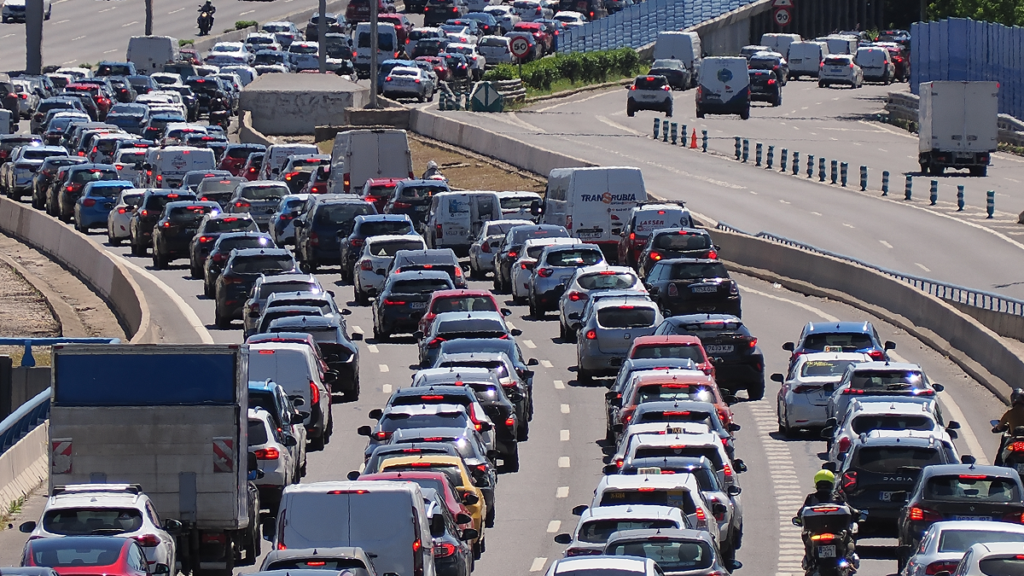
Spain’s August holiday changeover is expected to generate 5.6 million long-distance journeys. Credit: Juan Jesus Ruiz Toscano / Shutterstock
Leaving for the coast on Friday afternoon or heading home on Sunday evening could mean joining the weekend’s heaviest traffic. The DGT has identified three periods when Spain’s holiday changeover is expected to put the greatest strain on the roads.
The three busiest periods begin on Friday afternoon
Spain’s Directorate General of Traffic (DGT) expects 5.6 million long-distance journeys between 3pm on Friday July 31 and midnight on Sunday August 2.
For people with a bit more flexibility and able to choose when to travel, the authority identifies three particularly difficult periods:
- Friday, July 31: 3pm to midnight
- Saturday, August 1: 8am to 3pm
- Sunday, August 2: 3pm to midnight
Friday afternoon and Saturday morning will be dominated by departures from the largest cities towards coastal areas, mountain resorts and second homes. On Sunday, shorter journeys between coastal towns and beach areas may cause difficulties in the morning before the main return traffic begins during the afternoon.
The DGT has also noted that teleworking may allow some people to bring their departure forward to Thursday evening. However, its official special operation and the three least favourable travel periods all run from Friday to Sunday.
August departures and July returns could cross paths
This is more complicated than a regular weekend getaway. People beginning their August holidays will be travelling in the opposite direction to those returning home after a July break, while regular weekend journeys continue around them. The holiday rush also overlaps with the summer flow of Portuguese and Maghrebi vehicles crossing Spain, with many of the latter travelling south towards ferry ports as part of Operation Crossing the Strait, Spain’s annual plan for journeys between Europe and North Africa.
The DGT expects 54.5 million long-distance journeys throughout August, making it the busiest month of its summer operation. The greatest pressure is expected on routes leaving major urban centres and roads serving coastal and tourist destinations. The DGT map below shows the high-capacity roads expected to carry the most traffic in red. The orange and green routes are forecast to be less heavily used and may provide alternatives, depending on the journey.
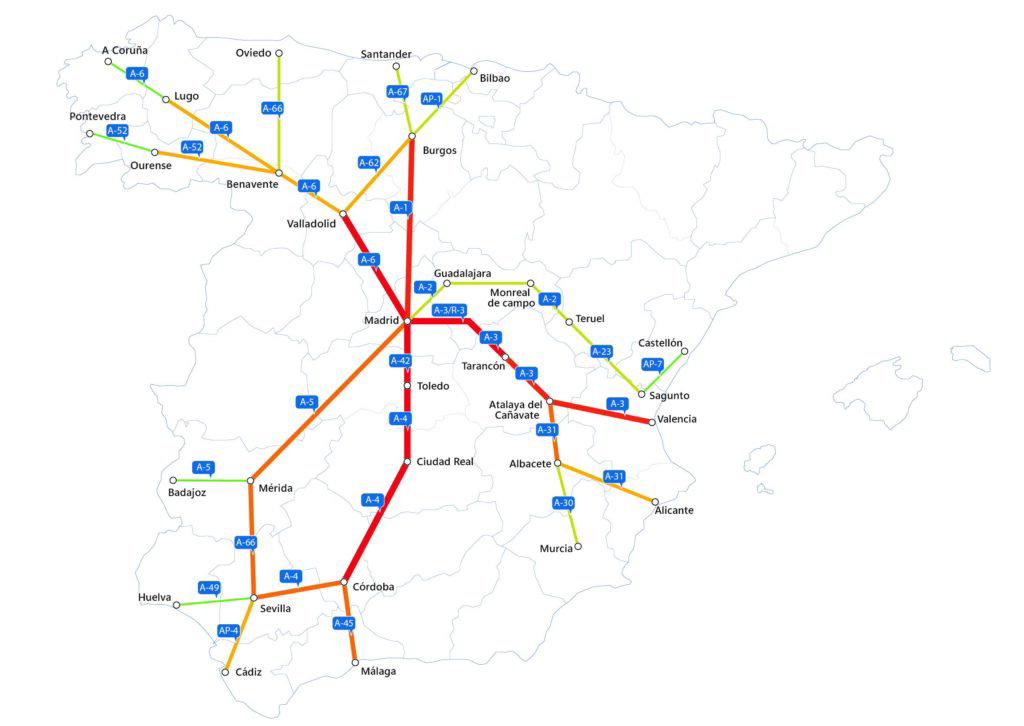
Among the high-capacity corridors singled out are the A-6 between Madrid and Valladolid, the A-42 and A-4 from Madrid towards Córdoba, and the A-3 and R-3 between Madrid and Valencia.
Extra lanes, drones and cameras will cover the changeover
Temporary additional or reversible lanes may be opened where possible to keep traffic moving. Roadworks will be suspended on affected routes, while some heavy vehicles and sporting events will face temporary restrictions.
The operation brings together the Guardia Civil’s Traffic Group, DGT traffic management centres, aerial units and road maintenance teams. Fixed and mobile speed cameras will be highly active, alongside Pegasus helicopters, drones and overhead cameras used to detect mobile-phone distractions and failure to wear a seat belt.
Where drivers can check queues before setting off
The DGT recommends checking both the vehicle and the route before a long journey. Tyres, lights, brakes, oil, coolant, battery and air conditioning are among the items it says should be checked, particularly during Spain’s summer heat. Live incidents, queues, roadworks and restrictions can be checked through the DGT’s Infocar traffic map. The information is updated automatically around the clock using reports from the Guardia Civil and traffic management centres.
Updates are also available through the official @DGTes and @informacionDGT social accounts, traffic bulletins on radio and television, and the permanent 011 traffic information line. For journeys that cannot be moved to another day, avoiding the three official peak windows offers the clearest chance of missing the worst of the holiday changeover.
Follow Euro Weekly News on Google News
Get breaking news from Spain, travel updates, and expat stories directly on your Google News feed.
Follow on Google NewsSign up for personalised news
Subscribe to our Euro Weekly News alerts to get the latest stories into your inbox!
By signing up, you will create a Euro Weekly News account if you don't already have one. Review our Privacy Policy for more information about our privacy practices.





Harry Dennis
Born in the UK and raised on the Cádiz coast, Harry brings his background in design, music, and photography to his writing for Euro Weekly News, sharing stories that celebrate culture and lifestyle across Spain and beyond.
Comments