Spanish law forces open doors: Block community workers from your property and face court, compensation and ruinous bills
By Adam Woodward • Published: 02 Aug 2026 • 9:35 • 3 minutes read
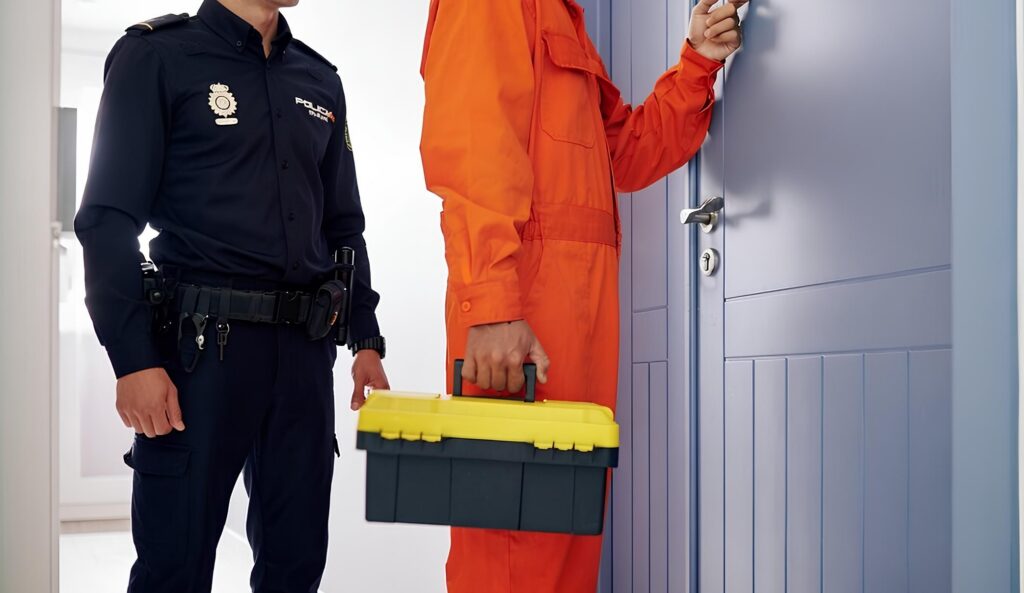
What if the leak is from your house in Spain? Credit: Dragon Images - Shutterstock
Spanish courts have recently been hammering home a brutal reality for property owners. Refuse official workers entry when a shared pipe or root problem on your land hits others, and you risk digging up your own garden, paying legal costs, compensation and the full repair tab.
One Euro Weekly News reader from Orihuela discovered this after a neighbour’s bougainvillaea roots wrecked common water pipes, sending his bills sky-high for water he never used. The stubborn refusal to let a plumber into his garden dragged everything through the courts, while our Euro Weekly Reader continued to pay exorbitant water bills that didn’t correspond to his water usage. It should be said that incompetency and ignorance of the law at the water company and the community management didn’t help either!
Owners in flats, houses or urbanisations share this duty under Spain’s Ley de Propiedad Horizontal. Article 9.1 leaves zero wriggle room. You must consent to repairs the building or shared services need and allow the essential access or servitudes those works demand.
The community association has to pay for any damage caused to your place, yet you cannot simply slam the door.
What article 9.1 really demands from every owner
Article 9.1 spells out clear duties. Respect all community installations and common elements, whether general or for private use by someone else. Keep your own property in decent nick so it does not affect others. Most critically, consent inside your home or garden to the repairs the overall property service requires, and permit the indispensable access for works, actions or new common services agreed upon under the law. You also get the right to claim compensation for any harm done.
That same article insists you allow entry for these exact purposes. Courts treat this as non-negotiable when common elements are at stake. Many Spanish lawyers still seem slow to grasp the full force of this rule, which is why some disputes drag on far longer than they should.
Cases where workers can legally step onto your land
Repairs to general drains and pipes often force the issue. Damp caused by common building parts, work on façades or roofs, safety fixes that keep the whole structure sound, and interventions on community-owned installations all qualify. Justification must come first.
Community representatives need to prove the work links directly to conservation or repair of the shared property and answers a real need. Without solid evidence the entry request can itself spark fresh rows.
These rules hit houses on urbanisations just as hard as apartment blocks. Shared water networks, drainage runs and underground services routinely cross private gardens. One owner’s problem quickly becomes everyone’s.
Real nightmares from water roots to bathroom battles
Last year’s Euro Weekly News reader faced exactly this nightmare. Roots from the neighbour’s bougainvillaea had tunnelled into the common water pipes under the gardens. The bush thrived while the neighbour’s bills soared into hundreds of euros for water he had never used. A plumber arrived to inspect. Entry was refused. The leak continued. Court action followed. Urbanisation-contracted teams finally ended up digging up the obstructing garden to fix the pipes. That neighbour now faces legal costs, compensation to the overcharged owner, possible water company claims and the bill to repair his own garden. And all because his attitude led to him blocking access to a plumber there to repair.
A recent court ruling made the same point with an 81-year-old owner. Community workers needed to lift her shower tray to replace a faulty residual-water drain causing damp elsewhere (a very typical story in Spain). She first agreed, then pulled back, wanting precise details on duration and impact. Judges ruled she had no right to block entry simply because she lacked every last detail. She knew the problem existed. Access had to be given. Costs followed her refusal.
Asking for details is fine, but blocking is not
Owners can request information about timing, methods and disruption. Demanding answers never cancels the duty to open the door when the work is essential and properly justified. Courts repeatedly confirm that inviolability of the home bends for these community necessities. Delay only multiplies damage and shifts more liability onto the person who said no.
Anyone living in a Spanish urbanisation or block should treat shared pipes, drains and roots as potential flashpoints. Early cooperation usually keeps costs down and gardens intact. Refusal turns a repair job into a full-scale legal and financial mess that Spanish judges show little patience for.
Spain has developed through the centuries as a communal society in which resources are shared fairly. Anyone who treats his home as a castle, inaccessible to others who only want repair and make their own lives less of a nightmare, has a nasty shock in store somewhere down the line.
By the way, the obstinate neighbour who wouldn’t grant access to plumbing repairs below his bougainvillaea bush was Spanish, and should have known better.
Follow Euro Weekly News on Google News
Get breaking news from Spain, travel updates, and expat stories directly on your Google News feed.
Follow on Google NewsSign up for personalised news
Subscribe to our Euro Weekly News alerts to get the latest stories into your inbox!
By signing up, you will create a Euro Weekly News account if you don't already have one. Review our Privacy Policy for more information about our privacy practices.





Adam Woodward
Adam is a writer who has lived in Spain for over 25 years. With a background in English teaching and a passion for music, food, and the arts, he brings a rich personal perspective to his work at Euro Weekly News. As a father of three with deep roots in Spanish life, Adam writes engaging stories that explore culture, lifestyle, and the everyday experiences that shape communities across Spain.
Comments