The siesta habit that may quietly reveal declining health
By Harry Dennis • Published: 06 Aug 2026 • 12:23 • 3 minutes read
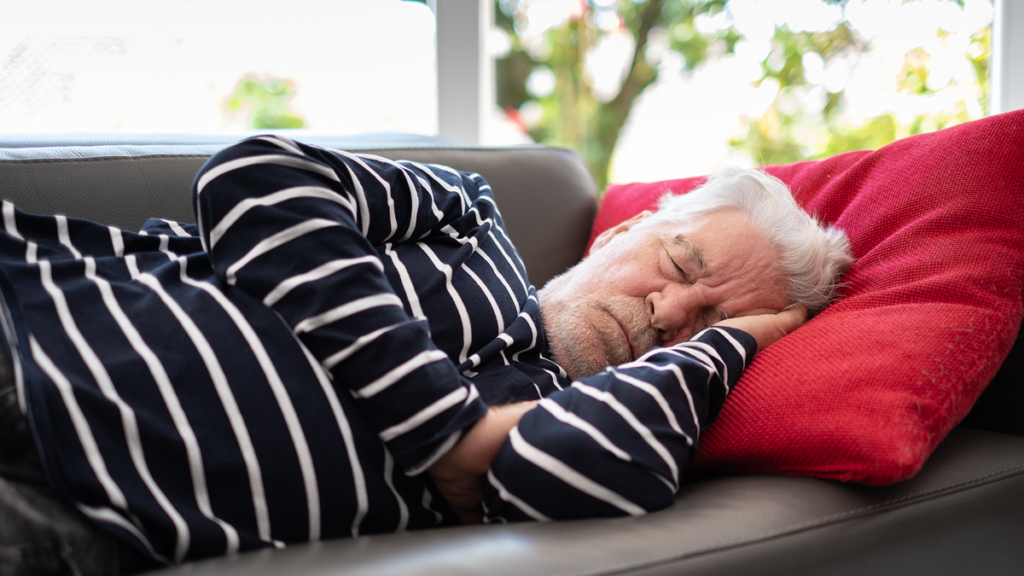
Long, frequent or morning naps may offer a clue to an older adult’s wider health, researchers say. Credit: Lucigerma / Shutterstock
A quick doze after lunch is not the habit causing concern. The change to look out for is when an older person begins sleeping a bit longer, more often or before lunch, as that pattern can say more about their health than some might think.
Why morning napping carries the biggest weight
Researchers studying 1,338 older adults found that longer, more frequent and predominantly morning naps were associated with higher mortality during up to 19 years of follow-up. The participants, who had an average age of 81, wore wrist activity monitors for approximately ten days. The devices allowed the researchers to estimate when they slept during the day, how long for and how often.
According to the study published in JAMA Network Open, each additional hour of daytime sleep per day was associated with a 13 per cent higher adjusted rate of death during follow-up. Each additional daily nap was associated with a 7 per cent increase. Among habitual nappers, those whose sleep clustered in the morning had a 30 per cent higher adjusted mortality rate than those who mainly slept in the early afternoon.
These are of course only relative comparisons within one older population, and not a forecast of how it will affect every single individual. The researchers also found no association between mortality and how much nap duration varied from one day to another.
Why the nap may be a clue rather than the cause
“It is important to note that this is correlation not causation,” lead author Chenlu Gao said when the findings were published by Mass General Brigham. This means that the actual napping may not be the problem. Instead, it could reflect things like disrupted body rhythms, poor night-time sleep or an illness producing unusual fatigue. The researchers identified several possible explanations, including obstructive sleep apnoea, chronic pain, diabetes, cardiovascular conditions, mood disorders and early neurodegenerative changes.
There were other important limitations to consider as well. Participants were predominantly white and female, with an average age above 80, so the results cannot be applied automatically to younger adults, shift workers that have varying sleep schedules or Spain’s general population. It is also worth mentioning that wrist monitors can sometimes mistake quiet resting for sleep.
Significantly, however, when the researchers restricted one analysis to participants without cognitive impairment, the association between morning nap timing and mortality was no longer statistically significant.
How Spain’s short after-lunch siesta creates a different pattern
The Spanish siesta most people are familiar with usually follows lunch and coincides with a natural early-afternoon fall in alertness. The authors explicitly distinguished this culturally familiar rest from sleeping unusually early in the day.
A previous study of 3,275 adults in Murcia suggested that the length of people’s siestas could also matter. People who napped for no more than 30 minutes were less likely to have a high blood-pressure reading. Longer naps were linked to being overweight and to a combination of health problems that can raise the risk of diabetes and heart disease.
However, these results were only taken by researchers from a snapshot of participants’ health and sleeping habits at one point in time, and although they found a link, they could not prove that the naps caused those health differences.
Brief daytime sleep can still relieve fatigue and improve alertness. But for people experiencing insomnia, Spanish guidance recommends generally avoiding naps or, when one is appropriate, taking it after lunch and limiting it to no more than 30 minutes.
The detail worth noting is a change in pattern
One lengthy nap after a sleepless night is not the pattern examined by the study. The more relevant point is a new and persistent tendency to sleep for longer, take several naps or regularly fall asleep during the morning. “Those who are caregivers may want to have their loved one checked if they notice a change in their sleeping pattern,” study co-author Dr Aron Buchman told Rush University Medical Center.
A simple record of nap times, their durations and one’s night-time sleep can be extremely useful context for a doctor. A person shouldn’t self diagnose an illness from a tracker or sleep diary, but a clear change may be worth mentioning during a routine appointment.
The short, post-lunch siesta has not become dangerous, and there’s no need to cancel that arm-chair appointment. What deserves more attention is when an older person’s familiar rest begins turning into something earlier, longer or increasingly difficult to resist.
Follow Euro Weekly News on Google News
Get breaking news from Spain, travel updates, and expat stories directly on your Google News feed.
Follow on Google NewsSign up for personalised news
Subscribe to our Euro Weekly News alerts to get the latest stories into your inbox!
By signing up, you will create a Euro Weekly News account if you don't already have one. Review our Privacy Policy for more information about our privacy practices.





Harry Dennis
Born in the UK and raised on the Cádiz coast, Harry brings his background in design, music, and photography to his writing for Euro Weekly News, sharing stories that celebrate culture and lifestyle across Spain and beyond.
Comments