Massive EU airline rule changes: what will change for bags, seats and delays
By Harry Dennis • Published: 06 Aug 2026 • 13:34 • 3 minutes read
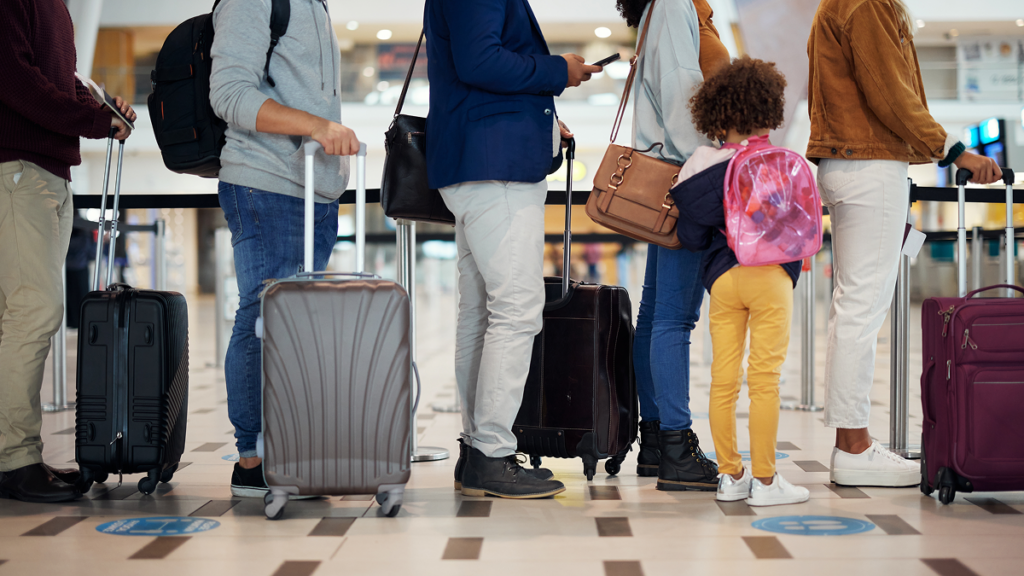
New rules will change how airlines display cabin-bag fares and handle family seating and flight disruption. Credit: Peopleimages / Shutterstock
Paying extra just to sit beside a child is set to disappear on flights covered by EU law. The same overhaul changes cabin-bag pricing and makes delay claims easier, but one widely repeated luggage claim still needs unpacking.
After 13 years, the EU has settled its new flight rulebook
The final text brings an end to negotiations that began in 2013, settling some of the most frustrating parts of flying in Europe: families being charged to sit together, unclear cabin-bag prices, complicated compensation claims and return tickets being cancelled after a missed outward flight.
The European Parliament backed the overhaul by 646 votes to 12 on July 7, before the Council of the European Union granted final approval on July 13. It will cover every flight departing from Spain, regardless of where the airline is based. Flights arriving from the UK or another non-EU country will also be covered when operated by an EU-licensed airline.
Travellers cannot claim these new protections immediately. They will become applicable 12 months after the regulation enters into force, which happens 20 days after publication in the EU’s Official Journal. Until then, existing passenger-rights rules and individual airline policies continue to apply.
The changes passengers could see regarding cabin bags
Every passenger will be entitled to take one personal item into the cabin without an additional charge. The legal text defines this as an item measuring no more than 40 by 30 by 15 centimetres, or one that fits beneath the seat in front.
When the new rules are put into effect, airlines and booking websites will have to display flight fares that include a larger piece of hand baggage, such as a trolley bag, by default at the beginning of the booking process. However, they may still offer cheaper fares to people who voluntarily travel without that larger bag. The change is therefore largely about making the real price easier to compare before clicking through several booking screens. Airlines will also have to state their cabin baggage dimensions and weight restrictions clearly early-on.
If a personal item or cabin bag has to be placed in the hold because the aircraft lacks space, the airline will not be allowed to impose an additional charge.
Children under 14 must be offered an adjacent seat free
An adult or other accompanying person travelling under the same booking as a child below the age of 14 must be offered an adjacent seat without paying extra. If neighbouring seats are no longer available, the airline must make an effort to help the pair sit together, although the text cannot guarantee that an adjacent seat will always be available on a full aircraft.
Similar protection will apply to people accompanying passengers with disabilities or reduced mobility, pregnant women and others with specified assistance needs.
The three-hour compensation threshold survives
Passengers will retain the established three-hour threshold for flight-delay compensation. Depending on the journey, payments will remain at €250 for distances up to 1,500 kilometres, €400 for longer intra-EU journeys and other flights between 1,500 and 3,500 kilometres, and €600 for remaining long journeys. The €600 payment may be reduced by half in certain long-haul cases where the passenger arrives no more than four hours late. Airlines can also refuse compensation where they prove that extraordinary circumstances directly caused the disruption and could not reasonably have been avoided.
Claiming should also become more straightforward. Airlines must send potentially eligible passengers information and instructions within 96 hours of the end of their journey. Travellers will have nine months to file a claim, after which the airline must pay or provide a substantiated refusal within 30 days.
Duty-of-care rules are also clarified, including refreshments every two hours, a meal after three hours and accommodation when an overnight stay becomes necessary. Where extraordinary circumstances caused the disruption, hotel provision can be capped at three nights.
Return flights, boarding passes and rerouting all gain protection
Airlines will no longer be able to cancel the return part of a booking or charge a penalty simply because a passenger missed the outward flight. One spelling correction or administrative name update must be provided free when requested at least 48 hours before departure. And airlines must also accept a clear, machine-readable printout of a digital boarding pass and provide a printed pass free once the passenger has checked in.
During serious disruption, an airline must offer rerouting under comparable conditions. If it fails to offer a suitable option within three hours after a passenger chooses to continue travelling, the passenger may arrange a necessary and reasonable alternative and seek reimbursement capped at 400 per cent of the original ticket price.
Passengers held on an aircraft at an EU airport must normally be allowed to disembark once a tarmac delay reaches two hours, unless safety, security, immigration or air traffic control restrictions prevent it.
For flights taken now, these additions can not yet be demanded at the airport. Publication in the Official Journal will start the countdown to their application.
Follow Euro Weekly News on Google News
Get breaking news from Spain, travel updates, and expat stories directly on your Google News feed.
Follow on Google NewsSign up for personalised news
Subscribe to our Euro Weekly News alerts to get the latest stories into your inbox!
By signing up, you will create a Euro Weekly News account if you don't already have one. Review our Privacy Policy for more information about our privacy practices.





Harry Dennis
Born in the UK and raised on the Cádiz coast, Harry brings his background in design, music, and photography to his writing for Euro Weekly News, sharing stories that celebrate culture and lifestyle across Spain and beyond.
Comments