Tourists visiting Cádiz are discovering a summer sight they never expected
By Molly Grace • Published: 06 Aug 2026 • 21:10 • 3 minutes read
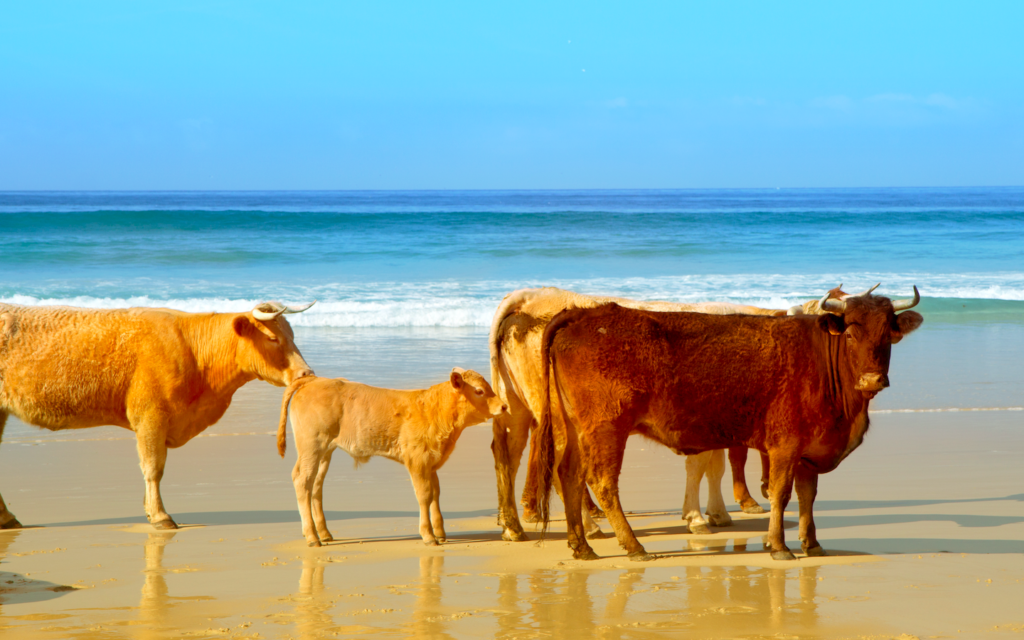
Bolonia and Zahara de los Atunes have long attracted visitors for their clear waters. Photo credit: Vira Pogromska/Shutterstock
Visitors arriving at some of Cádiz’s most popular beaches this summer are discovering that the Costa de la Luz still has the ability to surprise them. For many holidaymakers, a day by the Atlantic coast is expected to follow a familiar pattern: finding a spot on the sand, cooling off in the sea and enjoying one of Spain’s most scenic coastlines, but at two beaches in Cádiz province, visitors are experiencing something far removed from the usual summer routine.
The unexpected scenes have become one of the most talked-about moments for tourists visiting Bolonia and Zahara de los Atunes. People unfamiliar with the area often stop to watch what is happening, with many reaching for their phones to capture an encounter they never expected to have during a beach holiday. While some visitors arrive expecting one of Andalucía’s most beautiful coastal landscapes, they leave with a story that is much harder to predict. It is part of Cádiz’s authenticity that brings connection between tourism, nature and traditional rural life that has disappeared from many other European destinations.
The unusual visitors sharing Cádiz’s beaches
The reason behind the surprise is the presence of Cádiz’s famous Retinto cattle, which regularly move through the countryside and coastal areas surrounding these beaches. For locals, the sight is not unusual. The animals have been part of the landscape for generations and their movements are simply part of traditional farming practices in the area. For tourists, however, seeing them on one of Spain’s most famous beaches can be a completely unexpected experience.
Bolonia and Zahara de los Atunes are located in an area where natural spaces and rural land remain closely connected. Unlike heavily developed coastal resorts, where beaches are separated from the surrounding countryside, this part of Cádiz has maintained a landscape where livestock, dunes and coastline exist side by side. The cattle are not placed on the beach as a tourist attraction. They are following natural routes through an environment they have inhabited for generations.
Why Retinto cattle are so important to Cádiz
The reddish-brown Retinto breed is one of Andalucía’s most recognisable native cattle breeds and has a long history in southern Spain. Adapted to the hot and often dry conditions of the region, Retinto cattle are particularly suited to extensive grazing systems. Rather than being kept permanently in enclosed spaces, many herds move across large areas of countryside, feeding naturally and contributing to the maintenance of traditional landscapes. Around Cádiz, especially in areas close to La Janda and the Costa de la Luz, the breed remains closely linked to local farming culture. Generations of farmers have raised these animals, preserving a system that forms part of the province’s rural identity.
The breed is also known throughout Spain for the quality of its beef, which is considered one of Cádiz’s most valued local products. Restaurants across the region serve Retinto meat, making the cattle an important part of the province’s gastronomy as well as its countryside. For visitors, however, seeing the animals outside the context of a farm or restaurant provides a rare glimpse into a traditional way of life that continues alongside modern tourism.
Tourists are reminded to respect the animals
Although the cattle are generally calm and accustomed to their surroundings, visitors are reminded that they are still large animals and should be treated with caution. Tourists who encounter them are advised to keep a safe distance, avoid trying to touch them and never attempt to attract them closer for photographs. The animals should be allowed to move freely without interference.
This is particularly important when calves are present, as even normally relaxed animals can react differently when protecting their young. Visitors are also encouraged not to leave food behind or attempt to feed the cattle. While the experience may feel unusual and exciting, the animals are not part of a petting attraction and should remain in their natural environment.
Most encounters are peaceful, with beachgoers simply stepping aside and watching as the cattle continue along their route, but they have been known to steal front row spots, picnics and even parasoles for shade.
A glimpse of the Cádiz that tourists rarely see
Bolonia and Zahara de los Atunes have long attracted visitors for their clear waters, impressive dunes and unspoilt coastline. But the presence of Retinto cattle has added another unexpected element to the experience. For many tourists, the encounter becomes one of the highlights of their trip, not because it was planned, but because it reveals a side of Cádiz that cannot be found in a typical holiday brochure.
The beaches show a rare balance between tourism and tradition, where visitors can still experience a landscape shaped by centuries of farming and nature. For locals, the sight remains part of everyday life but for visitors, it is a reminder that some of the most memorable holiday moments are often the ones nobody expected to find.
Follow Euro Weekly News on Google News
Get breaking news from Spain, travel updates, and expat stories directly on your Google News feed.
Follow on Google NewsSign up for personalised news
Subscribe to our Euro Weekly News alerts to get the latest stories into your inbox!
By signing up, you will create a Euro Weekly News account if you don't already have one. Review our Privacy Policy for more information about our privacy practices.




Molly Grace
Molly is a British journalist and author who has lived in Spain for over 25 years. With a background in animal welfare, equestrian science, and veterinary nursing, she brings curiosity, humour, and a sharp investigative eye to her work. At Euro Weekly News, Molly explores the intersections of nature, culture, and community - drawing on her deep local knowledge and passion for stories that reflect life in Spain from the ground up.
Comments