Nearly one in five Barcelona bar owners is Chinese as Spain’s hospitality sector changes
By Harry Dennis • Published: 08 Aug 2026 • 13:51 • 3 minutes read
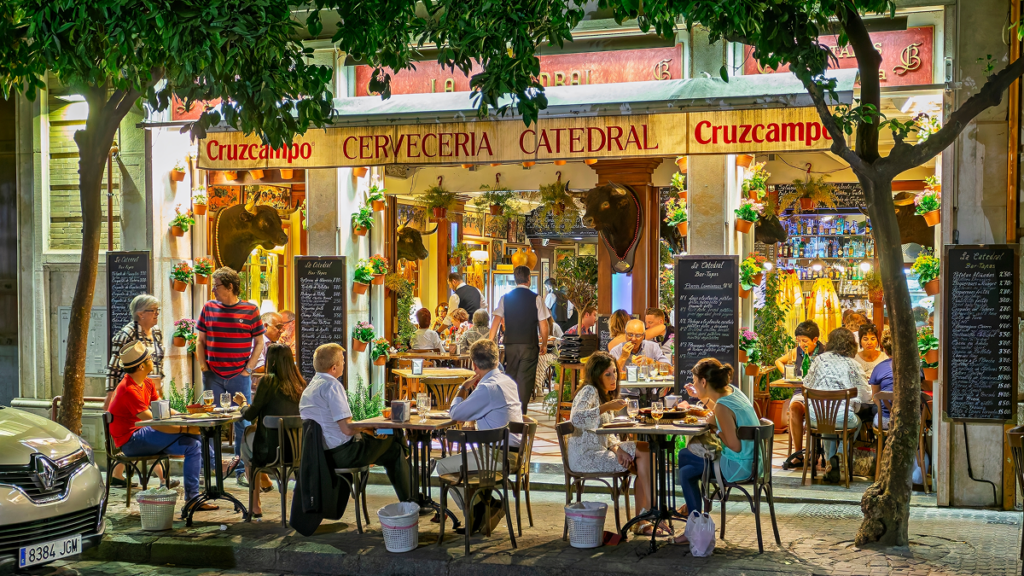
New figures reveal a quiet change behind the counter at Spain’s bars and restaurants. Credit: Nigel Jarvis / Shutterstock
The sign above a neighbourhood bar may remain unchanged, and so may the tortilla, coffee and menú del día. Behind the counter, however, Spain is undergoing a quiet handover as foreign entrepreneurs take on businesses struggling to find a successor.
Barcelona’s bars are showing the change most clearly
Barcelona’s latest restaurant-sector survey, published on July 28, offers the clearest local picture yet of the change happening in Spanish bars across the country. Of 999 establishments surveyed in 2025, 56.2 per cent had an owner of Spanish nationality. Another 8.5 per cent were owned by citizens of other European Union countries and 35.2 per cent by people from outside the EU. That puts the foreign-national share at close to 44 per cent. The Spanish figure fell 6.9 percentage points in a year, from 62.6 per cent in 2024.
Chinese nationals were by far the largest individual foreign group, accounting for 18.6 per cent of owners surveyed. That was up from 15.3 per cent a year earlier and means almost one in five Barcelona bars and restaurants in the study had a Chinese-national owner. Italians represented 4.6 per cent and Pakistanis 2 per cent.
The financial pressure behind many businesses is also visible. Some 86.9 per cent of the establishments rented their premises, with the average monthly rent reaching €1,871.90, nearly €78 more than in 2024. The council survey covered businesses that had operated for at least a year with the same activity and owner.
One in four hospitality autónomos nationwide is foreign
Barcelona is the more dramatic example, but the wider trend does extend across Spain. The Ministry of Inclusion, Social Security and Migration reported in July that foreign nationals represented 25.5 per cent of self-employed workers in hospitality in June 2026. With Spain recently recording around 329,000 hospitality autónomos, that points to roughly 84,000 foreign self-employed workers in the sector.
Their presence is even greater among employees. Foreign citizens accounted for 31.5 per cent of salaried hospitality workers, compared with 15.4 per cent of Social Security contributors across the economy as a whole.
Spain had a record 525,478 foreign autónomos in June, 7.9 per cent more than a year earlier. And at the end of 2025, the Union of Professionals and Self-Employed Workers (UPTA) counted 69,040 Chinese autónomos across Spain, the largest total among nationalities from outside the EU. However, that figure does cover every industry, not how many specifically own bars and restaurants.
Why Chinese ownership does not necessarily mean Chinese food
The move from running Chinese restaurants into taking over conventional Spanish cafés and bars is not new. Research by Joaquín Beltrán and Amelia Sáiz of the Autonomous University of Barcelona documented the shift more than a decade ago, describing how Chinese entrepreneurs diversified into businesses serving a mainstream local clientele. This helps explain why the handover can be almost invisible from the outside. Many Chinese owned bars and restaurants maintain their old name, regular customers and familiar menu of coffees, local beers, tapas of tortilla and a classic menú del día, while the person holding the keys changes.
UPTA argues that foreign entrepreneurship is increasingly filling gaps left as older self-employed workers retire without a successor. In 2024, the organisation estimated that 600,000 autónomos would leave their businesses over the following five years because of retirement and lack of generational replacement, particularly in services, commerce and hospitality.
Spain’s next generation of bar owners is already emerging
The change behind Barcelona’s counters is likely to become increasingly visible elsewhere in Spain. A large generation of established autónomos is approaching retirement, and the lack of interest from younger generations due to long hours, rising costs and tight margins can make hospitality businesses difficult to pass on.
At the same time, the number of foreign autónomos in Spain is rising rapidly. Their total increased by 7.9 per cent in the year to June 2026, and hospitality is already one of the sectors most dependent on their contribution. For Spain’s bars and restaurants, this changing of the guard does not necessarily mean locals will be losing the businesses they recognise and love. Many new owners will still preserve an existing bar’s name, staff, regular customers and familiar menus, providing continuity where a lack of successors might otherwise leave the shutters down.
Barcelona may be further along in that transition, but the national figures point in the same direction. If the current momentum continues, foreign entrepreneurs will play an increasingly important role in deciding which neighbourhood bars survive, who runs them and how Spain’s hospitality industry evolves.
Follow Euro Weekly News on Google News
Get breaking news from Spain, travel updates, and expat stories directly on your Google News feed.
Follow on Google NewsSign up for personalised news
Subscribe to our Euro Weekly News alerts to get the latest stories into your inbox!
By signing up, you will create a Euro Weekly News account if you don't already have one. Review our Privacy Policy for more information about our privacy practices.



Harry Dennis
Born in the UK and raised on the Cádiz coast, Harry brings his background in design, music, and photography to his writing for Euro Weekly News, sharing stories that celebrate culture and lifestyle across Spain and beyond.
Comments