Spain’s abandoned dog crisis grows as traffickers cash in on cheap imported puppies
By Molly Grace • Published: 10 Aug 2026 • 22:48 • 4 minutes read
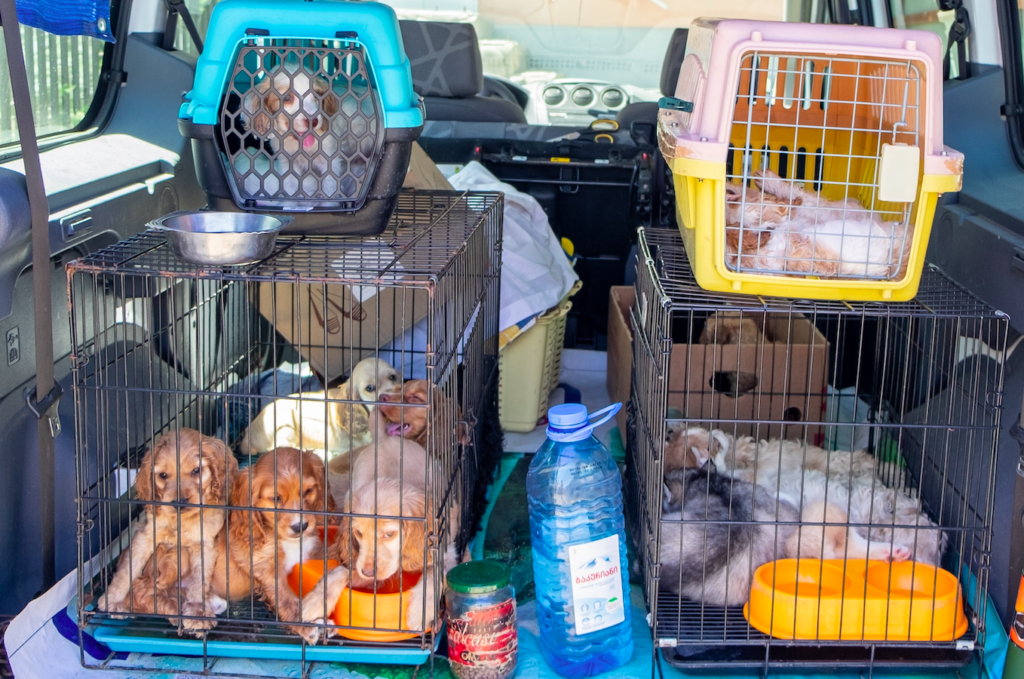
Spain is struggling to find homes for animals already in shelters. Photo credit: vaxo/Shutterstock
Spain is already struggling to cope with hundreds of thousands of dogs and cats entering shelters every year. Now, police are warning that more puppies are being brought into the country illegally for profit, with some arriving without proper health controls and potentially carrying diseases.
The Mossos d’Esquadra have detected a rise in animal trafficking through the AP-7, with dogs being transported from Eastern Europe and sold on in Spain for vastly more than they cost to acquire. For the animals, the consequences can be serious. For the people who unknowingly buy them, a new puppy can quickly become a major veterinary worry, while the trade continues to add pressure to a country already struggling with abandoned and unwanted animals.
Puppies crossing Spain for profit
The AP-7 has become a key route for the movement of animals into Spain, according to the Mossos. Dogs are reportedly being brought from Eastern European countries, with breeds including Chihuahuas, dachshunds, Labradors and Golden Retrievers among those identified, for traffickers, the financial incentive can be enormous.
A dog bought for around €100 can reportedly be sold in Spain for as much as €2,000, creating potential profits many times higher than the original purchase price. That makes puppies a lucrative commodity, particularly when animals can be moved across borders and sold to unsuspecting buyers. But the journey can carry a much greater cost for the animals, and potentially for the families who take them home.
The hidden health risk for buyers
Mossos environmental officers have warned that some animals arrive without the required sanitary controls. That means a puppy can appear perfectly healthy when it is offered for sale, only for an illness to emerge after it has reached its new home. For a family that has fallen in love with a puppy and paid a substantial amount of money for it, discovering that the animal is sick can mean distress, veterinary bills and, in the most serious cases, the possibility of losing a much-loved new pet.
The health risk is also one reason authorities are concerned about animals being moved outside the proper controls. International animal transport is not automatically illegal. Legitimate breeders, businesses and owners regularly move animals across European borders under established rules, the problem comes when those safeguards are bypassed.
Spain already has an enormous shelter problem
The renewed trafficking warning comes against a difficult backdrop for Spain’s animal shelters. Fundación Affinity recorded a shocking 285,720 dogs and cats entering Spanish shelters during 2025, equivalent to around 783 animals every day. Dogs accounted for 169,268 of those arrivals. The organisation describes abandonment and loss as an unresolved welfare problem in Spain, with shelters and municipal services facing the consequences.
The figures do not mean that all of these animals were abandoned, the study includes animals that were lost as well as those abandoned, but they demonstrate the scale of the pressure facing Spain’s protection system. More than 285,000 animals entering shelters in a single year means thousands of dogs and cats need somewhere to go, veterinary treatment, food and, ultimately, a new home.
Against that backdrop, the existence of a commercial trade bringing additional dogs into the country for profit creates an uncomfortable contrast. Spain is struggling to find homes for animals already here while traffickers are exploiting demand for particular breeds.
Why the trade continues
The economics help explain why the problem is so difficult to eradicate. The demand for specific breeds creates a market in which buyers may be prepared to pay considerably more for a puppy than the person supplying it originally paid. That gap creates an incentive to move animals quickly and cheaply, the danger is that welfare can become secondary to profit.
Animals may be transported long distances, and puppies that have not received the appropriate veterinary checks can enter the Spanish market without buyers knowing exactly where they came from or what health risks they may carry. For prospective owners, the attraction of a particular breed or a seemingly good price can make it difficult to recognise the warning signs.
The warning for anyone buying a puppy
The Mossos investigation should therefore serve as a warning to people looking for a dog in Spain. A low price is not necessarily a bargain, particularly when a puppy’s history, health checks or origin cannot be properly established. Buyers should be able to establish where an animal was born, see appropriate documentation and verify its identification and veterinary history before handing over money. That matters not only for the individual puppy but for the wider animal-welfare system.
Fundación Affinity’s latest figures show that the abandonment problem remains deeply entrenched. In 2025, only a proportion of the animals entering shelters were puppies, while the majority of dogs were adults, demonstrating that the pressure does not end once an animal has been sold or adopted. The message from the AP-7 is therefore bigger than a police warning about one trafficking route.
For Spain’s animal lovers, the real concern is what happens when a puppy bought for profit becomes a sick animal, an expensive veterinary case or, eventually, another dog needing a place in an already stretched shelter system. A cheap puppy can come with a very high price, for the animal, its new family and Spain’s already overloaded animal-welfare network.
Follow Euro Weekly News on Google News
Get breaking news from Spain, travel updates, and expat stories directly on your Google News feed.
Follow on Google NewsSign up for personalised news
Subscribe to our Euro Weekly News alerts to get the latest stories into your inbox!
By signing up, you will create a Euro Weekly News account if you don't already have one. Review our Privacy Policy for more information about our privacy practices.





Molly Grace
Molly is a British journalist and author who has lived in Spain for over 25 years. With a background in animal welfare, equestrian science, and veterinary nursing, she brings curiosity, humour, and a sharp investigative eye to her work. At Euro Weekly News, Molly explores the intersections of nature, culture, and community - drawing on her deep local knowledge and passion for stories that reflect life in Spain from the ground up.
Comments