Jellyfish strike France’s biggest nuclear plant again and shut down three reactors
By Harry Dennis • Published: 12 Aug 2026 • 17:11 • 2 minutes read
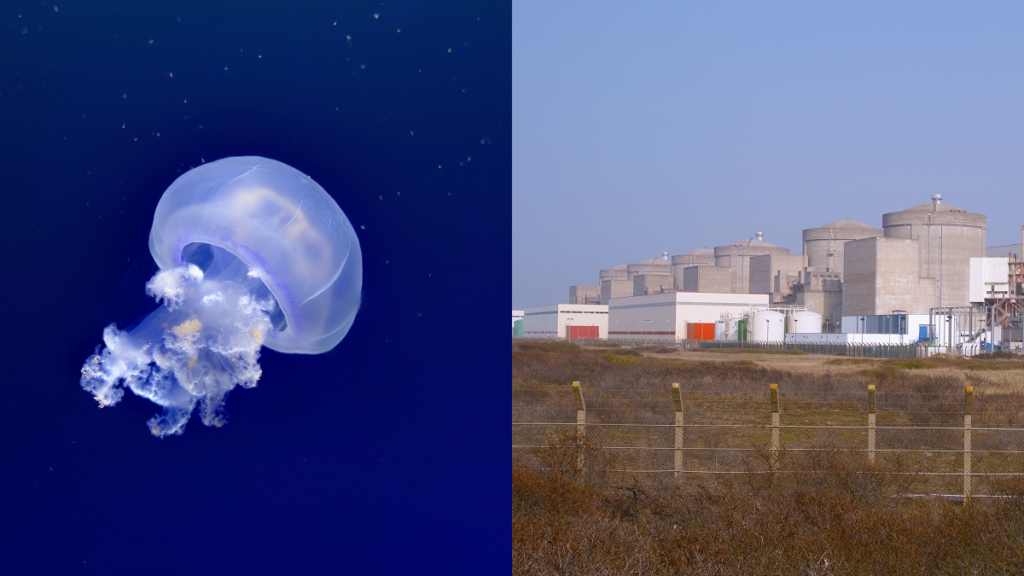
A swarm of jellyfish shut down reactors at Gravelines, the largest nuclear power plant in Western Europe, for the second August running. Credit: CVancoillie / Igor Karpenko 64 / Shutterstock
A swarm of jellyfish has knocked out three reactors at Europe’s largest nuclear plant, and the strangest part is not that it happened but that it happened almost exactly a year to the day after the last time it did.
Three reactors down, one still running at full power
On Monday August 10, operator EDF said swarms of jellyfish had clogged the seawater filters that cool Gravelines, the plant near Dunkirk that draws its water from a canal linked to the North Sea. Three of the six 900-megawatt reactors shut down automatically, a fourth had its output halved, and a sixth was already offline for scheduled maintenance. Only one reactor kept running at full capacity.
“This situation has no impact on the safety of the facilities, the safety of personnel, or the environment,” EDF said in a statement. The company added that jellyfish have little ability to swim against a current, which is why so many were carried straight into the cooling system.
The same plant, almost the same date, two years running
This is not the first time Gravelines has been beaten by jellyfish. Almost exactly a year earlier, on August 10 2025, a swarm forced every reactor at the plant offline, taking engineers more than a week to fully reconnect the site to the grid, according to French newspaper Le Monde.
EDF spent hundreds of thousands of euros after that shutdown on preventive measures, including boats that trawl the water around the plant around the clock and thermal cameras to track incoming blooms. This time, reports suggest the swarm grew too fast for those defences to keep up.
Why jellyfish keep finding their way into a nuclear plant
Gravelines draws its cooling water from a canal connected to the North Sea, where jellyfish are a normal presence in summer. Warmer sea temperatures extend their breeding season and speed up the growth of jellyfish polyps, the dormant, bottom-dwelling stage that can suddenly bud into a swarm.
Marine biologists also point to overfishing, which has stripped the sea of natural predators including tuna and turtles, and to plastic pollution, both of which tip marine ecosystems further in jellyfish’s favour.
France’s nuclear fleet is already stretched by the heat
The Gravelines shutdown wiped out about 3.2 gigawatts of capacity at the height of a summer heatwave. It came a day after France recorded a nuclear shortfall of 15.6 per cent, the largest ever calculated from EDF’s own data, as other reactors were throttled back because nearby rivers ran too warm to safely cool them.
France normally exports more electricity than it imports, drawing more than 70 per cent of its own supply from nuclear power. This summer, extreme heat has repeatedly pushed the country the other way, forcing it to lean more heavily on gas and imported power to make up the shortfall.
Gravelines is not the only plant jellyfish seem to have it in for
Jellyfish have disrupted nuclear cooling systems elsewhere before, including a three-day shutdown at Sweden’s Oskarshamn plant in 2013 and two separate incidents at Scotland’s Torness plant, in 2011 and 2021. Energy analysts increasingly regard the blooms as a recurring, underappreciated risk for coastal power stations as seas continue to warm.
EDF has not said how long it will take to bring Gravelines back to full output. Last year’s clean-up offers a clue though: the plant needed more than a week before every reactor was reconnected to the grid.
Follow Euro Weekly News on Google News
Get breaking news from Spain, travel updates, and expat stories directly on your Google News feed.
Follow on Google NewsSign up for personalised news
Subscribe to our Euro Weekly News alerts to get the latest stories into your inbox!
By signing up, you will create a Euro Weekly News account if you don't already have one. Review our Privacy Policy for more information about our privacy practices.



Harry Dennis
Born in the UK and raised on the Cádiz coast, Harry brings his background in design, music, and photography to his writing for Euro Weekly News, sharing stories that celebrate culture and lifestyle across Spain and beyond.
Comments