Spain recalls additional model of eclipse glasses over serious eye damage risk
By Natascha Rivera • Published: 12 Aug 2026 • 16:18 • 3 minutes read
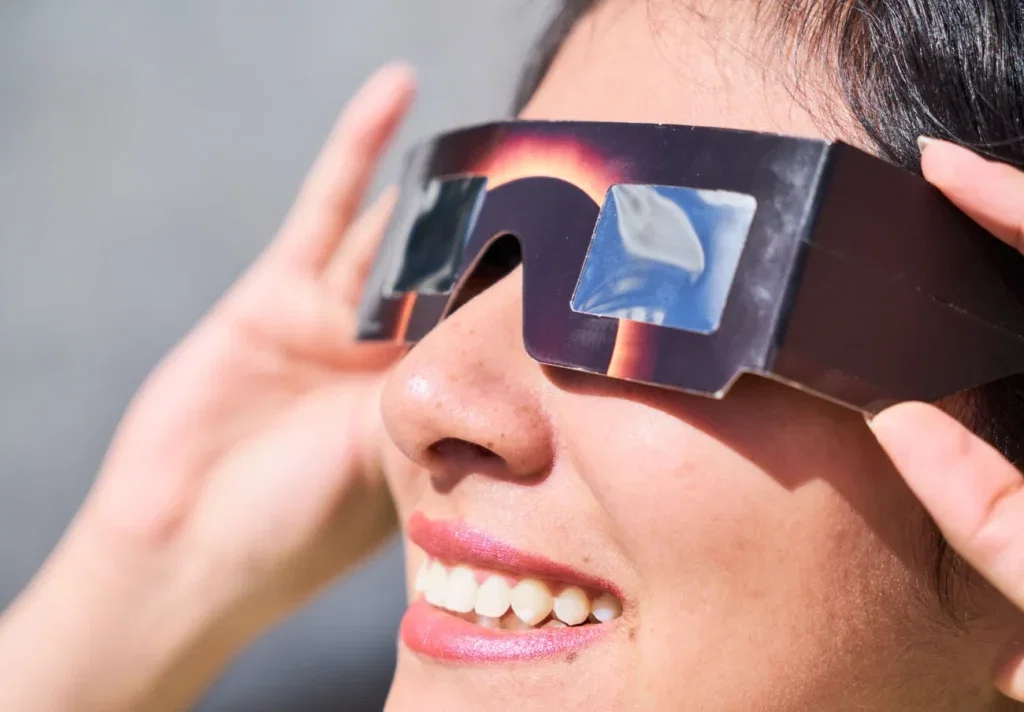
Seven solar eclipse glasses models recalled in Spain over safety. Photo Credit: FACUA
For those who have already gone out to get their eclipse glasses in anticipation of the total solar eclipse to take place today, August 12, it may be a good idea to double check the model before heading to a lookout point: an additional model of eclipse glasses have been recalled in several autonomous communities in Spain due to serious risk of public eye health, according to consumer authorities. This brings the total up to seven models of eclipse glasses that have been recalled.
The latest recall: Mó brand eclipse glasses by Multiópticas
Initially, Spanish television broadcasting company RTVE had ordered the recall of six models from the brands Lionstar, ECP Eye Care Professional, Pelispan, Homanaje, Orro and Opticalia. Following a notification from authorities, the Mó brand from Multiópticas has now been added to the list of recalled eclipse glasses models.
In particular, the recalled model is Mó brand solar eclipse glasses, model 2508-RS003, sold by Multiópticas. The recall of this model has been notified by the Balearic Islands Government’s Directorate General for Benefits, Pharmacy, and Consumer Affairs.
The recalled eclipse glasses models
It joins the other six models currently being recalled, taken off shelves, and banned from being sold:
- Lionstar, Model LSP1
- ECP Eye Care Professional (model not specified)
- Pelispan (model not specified)
- Homanaje, Model QW-50Z1
- Orro, Model O37-R, lot 2603-01
- Opticalia (model not specified)
The real danger: the human reaction hazard
To be specific, according to the National Consumer Alert Network, the danger lies in the instinctual human reaction users can get once they put on the glasses. While solar eclipse glasses are designed to be extremely dark – blocking out 99.9999 per cent of all visible light, along with harmful UV and infrared radiation – they are still meant to allow the user to see the sun clearly and safely when they are on.
The recalled glasses, on the other hand, produce complete and total obscurity. This may lead users to instinctually and temporarily remove them while trying to locate the sun, which, even for a moment, is enough time to leave the unprotected eye permanently damaged, causing chemical or thermal damage to the retina.
In other words, even with the glasses on, the sun should still be clearly visible, without needing to remove or adjust the glasses.
How to safely watch the solar eclipse if your glasses have been recalled
After the recall, these glasses will be prohibited from being sold and removed from shelves effective immediately. If you find yourself without certified glasses, or realise yours are among the recalled models, it is important to remember that viewing a solar eclipse directly with the naked eye, through standard sunglasses, or improvised filters like camera lenses and binocular optics can cause irreversible retinal damage.
However, you can still experience the event safely using DIY techniques. The simplest method is to punch a small, clean hole in a piece of card or paper and hold it up with your back to the sun, allowing the sunlight to project an image of the crescent sun onto another surface, like a paper plate. Natural pinholes created through tree leaves or the small gaps in a kitchen colander, for instance, will also project crisp, safe images of the eclipse onto the floor, letting you observe the phenomenon in real time without risking your eyesight.
For a quick and effortless alternative, head to your kitchen pantry. Holding up a simple cracker or a piece of crispbread with tiny holes, or even crossing your fingers to form a small grid, will cast multiple crescent reflections onto the ground, letting you safely watch the shadow shift in real time.
It is also worth checking if your local town hall is providing eclipse glasses for residents and visitors to enjoy this rare spatial phenomenon.
Follow Euro Weekly News on Google News
Get breaking news from Spain, travel updates, and expat stories directly on your Google News feed.
Follow on Google NewsSign up for personalised news
Subscribe to our Euro Weekly News alerts to get the latest stories into your inbox!
By signing up, you will create a Euro Weekly News account if you don't already have one. Review our Privacy Policy for more information about our privacy practices.


Natascha Rivera
Natascha is a Dominican writer based in Spain with a background in audiovisual and marketing communication. A lifelong reader and passionate storyteller, she brings a creative edge to her work at Euro Weekly News. Her multicultural perspective informs her coverage of lifestyle and community stories, offering fresh angles and relatable storytelling that connects with a diverse audience.
Comments