Spain’s eclipse traffic nightmare begins as kilometre-long queues hit Madrid and Barcelona
By Molly Grace • Published: 12 Aug 2026 • 18:34 • 3 minutes read
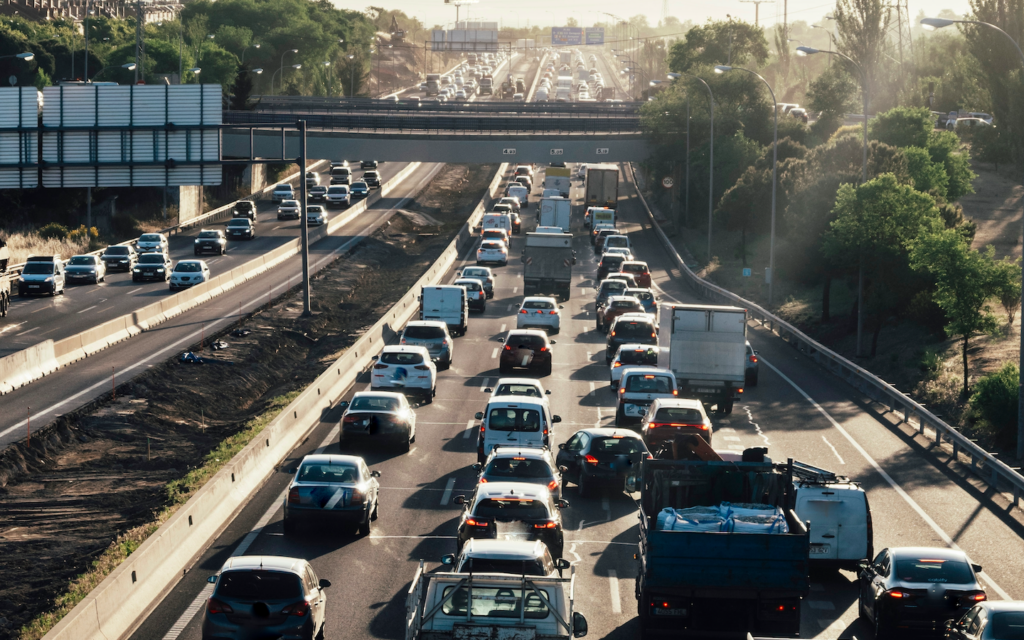
The growing congestion is an early warning for anyone planning to drive to an observation point. Photo credit: Jose Luis Carrascosa/Shutterstock
Drivers heading out to watch the total solar eclipse are already facing major delays, with kilometre-long queues forming on the main roads leaving Madrid and Barcelona several hours before totality. What was expected to be a difficult traffic day is now becoming a reality for motorists trying to reach viewing locations across Spain.
The first major problems were being reported from around 4:30pm, when traffic was already building on several routes out of Madrid. With people travelling towards areas where the eclipse will be total, motorists setting off later could find that journeys take considerably longer than normal.
Madrid roads already under pressure
For drivers in the capital, congestion has been reported on the A-1 around the Jarama Circuit and Venturada, the A-3 near Rivas-Vaciamadrid, the A-6 around El Plantío and the M-607 near Tres Cantos. An accident on the A-1 at Venturada has added to the disruption on one of the key routes out of Madrid.
The queues are forming as people leave the capital for locations offering better views of the eclipse. Anyone still deciding whether to drive should be aware that the traffic is already moving well beyond the usual rush-hour pattern, with delays affecting several of the main escape routes from Madrid.
Barcelona queues stretch for kilometres
The situation is also causing problems around Barcelona, where the AP-7 is seeing particularly heavy traffic as people head away from the city. Long stretches of congestion have been reported between Martorell and Subirats, while other sections of the AP-7 and nearby roads are also experiencing delays.
The pressure is particularly significant because the queues were already forming around three hours before the eclipse. That leaves drivers facing a difficult choice: continue towards their planned viewing location and risk longer delays, or reconsider their journey before the roads become even busier.
Traffic spreads across Spain
The disruption is not limited to Madrid and Barcelona. Live traffic monitoring is showing increased congestion on routes leading towards the eclipse’s path of totality, with motorists travelling towards northern and eastern parts of Spain. The east is particularly busy, with significant problems reported on the AP-7 in Catalonia and further south on roads through Valencia and Alicante.
These routes are carrying both ordinary holiday traffic and people travelling specifically to find a good position for the eclipse. The pressure is also being felt in Castilla y León, where routes towards the north are dealing with increased traffic. Across the country, the pattern is broadly the same: vehicles are leaving major population centres and heading towards places where the brief period of totality can be seen.
The journey home could be another problem
The traffic situation could become even more difficult after the eclipse. Thousands of motorists who have travelled to viewing locations will eventually need to make the same journey back, creating the possibility of another wave of congestion once totality ends.
The authorities have warned that the return journey could prove particularly difficult, especially on smaller roads serving popular observation points. Drivers who do not need to get home immediately may therefore be better off waiting rather than joining the rush as soon as the eclipse finishes.
Drivers face strict safety rules
Authorities are also warning motorists not to improvise their own viewing spots. Stopping on a motorway, road or hard shoulder to watch the eclipse is prohibited. Drivers must leave the traffic route completely and use a permitted parking or viewing area. Anyone who is already driving when the eclipse begins should concentrate on the road rather than attempting to watch or photograph it. The sudden change in light can become a distraction, making the combination of heavy traffic and reduced visibility particularly demanding.
The DGT’s live traffic information is being updated as conditions change, while traffic monitoring is also showing congestion across the country’s main routes. For drivers still planning to leave Madrid, Barcelona or another major city, today’s traffic is a clear indication of what is happening on the ground. The eclipse may last only minutes, but the journey to see it, and the trip home afterwards, could take hours
Follow Euro Weekly News on Google News
Get breaking news from Spain, travel updates, and expat stories directly on your Google News feed.
Follow on Google NewsSign up for personalised news
Subscribe to our Euro Weekly News alerts to get the latest stories into your inbox!
By signing up, you will create a Euro Weekly News account if you don't already have one. Review our Privacy Policy for more information about our privacy practices.


Molly Grace
Molly is a British journalist and author who has lived in Spain for over 25 years. With a background in animal welfare, equestrian science, and veterinary nursing, she brings curiosity, humour, and a sharp investigative eye to her work. At Euro Weekly News, Molly explores the intersections of nature, culture, and community - drawing on her deep local knowledge and passion for stories that reflect life in Spain from the ground up.
Comments