Why Lidl, Primark and El Corte Inglés still won’t take this form of payment
By Harry Dennis • Published: 18 Aug 2026 • 11:17 • 2 minutes read
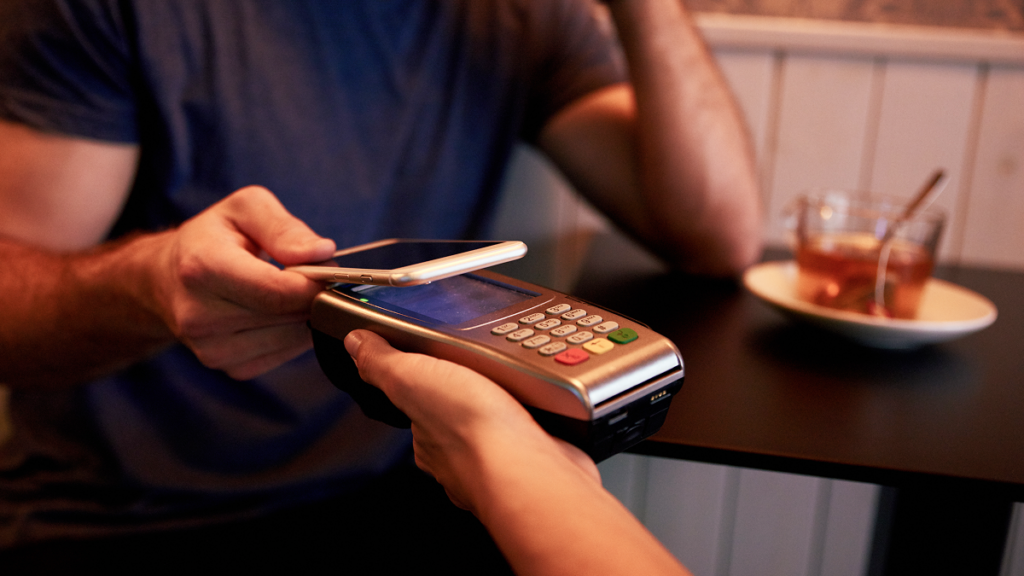
Paying by phone at the till is becoming more common in Spain, but not every shop accepts it yet. Credit: Pablo Calvog / Shutterstock
More than 1.6 million payment terminals across Spain can already accept Bizum, but ask to use it in Lidl, Primark or El Corte Inglés and the answer is still no. Despite headlines declaring shoppers now have an official ‘right’ to pay this way in any shop, most of the country’s best-known chains haven’t set a date to switch it on.
Primark, Fnac and Lidl all say the same thing: ‘not yet’
The well-known French culture and technology retailer Fnac told Spanish media that it was still waiting for a “new order” before enabling Bizum at its tills. Primark gave a slightly more bold statement: it has “no implementation date planned”.
DIA, Lidl and El Corte Inglés gave similarly vague replies when asked, while reporters who visited bars and cafés found none accepting it either. And this is despite Bizum Pay, the bank feature that lets a phone tap a card machine instead of a physical card, reaching around 1.6 million compatible terminals since its wider rollout began on Monday July 14. The expansion and infrastructure now exists in most Spanish shops. However, the willingness to switch it on among some retailers is still in short supply.
The ‘official right’ doesn’t match Spanish law
Several Spanish headlines this week described paying by Bizum in shops as a new official right, with some suggesting shoppers could complain if a till turned them down. The Comunidad de Madrid’s consumer affairs office says the opposite: no law obliges any shop to accept Bizum, and each business decides for itself which payment methods to offer, in the same way it isn’t required to take American Express or a cheque.
If a shop does offer Bizum Pay, it cannot charge extra for using it and must be upfront about any conditions attached. But it remains just as free not to offer it at all, which leaves shoppers with no formal complaint to make if a till says no.
Cash still wins at the till
Part of the reluctance comes down to how people in Spain actually pay. Bank of Spain figures show 57 per cent of in-person purchases are still made in cash, 27 per cent by card and just 15 per cent by phone, a share that has grown only slowly from 11 per cent last year.
Most phone payments already go through Apple Pay or Google Pay, both of which work effortlessly with cards shoppers already carry. One shopkeeper in Palencia summed up the problem saying “with a card already loaded onto a phone, nobody pays with Bizum.”
Big chains have their own reasons to wait
Retail groups including Mercadona, Carrefour and Ikea have told banks they are studying the option through Spain’s supermarket and retail associations, but none have committed to a date. Switching on a new payment method means updating point-of-sale software across hundreds of stores and coordinating with banks and payment processors, work that several chains say is still ongoing months after the technology first became available.
A wider rollout is now pencilled in for September
Bizum’s member banks had originally hoped to reach most customers by early summer, but the general rollout was delayed after some of the roughly 40 banks in Spain’s Bizum network had not finished the development work needed. A general launch, in which most Bizum-affiliated banks and shops with compatible terminals could offer the service to every customer, is now expected in September or October. Until then, anyone hoping to tap their phone at a Spanish till will most likely have to rely on their trusty card, or that ‘old thing’ made out of paper called “cash”.
Follow Euro Weekly News on Google News
Get breaking news from Spain, travel updates, and expat stories directly on your Google News feed.
Follow on Google NewsSign up for personalised news
Subscribe to our Euro Weekly News alerts to get the latest stories into your inbox!
By signing up, you will create a Euro Weekly News account if you don't already have one. Review our Privacy Policy for more information about our privacy practices.



Harry Dennis
Born in the UK and raised on the Cádiz coast, Harry brings his background in design, music, and photography to his writing for Euro Weekly News, sharing stories that celebrate culture and lifestyle across Spain and beyond.
Comments