Nine lives saved from above, eyes in the sky are keeping Fuengirola’s swimmers safe
By Lucy Ramnought • Published: 18 Aug 2026 • 12:24 • 2 minutes read
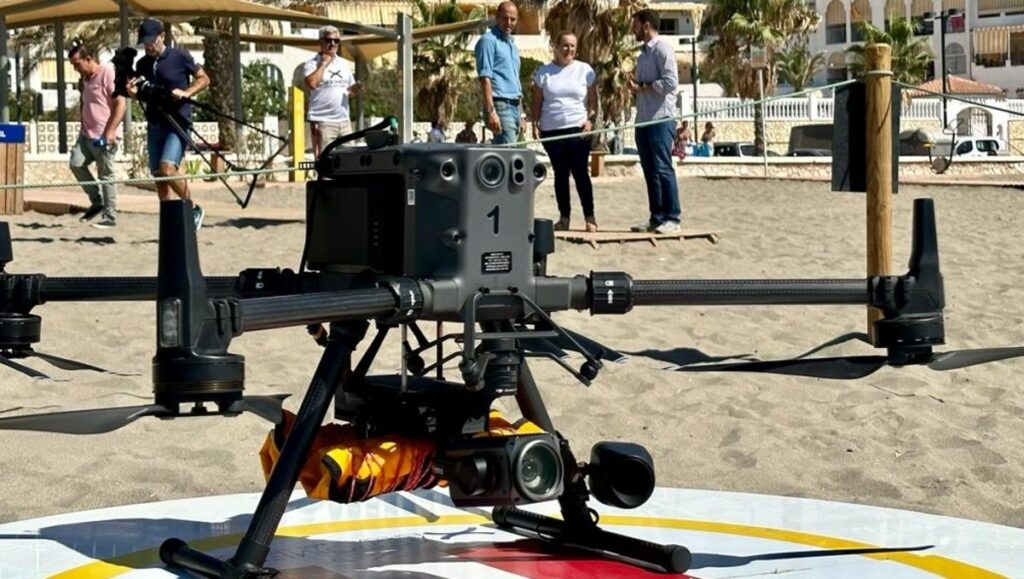
Eyes in the sky Credit:FuengirolaTH
Sets of eyes that never lose a staring contest have been watching over one of Spain’s busiest stretches of coastline this summer, and the numbers behind its work are impressive.
Drones clock up hundreds of hours over Fuengirola’s coast
Four drones stationed across Fuengirola’s coastline racked up 384 flying hours and carried out 2,653 individual services between June and July, according to town hall figures. More than 90 per cent of that work involved surveillance and prevention duties, keeping watch over bathers on the Costa del Sol resort’s beaches.
Nine rescue or assistance missions were completed by the aerial squad during the two months, with operators able to spot swimmers in difficulty within seconds and drop lifesaving flotation devices from above when needed, dramatically cutting the time it takes for help to arrive.
Mayor Ana Mula, visiting one of the drone control points with beaches councillor Jose Sanchez, pointed out that the popular town became a pioneer eight years ago when it began using drones to assist its lifeguard service. Plenty of other Spanish resorts have since copied the model, yet she insisted Fuengirola remains a reference point for a system that proves invaluable for saving lives at sea.
Specialist firm covers four points on the coast
Operator Aeromedia has run the drone service from four points along Fuengirola’s shoreline since June 1, with roughly 85 per cent of jobs linked to routine surveillance and control of swimming zones and around 10 per cent classed as preventive missions. Close coordination with lifeguards allows water rescue teams, boats and jet skis to be scrambled quickly whenever an operator flags a problem.
Lifeguards handle thousands of incidents
Lifeguard teams, on duty daily from 11am to 8pm across the same period, dealt with 686 medical assistance calls, 3,390 preventive actions, 46 water interventions and 2,845 accessibility services across the resort’s beaches. Jellyfish stings accounted for 148 of those medical cases, and minor wounds made up 469, plus a smaller number linked to weaver fish stings, heatstroke and burns.
Preventive work covered everything from warning bathers away from rip currents to flagging red-flag conditions, boats straying into swimming zones and even lost children on the sand. Of the 46 water interventions logged, 31 were full rescues.
Local officials credited the wider 55-strong lifeguard team, plus Local Police officers and 14 beach watchers, for last year’s national recognition as Spain’s best lifeguard service, an award tied to the Blue Flag scheme. Mula thanked staff directly, calling their work “essential” to giving residents and holidaymakers peace of mind on the sand this summer.
Follow Euro Weekly News on Google News
Get breaking news from Spain, travel updates, and expat stories directly on your Google News feed.
Follow on Google NewsSign up for personalised news
Subscribe to our Euro Weekly News alerts to get the latest stories into your inbox!
By signing up, you will create a Euro Weekly News account if you don't already have one. Review our Privacy Policy for more information about our privacy practices.



Lucy Ramnought
Lucy Ramnought is a local news writer and mother of 4 from the UK who has lived in the Costa Del Sol for just over 4 years. With a background in content writing and social media for various companies, and with vast experience in PA and project management, Lucy is committed to producing accurate, engaging and reliable stories to her work at Euro Weekly News.
Comments