700 flee as suspected arson wildfire spreads from Cáceres into Salamanca
By Molly Grace • Published: 19 Aug 2026 • 23:52 • 3 minutes read
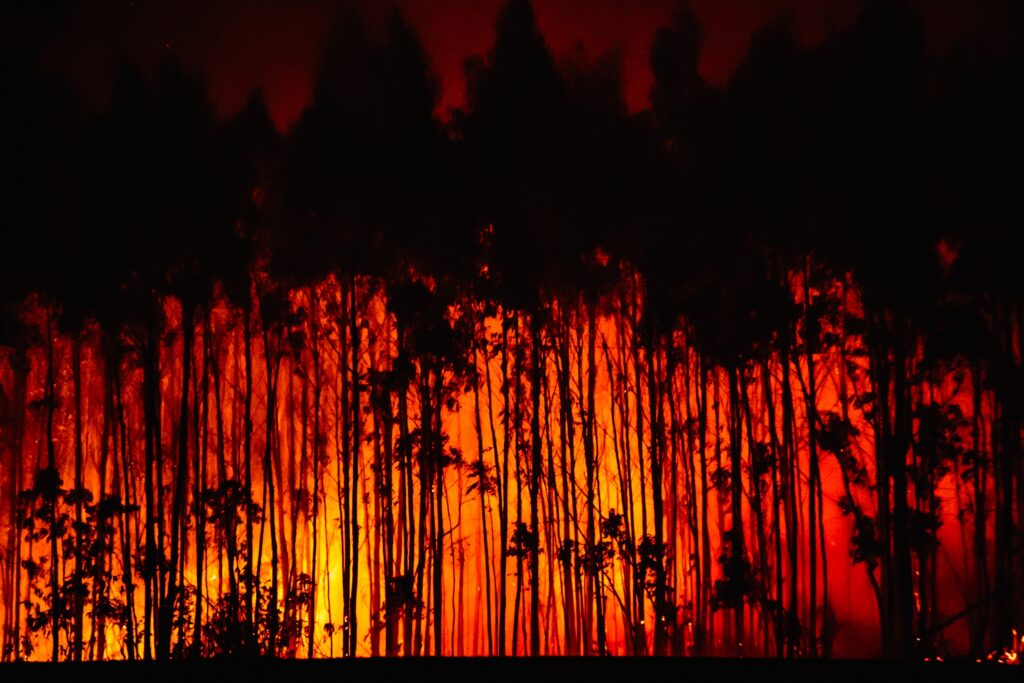
Around 2,200 hectares have been affected. Photo credit: Alberto Menendez Cervero/Shutterstock
A fast-moving wildfire is putting homes and communities in western Spain at risk, with residents already forced to leave their properties and fears growing that more people could be displaced as the flames push towards Salamanca. The blaze has ripped through countryside in Cáceres since Tuesday afternoon, with around 2,200 hectares now affected.
The most dangerous part of the fire is moving towards Cerezal and Nuñomoral, while another front has crossed the provincial boundary into Salamanca. Around 700 people have already had to leave ten small settlements. They cannot yet return, as firefighters have warned that the fire could change behaviour rapidly during the hottest and windiest part of the day.
More people could be forced out
Residents of Nuñomoral are facing the possibility of further restrictions as the fire approaches the municipality. Rather than ordering an evacuation, authorities have told people there to remain indoors, close their windows and doors and follow emergency instructions.
The town has around 1,200 inhabitants, meaning any deterioration could affect a substantial number of people. Those already evacuated include residents of Horcajo, Avellanar, Erías, Castillo, El Gasco, Martilandrán, Aldehuela, La Fragosa, Robledo and Cerezal. People have been taken to temporary accommodation, with 230 currently registered at the student residence in Caminomisco. A further 57 places remain available there.
A centre for people with severe disabilities has also been cleared. Thirty-eight residents of the Cottolengo centre were moved to safer accommodation after the fire threatened the area. The authorities have kept all the evacuation orders in place because they cannot guarantee that the affected communities are safe enough for residents to return.
The fire has reached Salamanca
The blaze began at around 2.30pm on Tuesday near Robledo, in the municipality of Pinofranqueado, in Cáceres. It initially spread through the Las Hurdes area before advancing towards the neighbouring province. By Wednesday, the flames had crossed into Salamanca around Vegas de Domingo Rey, in the municipality of Agallas.
That has brought firefighting teams from Castilla y León into the response and created a new concern for communities on the Salamanca side of the border. For readers unfamiliar with the area, Las Hurdes is a mountainous region in northern Cáceres, close to the Salamanca border. The fire’s movement means what began as a local emergency in Extremadura is now affecting a second province.
2,200 hectares already affected
Around 2,200 hectares have been affected, predominantly pine forest, although the figure remains an estimate while the fire continues to develop. The greatest concern is not simply the amount of land already burned, but what could happen if the fire reaches the Valle de los Tejos. Authorities have warned that the large amount of vegetation in the area could allow the flames to intensify rapidly.
The fire has already shown unusually aggressive behaviour. It has generated pyrocumulus clouds, created by the enormous amount of heat released by the flames, which can produce their own atmospheric conditions. That can make the direction and speed of a wildfire much harder to predict. Burning embers, known as pavesas, have also been carried away from the main fronts and caused fresh outbreaks on the western side of the fire.
Difficult conditions are hampering firefighters
High temperatures, low humidity and strong winds are adding to the difficulty. The terrain is another major obstacle. Parts of the fire are too steep and inaccessible for crews to work directly on foot or with heavy machinery. The head of the fire towards Cerezal and Nuñomoral is currently causing the greatest concern because of the amount of combustible vegetation and the difficulty of reaching it.
Crews have had more success in other areas. The western flank towards Horcajo has been closed, while sections around El Gasco, La Fragosa and Martilandrán have shown slower fire behaviour. More than 240 emergency personnel and 24 aircraft are involved in the operation, with the Unidad Militar de Emergencias, wildfire teams and crews from Castilla y León among those working to contain the blaze.
Fire is believed to have been deliberate
Investigators are also looking into whether the fire was deliberately started. Extremadura’s regional government has put the likelihood of intentional ignition at 99 per cent. The suspected starting point is beside a road between Robledo and Avellanar, although the investigation has not yet formally established the cause. Three homes in Avellanar have also been damaged by the fire.
For residents who have already fled, the key question is when they can safely return. At present, officials have made clear that there is not enough certainty to lift the evacuation orders. With the fire now extending into Salamanca and the most difficult front still threatening communities in Cáceres, the possibility of further evacuations remains if the flames intensify.
Follow Euro Weekly News on Google News
Get breaking news from Spain, travel updates, and expat stories directly on your Google News feed.
Follow on Google NewsSign up for personalised news
Subscribe to our Euro Weekly News alerts to get the latest stories into your inbox!
By signing up, you will create a Euro Weekly News account if you don't already have one. Review our Privacy Policy for more information about our privacy practices.





Molly Grace
Molly is a British journalist and author who has lived in Spain for over 25 years. With a background in animal welfare, equestrian science, and veterinary nursing, she brings curiosity, humour, and a sharp investigative eye to her work. At Euro Weekly News, Molly explores the intersections of nature, culture, and community - drawing on her deep local knowledge and passion for stories that reflect life in Spain from the ground up.
Comments