British woman stranded in Spain after UK eVisa system fails to recognise her
By Molly Grace • Published: 24 Aug 2026 • 22:31 • 3 minutes read
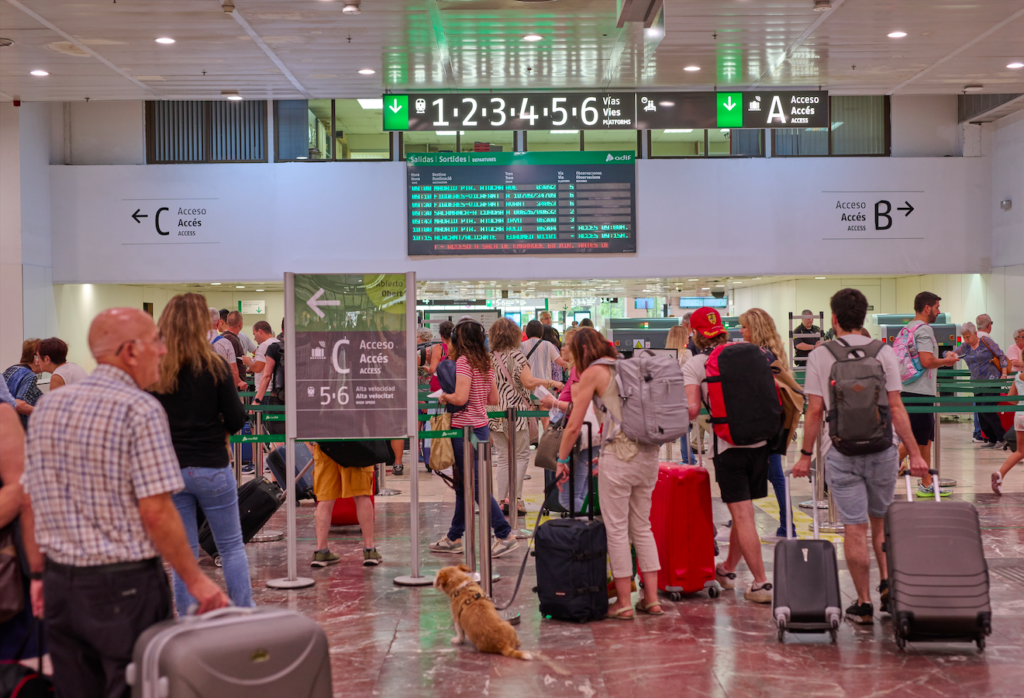
The department said that more than 10 million people have successfully used eVisas. Photo credit: Jose Maria Gallardo/Shutterstock
Imagine reaching a Spanish airport for your flight home to Britain only to be told you cannot board, despite having lived legally in the UK for eight years and holding settled status. That is what happened to Nidia Webb after the UK’s digital immigration system linked her eVisa to her identical twin sister.
Webb was left trying to resolve the problem from Spain, even though there was no question that she had the right to live in Britain. Her experience is a warning for British residents travelling abroad who rely on a digital immigration record to prove their right to return.
When the system gets it wrong
Webb discovered the problem when she tried to travel back to Britain. Her settled status was still valid, but the information attached to her eVisa did not correctly identify her. Instead, her record had become linked to her twin sister’s details. Home Office staff told Webb that this was a “known technical issue” affecting some twins.
The result was a problem that could not simply be explained away at the airport. The airline needed to establish that Webb had permission to enter the UK, while the digital system was presenting the wrong information. She spent hours trying to get the matter sorted before she was eventually allowed to travel.
Why this concerns British travellers
The UK’s move to eVisas means that many people no longer rely on a physical document to demonstrate their immigration status. Instead, their details are stored digitally and can be checked by carriers before they travel. That creates a potential problem if the information is incorrect.
Government guidance warns that a carrier may not allow a passenger to travel if their immigration status cannot be verified. For someone returning from Spain, that means a problem with a UK immigration record can stop the journey before the passenger even reaches Britain. The person may have every legal right to return, but the airline still needs to be able to confirm it.
Check before leaving Spain
British residents who rely on an eVisa should check their UKVI account before travelling. The passport they intend to use must be linked to the account, while their name, date of birth and immigration status should all be correct. This is particularly relevant for anyone who has recently renewed a passport or changed their personal details.
UKVI also has an online service for reporting errors with an eVisa. Checking before a trip gives travellers time to deal with an error while they are still at home. Discovering the same problem at a Spanish airport is a very different situation, particularly if the flight is due to leave within hours.
A known problem for some twins
Webb’s case is unusual because the error involved her identical twin, but the Home Office has confirmed that problems of this type are known to occur. The department said that more than 10 million people have successfully used eVisas and that most errors are resolved within 24 hours.
Webb’s experience nevertheless demonstrates the consequence when the digital record does not correctly match the person presenting their passport. She had not overstayed, her settled status had not expired and she had not lost her right to live in Britain, the system simply had the wrong person attached to her record.
Your right to return still needs to be visible
For British residents travelling between Spain and the UK, the warning is simple: check the digital record before travelling. Make sure the passport you will use is linked to the correct UKVI account and that the information displayed matches your identity. If something is wrong, report it before heading to the airport.
An eVisa is intended to make proving immigration status easier, but Webb’s experience shows what happens when the information behind it fails. You can have a completely valid right to live in Britain and still be left on the wrong side of the boarding gate if the system cannot prove it.
Follow Euro Weekly News on Google News
Get breaking news from Spain, travel updates, and expat stories directly on your Google News feed.
Follow on Google NewsSign up for personalised news
Subscribe to our Euro Weekly News alerts to get the latest stories into your inbox!
By signing up, you will create a Euro Weekly News account if you don't already have one. Review our Privacy Policy for more information about our privacy practices.





Molly Grace
Molly is a British journalist and author who has lived in Spain for over 25 years. With a background in animal welfare, equestrian science, and veterinary nursing, she brings curiosity, humour, and a sharp investigative eye to her work. At Euro Weekly News, Molly explores the intersections of nature, culture, and community - drawing on her deep local knowledge and passion for stories that reflect life in Spain from the ground up.
Comments