Mediterranean Interiors: The trend Americans are obsessed with
By Guest Writer • Published: 24 Aug 2026 • 15:57 • 4 minutes read
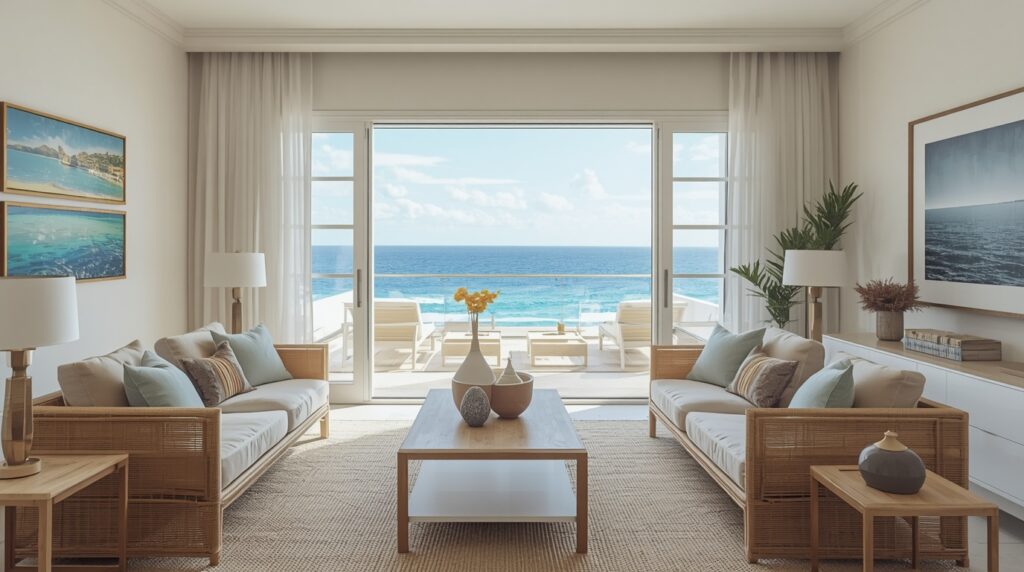
Image: Tomassini.com
American travellers didn’t just come home from Europe this summer with sunburns and duty-free perfume. They came home posting walls. Thousands of TikTok clips and Instagram reels shot along the Amalfi Coast, the Costa del Sol, the Cyclades, and the stretch of French coastline between Nice and Menton have spent June and July racking up views for the same reason: thick, whitewashed facades, deep blue shutters, terracotta floors, and long outdoor tables set for dinner well past nine at night. Carousel posts comparing rental villas from Positano to Paros have been circulating with a frequency that industry watchers describe as unusual even by summer-travel standards, and the engagement numbers have not gone unnoticed by interior design accounts hunting for the next viral aesthetic.
The traffic has translated into something more concrete than likes. Interior design forums and home renovation groups report a sharp rise this month in a very specific kind of question: how to decorate your home in Mediterranean style, even if you don’t live in Europe. Search platforms and social listening tools are showing the same pattern, with one term surfacing across TikTok captions, Pinterest boards, and Instagram bios in slightly different spellings but unmistakably the same intent. Mediterranean style, once a modest category on a paint chart, is now tracking as one of the most searched interior design terms of the season.
This Is the European style every tourist comes home obsessed with
Stripped of the hashtags, Mediterranean style refers to a design language shaped by four coastlines bordering the same sea: Italy’s Amalfi and Puglia regions, Spain’s Andalusia and Costa Blanca, the Greek Cyclades, and the French Riviera between Nice and Menton. It isn’t a single look so much as a shared set of solutions to the same climate problem, worked out separately over centuries and later recognised as one family of style once photographs of all four regions started circulating side by side. A house qualifies as Mediterranean less because of a specific colour or object and more because of how it handles heat, light, and the outdoors.
A few traits tend to show up regardless of which coastline a house sits on:
- Thick masonry or plaster walls, built originally to keep interiors cool before mechanical air conditioning existed
- Deep-set windows and, often, shutters that block direct sun while still letting in light
- A strong visual and physical connection between indoor rooms and an outdoor terrace, courtyard, or veranda
- Furniture built oversized and sturdy enough to live outdoors for years, especially anything meant for communal eating
That last point matters more than it might seem. Walk through a house in Sardinia, a finca outside Palma, or a stone cottage on Paros, and the dining space rarely feels like an afterthought. It is usually the largest, best-lit room in the house, or it spills straight onto a terrace shaded by a pergola. It is no coincidence that the most popular searches among American tourists returning home from their Euro-summer are precisely about how to find a Poltrona Frau dining table or a new Alessi moka pot. Regional habits around that table differ: Italians tend toward a smaller, informal eating nook near the kitchen for everyday meals, distinct from a separate, more formal table used for guests, while Spanish households often gather around a single large table that does double duty for lunch, homework, and evening conversation. On the Riviera, outdoor dining tends to take priority entirely, with indoor tables treated almost as a backup for bad weather.
Here’s what’s actually behind the Mediterranean design trend
Color choices across the Mediterranean rim follow the landscape rather than any decorating trend. The recurring shades include:
- Whitewash and limewash, dominant in Malta and southern Spain, chosen both for heat reflection and for the way they catch late afternoon light
- Terracotta and ochre, constant in central Italy, especially in Umbria region, echoing the clay used in roof tiles and flooring for centuries
- Cobalt and azure blue, appearing on shutters, tiles, and ceramics from Corsica to the Costa Brava as a nod to the sea that is never far from view
- Olive green and sun-bleached sand tones, used across all four regions as neutral grounding colours
Materials matter just as much as colour. Hand-glazed ceramic tiles, raw plaster, reclaimed wood, wrought iron, rattan, and woven cane furniture all appear repeatedly across the region, usually because they were locally available and durable long before “sustainable sourcing” was a marketing phrase. Linen upholstery and loosely woven cotton show up on nearly every sofa and daybed, chosen for breathability rather than aesthetics, though the two ended up aligned anyway.
So what are Mediterranean interiors, Really?
This is where the four regions genuinely diverge, and where a lot of American interpretations of the style tend to flatten real differences. Italian homes, especially older ones, often keep a closed kitchen, or cucina chiusa, separated from the rest of the house by a door, largely to contain cooking smells and heat. Spanish homes lean toward interior courtyards and shaded patios that function as an extra room for most of the year. Greek houses frequently build around a veranda positioned to catch sea views and evening breeze, while French Riviera villas favour loggias, covered but open-air spaces that blur the line between terrace and living room.
A handful of Mediterranean brands and studios have become shorthand for this look well beyond their home markets. Italian furniture house Porada is frequently cited for its solid-wood craftsmanship, particularly pieces worked in Canaletto walnut, while Paola Lenti has built its international reputation on colour and textile research applied to outdoor furniture and rugs. Spanish label Gan Rugs is known for the woven textures common to the region. In Greece, smaller design studios working in raw plaster and hand-thrown ceramics have found an international following largely through word of mouth rather than large-scale marketing.
Whether the trend has real staying power or fades by October, the way American searches spiked this summer suggests something more than a passing vacation photo trend. Renovation contractors in several U.S. cities have already reported a rise in requests specifically referencing Mediterranean interior design style, and it may be the first time in years that a European travel season has translated so directly into domestic home renovation plans.
Follow Euro Weekly News on Google News
Get breaking news from Spain, travel updates, and expat stories directly on your Google News feed.
Follow on Google NewsSign up for personalised news
Subscribe to our Euro Weekly News alerts to get the latest stories into your inbox!
By signing up, you will create a Euro Weekly News account if you don't already have one. Review our Privacy Policy for more information about our privacy practices.




Guest Writer
Comments