Sánchez finally calls top security meeting weeks after Ceuta migrant crisis
By Molly Grace • Published: 24 Aug 2026 • 16:07 • 4 minutes read
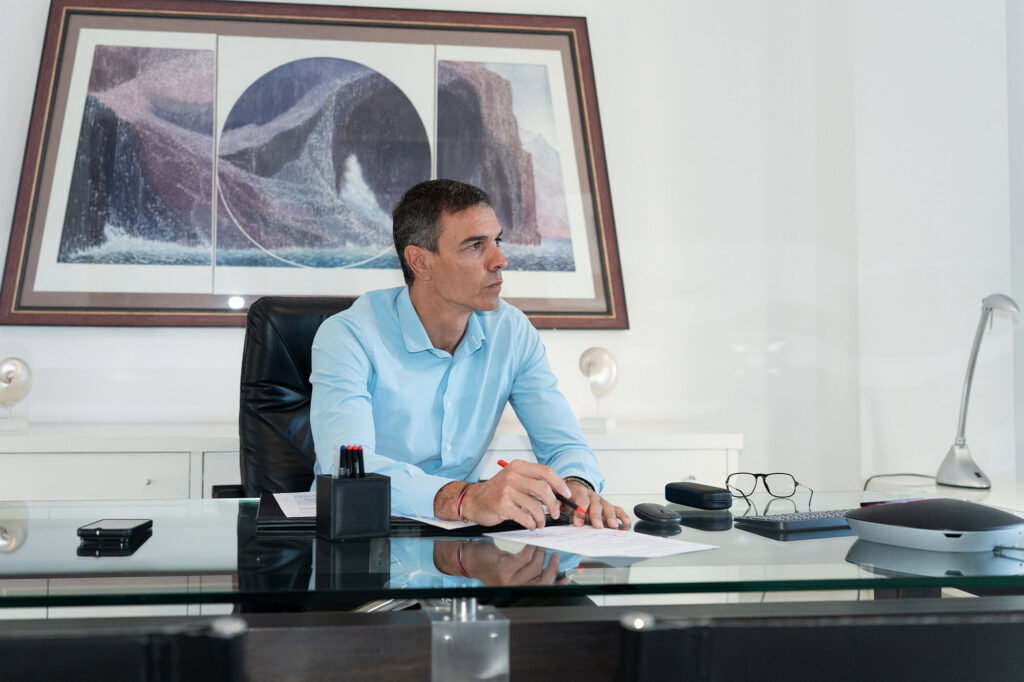
Pedro Sánchez has summoned an extraordinary meeting of the National Security Council for Tuesday, August 25. Photo credit: Pool Moncloa
For almost a month, Ceuta has been dealing with the consequences of the biggest migrant influx in its recent history, with thousands of people still in the city, pressure on local services and arguments over how the crisis should be handled. Now, after weeks of political pressure and growing concern over the situation, Pedro Sánchez is bringing Spain’s highest national security body together to examine what happened and what could happen next.
Pedro Sánchez has summoned an extraordinary meeting of the National Security Council for Tuesday, August 25, 26 days after the mass arrivals began. The council normally meets every two months, making the emergency session an unusual step.
Why Spain is calling the meeting now
The National Security Council brings together the country’s senior political, military and intelligence figures. Tuesday’s meeting will include Interior Minister Fernando Grande-Marlaska, Defence Minister Margarita Robles and Foreign Minister José Manuel Albares, along with the director of the CNI, the Chief of Defence Staff and the director of the Department of National Security.
Ceuta’s president, Juan Jesús Vivas, is also due to participate by video link. The council is being asked to assess the security implications of the crisis, including the circumstances surrounding the mass crossing and the measures needed to protect Ceuta’s border. Calls for the council to meet had already been made earlier this month. On August 8, Izquierda Unida coordinator Antonio Maíllo called for its immediate convening, arguing that questions remained about how thousands of people were able to reach the border in such numbers.
Tens of thousands crossed into Ceuta
The crisis erupted on July 30 and 31, when huge numbers of people crossed from Morocco into Ceuta by land and sea. The exact number varies depending on the source and the point at which the figures were recorded. Ceuta’s president initially estimated that around 60,000 people had crossed, while later figures put the number at more than 70,000.
Sánchez travelled to Ceuta on July 31 and described the events as an attack on the territorial integrity of Spain. He said the government would use all state resources to guarantee the security of residents and restore normal life. Many of those who entered subsequently returned to Morocco, but the crisis did not end with their departure.
Thousands remain and services are under pressure
The city is still dealing with people who have remained in the territory. Accommodation is one of the immediate problems, particularly for unaccompanied minors. The number of young people requiring protection has placed pressure on existing facilities and created the need for transfers to mainland Spain.
The situation has also created pressure on local services and the judicial system. A Ceuta investigating judge said on Monday that 14 sexual assaults had been confirmed since July 30, while the courts were receiving around 200 complaints a day, including cases involving sexual offences, violent robbery and theft. Two additional judges have been requested to help deal with the workload, but they are not expected to arrive until September.
Health measures have been introduced as authorities deal with the possibility of infectious disease outbreaks. Spain has approved the distribution of 25,000 vaccine doses to Ceuta, including 15,000 doses of the combined measles, mumps and rubella vaccine and a further 10,000 covering diseases including diphtheria, tetanus, polio and chickenpox. The vaccines are intended to protect people living in the territory, including migrants who arrived during the crisis.
Security remains the main concern
The sheer scale of the crossing has raised questions about how Spain can protect one of its external EU borders if another mass movement takes place. Security was increased after the July crossings, with additional forces deployed to Ceuta. The concern is not limited to what happened in July.
Authorities must also consider whether similar attempts could take place again and whether the measures now in place would be enough to deal with another sudden movement of people towards the border. That question is particularly important because the July crisis developed on a scale that put considerable pressure on the city’s ability to respond. The National Security Council will now bring the country’s intelligence, defence, interior and foreign affairs leadership together to examine those risks.
Pressure on the government
The timing of the meeting has also put Sánchez under political pressure. Opposition parties have questioned the government’s handling of the crisis, while calls for greater transparency have focused on how the mass movement developed and whether Spanish authorities had sufficient warning.
The government has already held meetings with ministers to coordinate the response, including a further meeting chaired by Sánchez on August 17. The National Security Council meeting is different because it brings together the officials responsible for Spain’s wider security system rather than focusing solely on migration and emergency assistance. The council will therefore have to consider more than the number of people still in Ceuta. It will examine the border, intelligence, military and security implications of what happened and the measures required to prevent a repeat.
What happens next?
For Ceuta, the immediate issue is accommodation, the protection of locals and minors, pressure on local services and maintaining security around the border. For Spain, Tuesday’s meeting provides an opportunity to examine how the country is going to responded to an unprecedented movement of people into one of its territories and whether changes are needed.
The crisis also has implications beyond Ceuta itself. The city is an EU territory on the North African coast, making its border part of the European Union’s external frontier. The July crossings have therefore raised questions about how Spain and the EU would respond if another mass movement occurred. Almost a month after the crisis began, Sánchez is now bringing the country’s top security officials together. The question facing them is no longer simply what happened in Ceuta at the end of July. It is whether Spain is ready if it happens again.
Follow Euro Weekly News on Google News
Get breaking news from Spain, travel updates, and expat stories directly on your Google News feed.
Follow on Google NewsSign up for personalised news
Subscribe to our Euro Weekly News alerts to get the latest stories into your inbox!
By signing up, you will create a Euro Weekly News account if you don't already have one. Review our Privacy Policy for more information about our privacy practices.


Molly Grace
Molly is a British journalist and author who has lived in Spain for over 25 years. With a background in animal welfare, equestrian science, and veterinary nursing, she brings curiosity, humour, and a sharp investigative eye to her work. At Euro Weekly News, Molly explores the intersections of nature, culture, and community - drawing on her deep local knowledge and passion for stories that reflect life in Spain from the ground up.
Comments