Long live the King! Who is Norway’s Haakon, the reserved heir who waited 35 years for the throne?
By Adam Woodward • Updated: 28 Aug 2026 • 12:44 • 5 minutes read
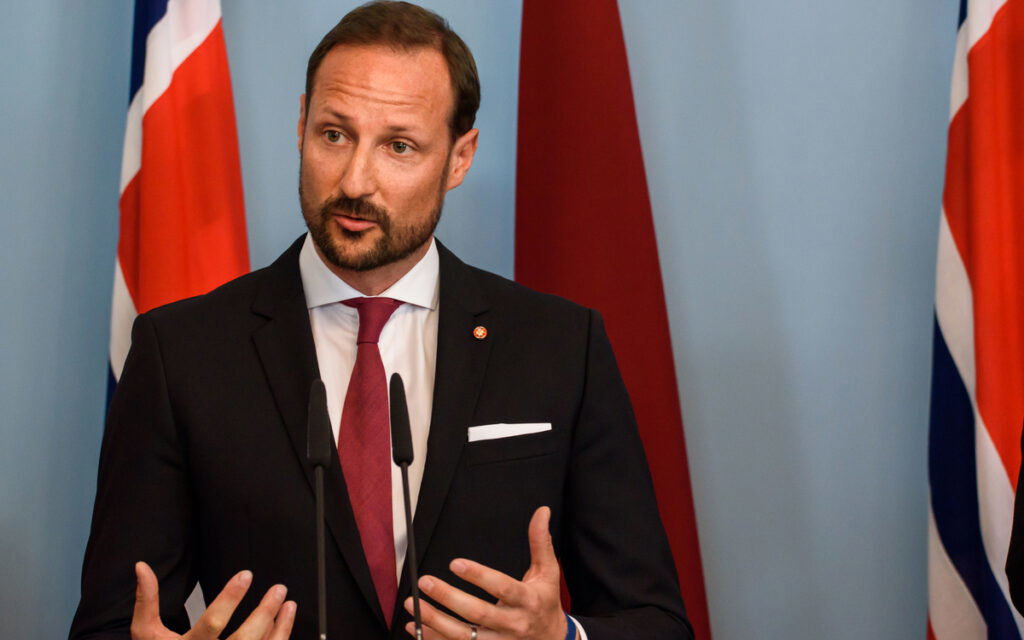
King Haakon of Norway. Credit: Gints Ivuskans - Shutterstock
Reserved by nature and used to keeping his feelings in check, Haakon Magnus has become King of Norway at 53 after watching his father do the job for more than three decades. Few European heirs have had such a long look at the role before having to take it on. Harald V’s death ended one reign and started another in the same instant, because Norwegian succession is automatic and immediate. No coronation, no proclamation in parliament and no ceremony at the Royal Palace is required. Palace language still leans on an old formula: the king is dead; long live the king!
Haakon had already been acting as regent during his father’s illness. Mette-Marit is now queen. Their daughter, Ingrid Alexandra, becomes crown princess and first in line, with her brother Sverre Magnus next. For readers following European courts from Spain, this is a quieter handover than a British coronation, but it still redraws the royal map overnight.
An ordinary childhood that was never quite ordinary
Born on July 20, 1973, at Rikshospitalet in Oslo, Haakon grew up at Skaugum with his older sister, Martha Louise. Harald and Sonja tried to give both children a life that looked like other Norwegian kids’: school, sport, the outdoors and mates. Royal House briefings still treat that push for normality as a guiding idea. Haakon knew early that his future was already written. Grandfather Olav V died on 17 January 1991. Harald took the throne that night, and a 17-year-old sports-and-music fan became crown prince. Six months later, on his 18th birthday, he sat for the first time with his father in the Council of State and gave his first official speech.
Navy, Berkeley and a London master’s
🚨 The King of Norway, Harald V 🇳🇴, has died at 89
The new king will be Prince Haakon (future King Haakon VIII), 53 👑
With Queen consort Mette-Marit
A controversial figure, with a son (Marius Borg Høiby) in serious legal trouble and her name linked to the Epstein files https://t.co/vVHxixunTR pic.twitter.com/soB34HAcw0
— Mambo Italiano (@mamboitaliano__) August 28, 2026
Naval training came first. Haakon graduated from the Norwegian Naval Academy in 1995, later adding special-operations instruction and the ranks of general and admiral. Political science at the University of California, Berkeley, followed, then a placement with Norway’s mission to the United Nations. A master’s in development studies at the London School of Economics, focused on international trade and Africa, rounded off a modern heir’s education: armed forces, university and diplomacy. Official material from the Royal House of Norway still frames that mix as preparation for a ceremonial head of state who also commands the armed forces on paper.
A marriage that stretched the palace’s comfort zone
Late-1990s Oslo social life brought him Mette-Marit Tjessem Hoiby. She was a single mother to Marius, born from an earlier relationship, and her past did not match the usual future-queen script. Gossip got out, but Haakon did not walk away. They married on August 25, 2001 in Oslo Cathedral. Marius joined the prince’s family, though never the Royal House or the line of succession. Ingrid Alexandra arrived in 2004 and Sverre Magnus in 2005.
That choice showed a trait he has repeated since. He rarely picks a public fight with pressure, but he does not easily change course because of it. Harald had waited nine years to marry Sonja Haraldsen and told Olav V he would marry her or nobody. Love matches had already won that battle by Haakon’s generation. He pushed the boundary again and later paid a price.
Marius’s investigations and court case put Haakon in an uncomfortable spot: protect someone he treats as a son without using the Crown to shield him from the law. Speaking before the 2026 trial, he drew a hard line. Marius is not a member of the Royal House, he said, then added at once that they love him and that he remains an important part of the family. Haakon and Mette-Marit stayed away from court while promising personal support, and he spoke with care for everyone affected. Institution and family were kept apart, without pretending the family did not exist.
Revelations about Mette-Marit’s old contact with Jeffrey Epstein added another burden. Aftenposten in 2026 questioned how well the couple understood the line between private life and public duty. Protective instinct toward his own can collide with the openness a modern monarchy is expected to show. That remains his weakest point as he starts the reign.
Illness at home and years as stand-in king
Mette-Marit said in 2018 that she has chronic pulmonary fibrosis. Official work thinned as her health worsened. A transplant followed, and recovery is still a long job. Harald’s own hospital stays and age meant Haakon kept stepping in as prince regent. He chaired the Council of State and took on the head-of-state tasks whenever his father could not. He did not have to imagine the job. He had already done stretches of it.
Ingrid Alexandra turned 18 in 2022. Haakon talked to her about freedom: even inside duty, he said, a person can still find a kind of liberty. He admitted he had not grasped that at the same age. Born into a role he never chose, he did not rebel against becoming king. He did look for a bit of room of his own, and that is what he wanted his daughter, now heir, to hear.
What sort of king will Norwegians get?
Fifty-three, more inward than showy, and better travelled in his studies than his father or grandfather were at the start of their reigns, Haakon arrives with the worries of his generation: climate, oceans, sustainability, international co-operation, development and young people. During an official visit to Japan last June he spent much of a speech on change in the Arctic, climate science and the duty to look after the oceans. Those themes have sat in his diary for years.
A first sight of King Haakon.
He arrives at the Extraordinary Council of State Meeting as monarch. pic.twitter.com/QCu7Oi6NxN
— Royal Central (@RoyalCentral) August 28, 2026
Comparisons with other European houses will come quickly. Spain’s court has its own mix of duty and family strain, from King Felipe VI’s Christmas call for unity to summer routines covered when Spain’s royals arrived in Mallorca. Britain’s Charles has spoken to the public in a different register, as in his Easter letter. Norway’s new king is likelier to keep the temperature low.
Whether that reserved style settles a battered institution will be the test. Family rows have bruised the brand. Health problems have emptied diaries. Haakon’s answer so far has been the same one he used in private life: hold the line, separate the Crown from the kitchen table, and refuse to be bounced off course. Norway now gets to see if that is enough.
Follow Euro Weekly News on Google News
Get breaking news from Spain, travel updates, and expat stories directly on your Google News feed.
Follow on Google NewsSign up for personalised news
Subscribe to our Euro Weekly News alerts to get the latest stories into your inbox!
By signing up, you will create a Euro Weekly News account if you don't already have one. Review our Privacy Policy for more information about our privacy practices.





Adam Woodward
Adam is a writer who has lived in Spain for over 25 years. With a background in English teaching and a passion for music, food, and the arts, he brings a rich personal perspective to his work at Euro Weekly News. As a father of three with deep roots in Spanish life, Adam writes engaging stories that explore culture, lifestyle, and the everyday experiences that shape communities across Spain.
Comments