New discovery beneath Tenerife could explain the island’s mysterious earthquake activity
By Molly Grace • Published: 28 Aug 2026 • 22:11 • 3 minutes read
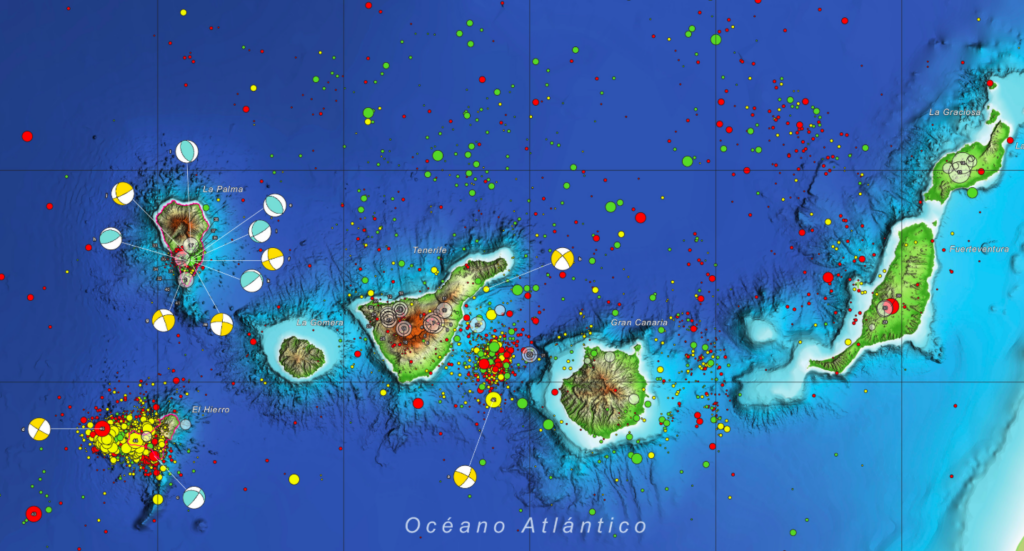
The most significant finding is beneath western Tenerife. Photo credit: Instituto Geografico Nacional
People living in Tenerife have been given a new insight into what could be happening beneath their feet after scientists identified a major accumulation of magma deep beneath the island in an area linked to the unusual earthquakes recorded since 2016. No need to panic, the discovery does not mean an eruption is about to happen. Instead, researchers say it could finally shed light on why Tenerife has experienced persistent, unusual seismic activity over the past decade and provide a much clearer picture of the volcanic processes taking place underground.
The magma-rich zone was identified beneath western Tenerife as part of the first three-dimensional study of the island’s deep structure. Researchers detected four areas between around 10 and 30 kilometres underground where seismic waves travel significantly more slowly than through the surrounding rock. The largest and most significant anomaly is beneath the western part of the island.
Magma found where earthquake activity is concentrated
Scientists believe the unusually slow seismic waves are consistent with extremely hot material and a high proportion of molten rock. Thermodynamic modelling has strengthened that interpretation, pointing towards an accumulation of magma originating in the upper mantle. What makes the finding particularly important is its position.
The newly identified magma zone coincides with areas where Tenerife’s unusual seismic activity has been concentrated since 2016. Researchers believe the relationship could provide an explanation for some of the earthquakes that have occurred beneath the island. Rather than being caused solely by movement along geological faults, some of the activity may be connected to magma and gases moving through the volcanic system.
What is happening kilometres below the island?
The magma is thought to be accumulating at the bottom of the oceanic crust through a process known as magmatic underplating. Magma rises from the mantle but does not necessarily continue all the way towards the surface. Instead, some becomes trapped beneath the crust, where repeated injections can gradually build up a substantial body of hot, partially molten material. As that magma moves and pressure changes, gases dissolved within it can separate from the molten rock.
Carbon dioxide is particularly important at these depths. The gas can migrate upwards through cracks and permeable areas of the crust, eventually interacting with Tenerife’s hydrothermal system. Researchers believe this movement could help explain some of the hybrid and low-frequency earthquakes detected beneath the island. The location of those earthquakes in relation to the newly identified low-velocity zone is one of the study’s most significant findings.
It does not mean an eruption is coming
Despite the shocking discovery, scientists are not warning that Tenerife is about to erupt. Magma exists beneath active volcanic islands, and its presence alone does not indicate that an eruption is imminent. The significance of this study is that researchers now have a much clearer picture of where magma is accumulating and how it may be interacting with the surrounding crust.
Tenerife remains an active volcanic system, but volcanic activity can continue deep underground for years, decades or longer without breaking through to the surface. The new findings therefore need to be viewed alongside other monitoring data rather than as an eruption forecast.
First detailed picture of Tenerife underground
The research has produced the first three-dimensional image capable of showing the island’s deep internal structure in this level of detail. Four major low-velocity areas were identified at depths of roughly 10 to 30 kilometres. The western anomaly stands out because the S-wave velocities there are particularly low, indicating conditions compatible with a high proportion of molten material.
Researchers combined seismic observations with thermodynamic calculations to establish what could be producing the anomaly. The result is a model that gives volcanologists a better understanding of how magma enters Tenerife from the mantle, where it accumulates and how fluids and gases can move through the island. It also gives them a possible explanation for why earthquake activity has repeatedly appeared around particular areas rather than being evenly distributed.
Why the discovery is significan
For residents and visitors, the most important message is that there is no need to worry about an imminent eruption. The discovery however does change scientists’ understanding of what lies beneath Tenerife. The earthquakes that have attracted attention since 2016 may be providing a window into a much deeper process, with magma accumulating kilometres below the surface and gases moving through the volcanic system.
Continued monitoring of earthquakes, volcanic gases and other changes will allow researchers to see whether the system remains stable or begins to change. For now, Tenerife is not facing an eruption warning. Scientists have, however, gained an unprecedented look at the huge quantities of heat and magma operating beneath the island, and the possible connection between that hidden volcanic activity and the earthquakes being detected at the surface.
Follow Euro Weekly News on Google News
Get breaking news from Spain, travel updates, and expat stories directly on your Google News feed.
Follow on Google NewsSign up for personalised news
Subscribe to our Euro Weekly News alerts to get the latest stories into your inbox!
By signing up, you will create a Euro Weekly News account if you don't already have one. Review our Privacy Policy for more information about our privacy practices.




Molly Grace
Molly is a British journalist and author who has lived in Spain for over 25 years. With a background in animal welfare, equestrian science, and veterinary nursing, she brings curiosity, humour, and a sharp investigative eye to her work. At Euro Weekly News, Molly explores the intersections of nature, culture, and community - drawing on her deep local knowledge and passion for stories that reflect life in Spain from the ground up.
Comments