Spain’s supermarket shake-up as Lidl’s rival opens 14 new stores
By Molly Grace • Published: 31 Aug 2026 • 23:20 • 3 minutes read

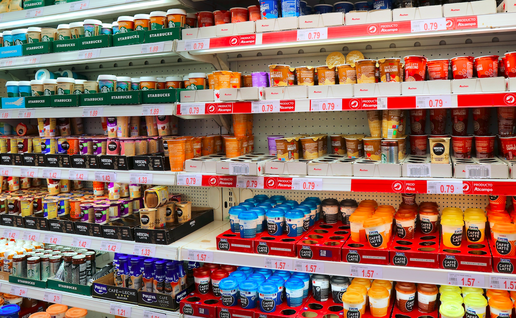
The expansion stretches across nine autonomous communities. Photo credit: Lestertair/Shutterstock
If your local supermarket suddenly became bigger, brighter and easier to shop in, or a completely new one appeared around the corner, you might not think much of it beyond the convenience. But while Spain’s biggest supermarket chains battle for customers with low prices, promotions and increasingly large stores, another player is quietly expanding in a very different way. One supermarket group has used the summer to open, reopen, renovate and transform 14 stores across Spain, adding more than 2,500 square metres of retail space and creating or maintaining 48 jobs.
The expansion stretches across nine autonomous communities, taking the chain into towns and neighbourhoods where proximity to customers is central to its business model. And unlike the headline-grabbing expansion plans of major chains, many of these new and revamped shops are being driven by local entrepreneurs, family businesses and existing store owners, rather than a straightforward rollout of large new supermarkets.
The supermarket behind the expansion
The supermarket chain behind the latest push is Covirán, which has been steadily strengthening its presence across Spain through its cooperative model. During July and August, it carried out 14 openings, refurbishments and transformations in Andalucía, Murcia, Navarra, Extremadura, Madrid, Aragón, the Comunidad Valenciana, Cataluña and the País Vasco. Andalucía accounted for four of the projects, while Murcia and Cataluña each had two.
The new openings included stores in Lumbier in Navarra, Lorca in Murcia, Calatayud in Zaragoza, Valencia, Barcelona and Arrasate-Mondragón in Guipúzcoa. The projects together add 2,592 square metres of commercial space, while 48 jobs have either been created or maintained through the expansion.
It is not just about opening shops
A significant part of the strategy involves taking existing stores and giving them a complete makeover rather than simply increasing the number of locations. Several supermarkets have been converted to the company’s Covirán Origen format, while an existing store in Vilches, Jaén, has been transformed into a Covirán Plus.
The newer formats are designed around modernising smaller neighbourhood supermarkets, improving the layout and equipment while retaining the proximity that allows customers to shop close to home. That approach gives the cooperative a different way of competing with the country’s larger chains, particularly in smaller municipalities and residential neighbourhoods where a huge supermarket is not necessarily practical.
The local businesses behind the growth
The expansion also reflects how Covirán operates. Many of its stores are managed by independent entrepreneurs who join the cooperative, rather than being directly operated by a single corporate structure. The latest projects include new entrepreneurs, family businesses, transfers and cases of generational succession, allowing existing local shops to continue operating while adopting a more modern format.
That matters in towns where a local supermarket can provide more than somewhere to buy groceries. A nearby shop can mean fewer journeys for older residents, easier access to everyday essentials and a source of employment within the community. Covirán’s president José Antonio Benito said the projects represent investment by people choosing to back their own businesses while maintaining commercial activity in their local areas.
A different challenge to Lidl
The expansion comes as Lidl is also continuing to grow its Spanish network. The German discount chain opened four new supermarkets during July and August, investing almost €30 million and adding close to 6,000 square metres of commercial space. Lidl said its 2026 plans include around 50 new stores, alongside the modernisation and expansion of existing locations. Covirán’s approach is considerably smaller in scale, but its 14 summer projects show that competition for Spanish supermarket shoppers is not limited to the country’s biggest chains.
For customers, the result is a changing supermarket landscape in which the choice of where to shop is increasingly being shaped not only by price, but by how close the store is, how modern it feels and whether it can offer the convenience of a neighbourhood shop without looking outdated. The latest expansion gives Covirán a stronger presence across nine regions of Spain while allowing dozens of existing and new local businesses to remain part of the country’s increasingly competitive food retail market.
Follow Euro Weekly News on Google News
Get breaking news from Spain, travel updates, and expat stories directly on your Google News feed.
Follow on Google NewsSign up for personalised news
Subscribe to our Euro Weekly News alerts to get the latest stories into your inbox!
By signing up, you will create a Euro Weekly News account if you don't already have one. Review our Privacy Policy for more information about our privacy practices.




Molly Grace
Molly is a British journalist and author who has lived in Spain for over 25 years. With a background in animal welfare, equestrian science, and veterinary nursing, she brings curiosity, humour, and a sharp investigative eye to her work. At Euro Weekly News, Molly explores the intersections of nature, culture, and community - drawing on her deep local knowledge and passion for stories that reflect life in Spain from the ground up.
Comments