Narco speedboat rams Guardia Civil boat off Murcia leaving three officers injured
By Harry Dennis • Published: 03 Sep 2026 • 11:15 • 2 minutes read
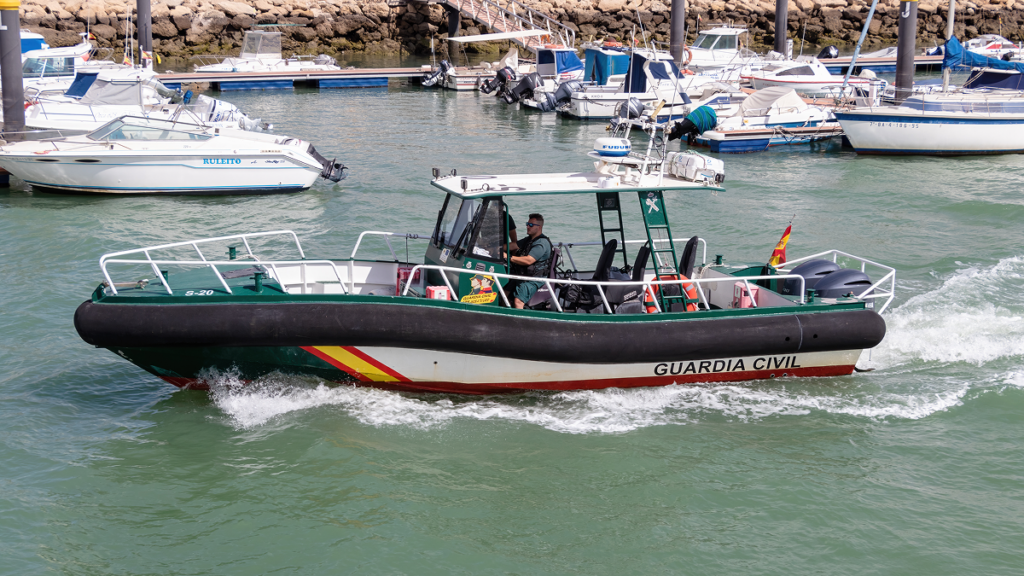
Gunfire in January, a fatal collision in May, now a ramming: Spain's narco boats turn on the Guardia Civil. Credit: agsaz / Shutterstock
A speedboat weighed down with spare fuel for a long run had every chance to slow down when the Guardia Civil moved to intercept it. Instead it turned into their patrol boat off the Murcia coast, injuring three officers in the latest sign that some smuggling crews would rather fight their way through than get caught.
Two engines, 20 cans of fuel and a collision off Cabo Cope
Officers from the Guardia Civil’s Servicio Marítimo (maritime service) moved to intercept a fast speedboat off Cabo Cope, in the municipality of Águilas, shortly after 9pm on Wednesday September 2. The boat was fitted with two engines and was carrying 20 fuel canisters, enough for a long-distance run and a sign of a well-resourced operation. As the patrol boat closed in, the speedboat rammed it rather than stopping. Three officers were injured in the impact, one of whom needed five stitches. The extent of the other two officers’ injuries has not been disclosed.
Both men on board the speedboat were arrested. Francisco Lucas, the Spanish Government’s delegate in Murcia, said he had spoken personally with the captain and the injured officers to pass on his thanks for their work.
Why the Guardia Civil says its crews are outgunned
The Asociación Unificada de la Guardia Civil (AUGC), one of the force’s main professional associations, said after the ramming that officers “risk their lives with inferior means against organised drug trafficking”. It is a complaint the union has made before, and one that had already been raised about this exact stretch of coast. Murcia’s only rapid-response patrol boat was recently reported to have been out of action for about a week, with a replacement sent from Barcelona that the AUGC said was “not built for the job” and too slow to catch high-powered narco boats. The union had called for a second fast vessel to be sent to the region. Instead, the coast’s patrol capacity was tested by a boat that chose to ram rather than run.
A year of gunfire, a fatal collision and now a ramming
Wednesday’s incident was not an isolated one. In January, three Guardia Civil rapid-action officers were wounded when smugglers opened fire on them during a chase on the Guadalquivir river near Trebujena, in Cádiz province. In May, a captain and an officer from the Servicio Marítimo were killed off Huelva when two patrol boats collided while pursuing a speedboat, in one of the force’s worst losses in these waters. In August, another speedboat opened fire on a Guardia Civil patrol boat off the same coast before being intercepted, leading to 10 arrests and the seizure of almost six tonnes of hashish.
Crews who no longer bother to hide
Elsewhere on the Spanish coast, officers describe smuggling crews growing bolder rather than more cautious. Reporting from Cádiz has described crews swapping over in daylight at a public yacht club pontoon, and one crew near Vélez-Málaga mockingly waving at the Guardia Civil boat sent to intercept them.
The pressure on Murcia’s coast shows no sign of easing. Two more men were arrested near Cartagena just three days before Wednesday’s ramming, after officers found another vessel off Monte Cenizas. Officials say eight boats and around 300 people have reached the Murcia coast by sea since August 15 alone.
Follow Euro Weekly News on Google News
Get breaking news from Spain, travel updates, and expat stories directly on your Google News feed.
Follow on Google NewsSign up for personalised news
Subscribe to our Euro Weekly News alerts to get the latest stories into your inbox!
By signing up, you will create a Euro Weekly News account if you don't already have one. Review our Privacy Policy for more information about our privacy practices.



Harry Dennis
Born in the UK and raised on the Cádiz coast, Harry brings his background in design, music, and photography to his writing for Euro Weekly News, sharing stories that celebrate culture and lifestyle across Spain and beyond.
Comments