Blue shark filmed at the surface off Almuñecar in broad daylight
By Adam Woodward • Published: 04 Sep 2026 • 18:53 • 2 minutes read
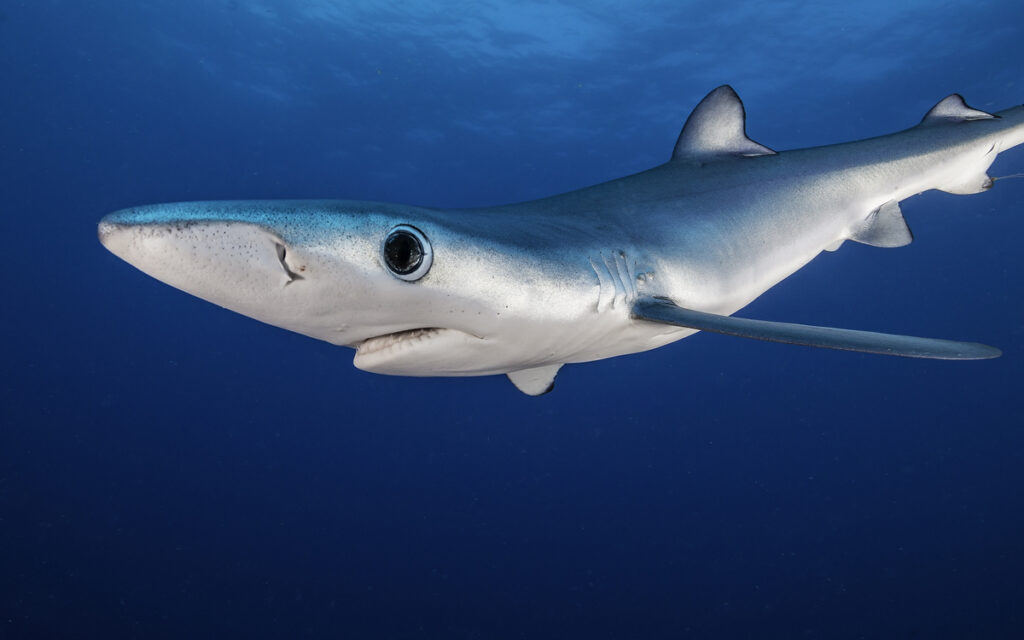
Blue shark off the coast of Almuñecar. Credit: wildestanimal - Shutterstock
Divers off Almuñecar have captured images of a blue shark, known locally as a tintorera, swimming near the surface in daylight. Footage from last Sunday comes from Open Water La Herradura, a dive firm that runs authorised marine wildlife trips on Granada’s Costa Tropical.
Big pelagic animals are turning up more often in these waters. This latest clip, shown on national TV station Telecinco, shows a sleek open-ocean hunter in conditions that usually keep it out of sight.
What the footage shows
Open Water La Herradura diving school recorded the animal in open water, not in a packed bathing zone. Staff say the outing was under a permit from Spain’s Ministry for Ecological Transition and the Demographic Challenge (MITECO), with professionals in charge and the usual rules applied.
Blue sharks already use the Granada coast. Crews from the same company say climate change is also bringing in other species that were once far harder to find here. Similar wildlife trips from the firm have previously put fin whales on camera off La Herradura and Torrox.
Why a daytime surface swim is unusual
Aula del Mar at the University of Granada describes the blue shark as an open-water species that can reach four metres. It has a slim body, a long pointed snout, large eyes and serrated triangular teeth in the upper jaw.
These sharks roam thousands of kilometres. Night work at 60 to 300 metres is their usual pattern, which is why a shallow daytime pass off Almuñecar caught people’s attention. Fish and molluscs make up most of the diet, so attacks on marine mammals or seabirds are not the norm.
Mediterranean blue sharks are in a worse state than the global stock. IUCN lists the species as Near Threatened worldwide and Critically Endangered in the Mediterranean, mainly because of fishing.
No reason to panic on the sand
Open Water La Herradura is clear that a tintorera in the Med does not equal danger for holidaymakers. It is part of the local sea, and this species needs protection more than it needs panic.
If one appears, stay calm, keep a sensible gap and do not touch, chase or try to “help” it. Anyone already in the water should move away slowly and leave the sea if that feels safer.
Costa Tropical has seen other large sharks this year. A shortfin mako was reported several miles off Almuñecar in April, well away from swimming areas. A wider look at where sharks turn up around Spain puts this sighting in context rather than treating it as a freak event.
Follow Euro Weekly News on Google News
Get breaking news from Spain, travel updates, and expat stories directly on your Google News feed.
Follow on Google NewsSign up for personalised news
Subscribe to our Euro Weekly News alerts to get the latest stories into your inbox!
By signing up, you will create a Euro Weekly News account if you don't already have one. Review our Privacy Policy for more information about our privacy practices.



Adam Woodward
Adam is a writer who has lived in Spain for over 25 years. With a background in English teaching and a passion for music, food, and the arts, he brings a rich personal perspective to his work at Euro Weekly News. As a father of three with deep roots in Spanish life, Adam writes engaging stories that explore culture, lifestyle, and the everyday experiences that shape communities across Spain.
Comments