Households told to stock up on food as UK faces ‘supersized’ El Niño threat
By Harry Dennis • Published: 04 Sep 2026 • 19:14 • 3 minutes read
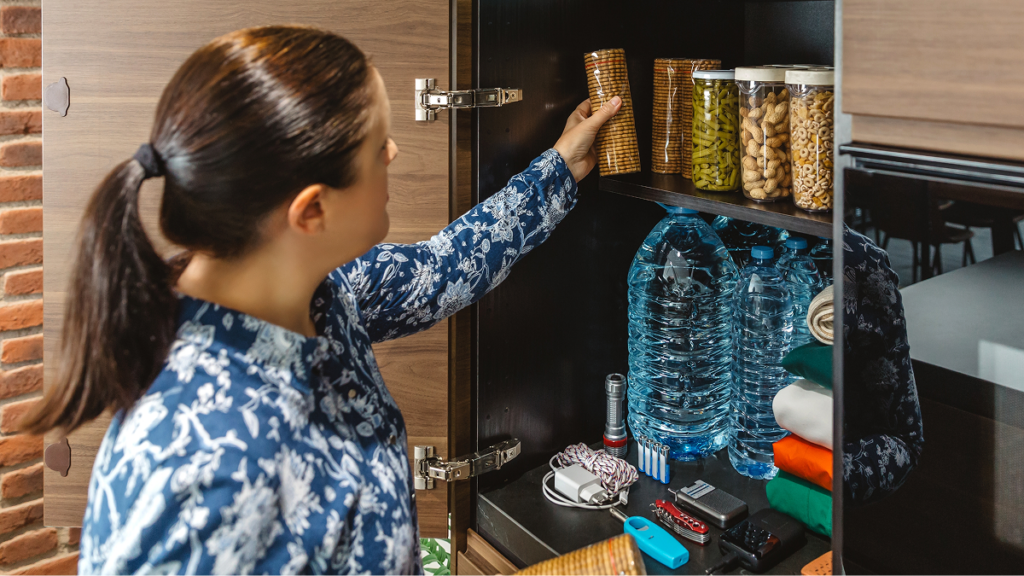
Keeping a small store of food, water and essentials at home is now part of official advice. Credit: David Pereiras / Shutterstock
It may sound slightly dramatic, but Britain’s Environment Secretary says now is the time to think about how you’d cope without deliveries or open shops for a few days.
Dame Angela Eagle, the Environment Secretary, said households that keep food stored at home would be better placed to cope while waiting for emergency help, linking the government’s forthcoming preparedness campaign to the developing El Niño for the first time. It was reported in late August that the campaign advised to keep several days of food, water and medication at home.
The comments came as the World Meteorological Organization issued its most unequivocal forecast yet, putting the probability of El Niño persisting through February 2027 at nearly 100 per cent and warning the event is on course to become “very strong” before the end of the year.
Environmental Secretary links food advice directly to El Niño
Eagle told broadcasters: “We’re about to experience probably the largest El Niño that has ever been seen, and that will lead to drier summers, wetter winters, with more extreme storms in this country.”
On keeping supplies at home, she said: “If you’ve got a store of a bit of food that can keep you going for a while before the emergency services can get to you, you’re going to be a lot better off than if you haven’t.” She described it as “just being a bit more resilient”, rather than a response to any specific incoming disaster.
The forecast behind the WMO’s ‘off the charts’ warning
WMO Secretary-General Celeste Saulo said the current trajectory could produce something “stronger than anything since our monitoring began, so literally off the charts we have used for the past four decades.” Sea surface temperatures in the key Pacific monitoring region were already 2.6C above average by mid-August, with some subsurface waters more than 8C above normal.
The UK’s own Met Office has called this an “unprecedented” El Niño, likely the largest since the 19th century. Professor Adam Scaife, its head of long-range forecasting, said: “I have never seen an El Niño signal this intense in our forecasts.” The Met Office expects a wetter, stormier autumn and early winter for the UK, though officials are clear that power or water cuts remain a preparedness scenario, not a firm prediction.
Independent analysis points to the worst El Niño pattern in 1,000 years
Climate scientist Zeke Hausfather, of Berkeley Earth, has separately argued that current model forecasts suggest this El Niño is “not only very likely to be the strongest event since reliable records began” in the 1950s, but could beat that record “by a truly mind-blowing margin.” He has cautioned that no forecasting model has ever been tested against an event this large, so real uncertainty remains.
A peer-reviewed study led by the University of Michigan, published in the journal Science, examined 1,000 years of coral records from the Galápagos Islands and found El Niño events of the past 40 years have been around 40 per cent stronger than those before 1850. Lead researcher Professor Julia Cole said: “We don’t see a time in the past where El Niños have been as strong as today.” The study does not itself rank this specific event, only the recent pattern.
Britain’s food system still ‘not done enough’ to prepare, auditors say
The National Audit Office has separately warned that Defra, The Department for Environment, Food and Rural Affairs, has not done enough to prepare Britain’s food system for increasingly severe supply shocks. The UK imports more than a third of its food, much of it through four major ports: Dover, Felixstowe, Southampton and London Gateway.
NAO head Gareth Davies said: “Recent disruptions have shown the resilience of the UK’s food supply chain, but risks are increasing in likelihood and severity.” The watchdog found Defra also lacks some of the legal powers it may need during a genuine crisis, including the ability to direct businesses to take emergency action.
Why Britons in Spain may want to check on relatives
For Britons living in Spain, the update is a reason to check that elderly or vulnerable relatives in the UK are prepared, rather than cause for alarm. EWN’s earlier coverage of the campaign set out how to help from a distance, including registering relatives on their supplier’s Priority Services Register and confirming a neighbour holds updated contact details. The same system driving this forecast is also expected to shape Spain’s own winter.
With the WMO’s forecast now among the clearest it has ever issued, that groundwork is worth doing before winter, rather than after the first storm.
Follow Euro Weekly News on Google News
Get breaking news from Spain, travel updates, and expat stories directly on your Google News feed.
Follow on Google NewsSign up for personalised news
Subscribe to our Euro Weekly News alerts to get the latest stories into your inbox!
By signing up, you will create a Euro Weekly News account if you don't already have one. Review our Privacy Policy for more information about our privacy practices.



Harry Dennis
Born in the UK and raised on the Cádiz coast, Harry brings his background in design, music, and photography to his writing for Euro Weekly News, sharing stories that celebrate culture and lifestyle across Spain and beyond.
Comments