Americans now spend more than Brits in Spain, and could soon be the Costas’ preferred guest
By Harry Dennis • Published: 07 Sep 2026 • 15:28 • 4 minutes read

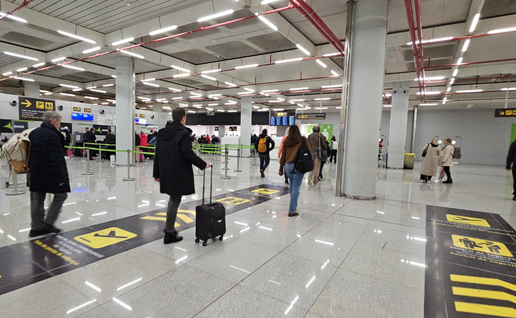
Spending power is starting to reshape what Spanish tourism looks like. Credit: Jose Hernandez Camera 51 / Shutterstock
Ask a Spanish hotelier which nationality they would rather welcome through the door, and the answer increasingly is not British. Brits still arrive in far greater numbers, but it’s American spending Spain’s Costas are now competing for, from Málaga’s booming arrivals to Valencia’s first transatlantic flight in years, with Alicante pushing for one of its own.
American arrivals have quadrupled in a decade
American tourist numbers to Spain have risen from around one million a year in 2014 to 4.2 million in 2024, according to Spain’s National Statistics Institute (INE), a fourfold increase in a decade. By the end of 2025, INE’s own figures show the total had climbed to just under five million.
The figure is still far smaller than the United Kingdom’s total of 19.1 million visitors last year, comfortably Spain’s biggest single market. But American numbers are growing faster, and in the first half of 2026 alone, 2.3 million Americans visited Spain, almost 10 per cent more than in the same period the previous year.
Netflix, tapas and easier flights are doing the marketing
Some of the surge comes down to easier access, with airlines opening new nonstop routes to Spanish cities barely on the American radar a decade ago.
The rest is cultural. Shows including Money Heist and the profile of chef José Andrés, whose restaurants turned tapas into a household word across America, have replaced the singular bullfights-and-flamenco image of Spain, whilst their recent World Cup win is also likely to bring a large spike in interest in visits to the football champions home turf.
‘Given the choice, I’d take an American’
Ernes Olasagasti, who runs Ikusnahi Tours in northern Spain and has worked with a largely American clientele since 2022, said: given the choice of any nationality walking through his door, he would take an American. “They are open-minded, enthusiastic and interested in the human side of travel,” he said.
Cynthia Pereira, who owns the bar Arenales in San Sebastián, has moved her kitchen’s opening time from 8pm to 7.30pm to suit American diners, and now keeps Basque cheesecake on the menu after customers began asking for it by name. “They’re nice, they want to chat, they’re polite,” she told The Telegraph. “They love everything they eat and drink, and they’re grateful.”
What Americans actually want: wine, golf and the slow lane
It’s not just the beaches they’re looking for. Data from tourism analytics firm Mabrian shows six in ten activities booked by American tourists in Spain last year were culture-led, with nature-based trips, gastronomy and wellness the top categories. Americans rated their overall experience 9.5 out of 10, above Spain’s national average of 9.3.
Olasagasti said Americans increasingly combine the Basque Country with Rioja, Barcelona, Cataluña, Madrid or Andalucía, showing “greater interest in northern Spain and in slower journeys through several regions, rather than simply visiting Barcelona, Madrid and Sevilla.” They still want the main sights, he said, but increasingly ask for authentic experiences such as meeting winemakers and small local producers.
Golf remains a steady draw too. Courses across the Costa del Sol, often marketed as the Costa del Golf, have pulled in overseas players since Valderrama hosted the Ryder Cup in 1997, and American visitors are increasingly among them, alongside a growing appetite for wine tourism in Rioja and the sherry bodegas of Jerez.
Why Spain is chasing value over volume
Spain’s tourism ministry has begun explicitly steering the industry toward “quality over quantity” as visitor numbers hit record highs, with the country on course to welcome 100 million international tourists in 2026 for the first time, having already broken its own record with 96.8 million in 2025.
The pressure behind that shift is infrastructure, not hospitality. Iñigo Fernández de Mesa, president of the Institute of Economic Studies (IEE), has warned that rising visitor numbers mean “more passengers on trains, more users on the roads, more water consumption, more hospital use,” at a time when national infrastructure spending has fallen to 3.4 per cent of GDP.
American spending offers a way round that problem. In the Balearic Islands, the most recent detailed breakdown by nationality showed American tourists spending an average of €2,528 per visit in 2023, more than double the €1,155 spent by British tourists and the €1,135 spent by Germans, according to Turespaña data.
Though none of this makes Britain any less important. UK visitors remain comfortably Spain’s largest market by number, and their numbers are still rising: 11.5 million arrived in just the first seven months of 2026, contributing an estimated €24 billion in spending last year alone. The difference is that Spain does not need more of that kind of growth. It needs the kind of spending Americans already bring.
Could Málaga, Alicante and Valencia be joining the itinerary?
Beyond Madrid and Barcelona, Spain’s aviation map is shifting to bring Americans to its coasts, though not at the same pace everywhere just yet. Málaga is currently furthest ahead: American arrivals through its airport rose 26.1 per cent in 2024 to 220,615 travellers, adding to a Costa del Sol that already had golf, marinas and a growing food scene to offer.
Valencia’s turn came in August 2026, when United Airlines confirmed the city’s first nonstop route to the US in years, starting in June 2027. Valencia’s own tourist board has been openly courting exactly this kind of connectivity.
Alicante is still waiting. The Costa Blanca has hosted US and Canadian tour operators on familiarisation visits this year, but has no direct American route of its own, and business leaders renewed their calls for one within days of Valencia’s announcement, a sign of how competitive the race for American visitors between Spain’s regions has become.
The quirks Spanish businesses have learned to work around
American visitors do come with a learning curve. Charlie Baker, who has visited Spain regularly since 2010, said his compatriots often “want to eat three meals a day on an American schedule” and grow frustrated when restaurants do not open until 8pm. Tipping also causes confusion in both directions, the San Sebastian bar owner said. Some Americans “can’t resist the urge to tip 20 per cent after a meal” despite Spain having little tipping culture, while others assume it is already included in the bill and leave nothing at all.
With new US routes to Ibiza and Valencia due to launch in 2027, Spanish hospitality will have plenty more time to get used to both the money and the habits that come with it.
Follow Euro Weekly News on Google News
Get breaking news from Spain, travel updates, and expat stories directly on your Google News feed.
Follow on Google NewsSign up for personalised news
Subscribe to our Euro Weekly News alerts to get the latest stories into your inbox!
By signing up, you will create a Euro Weekly News account if you don't already have one. Review our Privacy Policy for more information about our privacy practices.


Harry Dennis
Born in the UK and raised on the Cádiz coast, Harry brings his background in design, music, and photography to his writing for Euro Weekly News, sharing stories that celebrate culture and lifestyle across Spain and beyond.
Comments