Why Spain keeps part of its €33 billion gold reserve hidden beneath New York
By Harry Dennis • Published: 09 Sep 2026 • 14:16 • 2 minutes read
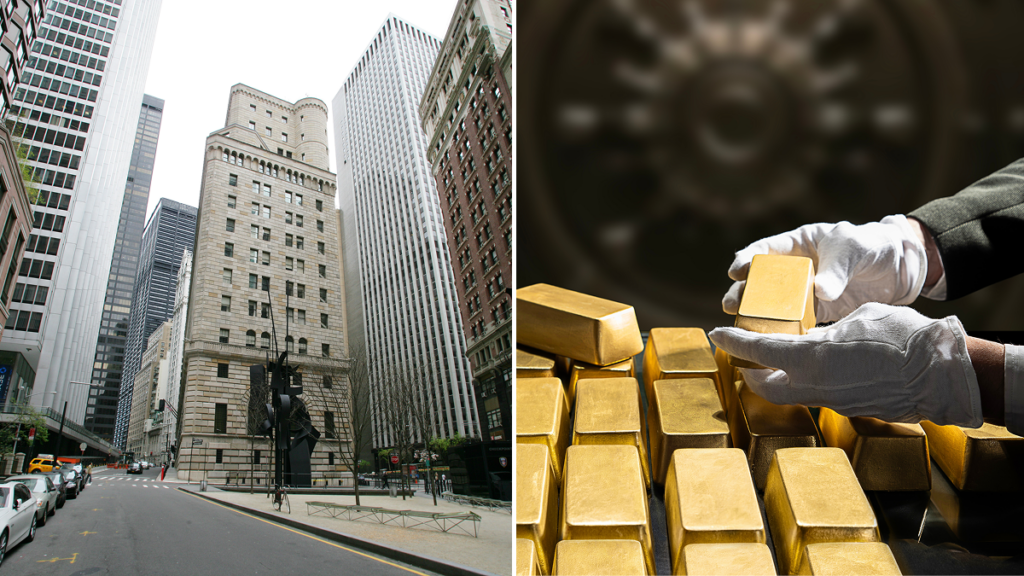
Other countries are already pulling their gold out of the United States. Spain has yet to say whether it will follow. Credit: Northfoto / TSViPhoto - Shutterstock
Somewhere beneath Manhattan sits an undisclosed quantity of gold belonging to Spain. The Banco de España knows exactly how much is stored there, yet it will not tell the public.
Banco de España will not confirm the figure
Spain’s gold reserve stands at around 281 tonnes worth close to €33 billion at current prices. Most of it sits in the Banco de España‘s own underground vault in Madrid, but a portion has sat abroad for decades, split between New York, London and Switzerland.
How that portion is divided between the three cities is not public information. Analysts who track the reserve describe the New York share as relatively small, but the Banco de España has never confirmed a figure, and the exact split, according to financial analysis site Merca2, “remains under a considerable level of confidentiality.”
The gold sits inside the Federal Reserve Bank of New York’s vault, 25 metres beneath Liberty Street in Manhattan, sealed behind a 90-tonne steel cylinder that cannot be reopened once closed for the day. The vault holds around 6,300 tonnes of gold belonging to dozens of nations, including Germany, Italy, the Netherlands and Switzerland, worth more than a trillion dollars (about €860 billion) in total.
The gold that once fled to Moscow
It would not be the first time Spanish gold vanished from public view. In October 1936, four months into the Spanish Civil War, the Republican government shipped roughly 510 tonnes of gold out of Cartagena, most of it bound for the Soviet Union, in exchange for arms and military supplies to fight Franco’s forces.
Historians who have traced the transactions say the gold was spent through documented, verifiable payments rather than seized or stolen. Franco’s regime later used the episode, known as the ‘Moscow gold’, as propaganda to discredit the defeated Republic for decades afterwards.
A 2007 sale Spain might now regret
Spain’s reserve was once far larger. In 2007, under economy minister Pedro Solbes, the Banco de España sold about 134 tonnes, some 4.3 million troy ounces, at roughly €669 an ounce, arguing that gold offered poor returns compared with other assets. The sale raised close to €2.9 billion.
At today’s prices, that same gold would be worth in the region of €16 billion, more than five times what it fetched. It is a costly example of how differently gold looks in a nervous market compared with the calm one Solbes was selling into.
Why other countries are already moving theirs
Spain is not the only country weighing what to do with gold sitting on American soil. The Netherlands withdrew 86 tonnes from the United States this month, moving it to London and citing growing geopolitical instability. German economists have urged their own central bank to bring gold home, pointing to the unpredictability of Donald Trump’s administration, while France repatriated much of its reserve from the US as far back as the 1960s, under Charles de Gaulle.
The Banco de España has given no indication that it plans to follow. For now, Spain’s gold stays beneath Manhattan, caught between the convenience of leaving it in the world’s deepest gold vault and a growing European question of whether that vault still belongs to a country Europe can rely on.
Follow Euro Weekly News on Google News
Get breaking news from Spain, travel updates, and expat stories directly on your Google News feed.
Follow on Google NewsSign up for personalised news
Subscribe to our Euro Weekly News alerts to get the latest stories into your inbox!
By signing up, you will create a Euro Weekly News account if you don't already have one. Review our Privacy Policy for more information about our privacy practices.



Harry Dennis
Born in the UK and raised on the Cádiz coast, Harry brings his background in design, music, and photography to his writing for Euro Weekly News, sharing stories that celebrate culture and lifestyle across Spain and beyond.
Comments