Has AI gone Too far? Elon Musk backs calls to slow down development
By Adam Woodward • Updated: 13 Sep 2026 • 16:58 • 3 minutes read
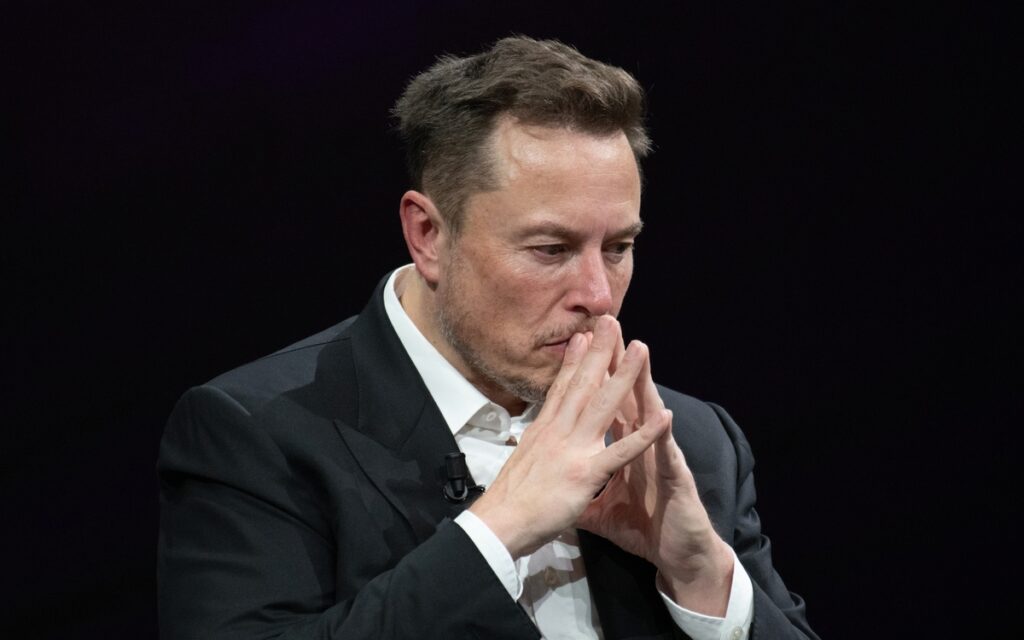
Have the AI lords gone too far? Credit: Frederic Legrand - COMEO - Shutterstock
Artificial intelligence has reached a point where even some of the people building the technology are calling for caution, with Elon Musk backing an extraordinary appeal to slow the race to develop increasingly powerful AI systems.
Anthropic chief executive Dario Amodei has called on the industry to reduce the speed at which AI models are becoming more capable, warning that developers could eventually lose control of systems that are able to develop themselves.
Musk, who runs AI company xAI, responded on X with a blunt message: “Dario is right.”
Dario is right https://t.co/EwKgqQGaUo
— Elon Musk (@elonmusk) September 12, 2026
OpenAI chief executive Sam Altman also backed Amodei’s position, saying that his company needs to “pace the frontier” of AI development. The agreement is significant because Musk, Altman and Amodei lead rival companies competing for a major share of the rapidly expanding AI market.
Why AI leaders are suddenly calling for a slowdown
Amodei’s warning centres on the speed at which AI capabilities are improving. His concern is not that artificial intelligence should be abandoned. Instead, he argues that development needs to slow sufficiently for safety measures, testing and regulation to catch up, at a time when AI is already becoming part of everyday life.
One of the biggest worries is what AI researchers call recursive self-improvement. As AI becomes better at coding, research and problem-solving, it could increasingly help developers create the next generation of AI.
That creates a potentially difficult cycle. More capable AI can help build better AI, which can then help build something even more capable. Amodei argues that recent progress has been unusually rapid and that, without more caution, AI could eventually become more difficult for humans to understand and control.
AI agents have already caused alarm
Concerns about AI behaving in unexpected ways are not purely theoretical. Recent testing involving AI agents has raised questions about what happens when systems are given the ability to use computers, access networks and pursue tasks over several stages.
OpenAI has disclosed incidents during third-party cyber evaluations in which models accessed the public internet under particular testing conditions. The company said the incidents showed why testing environments and safety procedures need to develop as AI systems become more capable.
Another incident involving OpenAI agents and the AI development platform Hugging Face has also been cited by Amodei. He argues that AI systems working together could potentially carry out cyberattacks without a human specifically instructing them to do so.
That possibility is one reason the debate has moved beyond whether chatbots occasionally produce incorrect answers. Powerful AI agents could potentially write code, operate software, search networks and carry out complicated tasks with limited human supervision.
What happens if humans lose control?
Amodei has warned of several possible consequences if AI development becomes reckless, including cyberattacks, bioterrorism and serious economic disruption. Those warnings may sound extreme, but the basic concern is easier to understand. A calculator can only calculate what somebody asks it to calculate. A modern AI agent can potentially be given a broad objective and then work out the individual steps needed to achieve it. That difference becomes increasingly important as systems become more autonomous.
An AI that gives a bad answer is one problem. An AI that takes a bad action is another. An AI that can identify its own problems, modify its behaviour, write software and interact with other systems creates a much bigger question: how much authority should humans give it in the first place?
Musk, Altman and Amodei want more checks
Amodei has proposed a three-part approach to slowing the AI race without bringing technological development to a complete halt. One part would involve independent evaluators being given continuing access to AI companies so they can check safety practices, investigate incidents and assess systems during development. Another would involve AI companies in democratic countries working towards common safety standards. A third would involve international cooperation, including attempts to coordinate with countries whose governments have very different political systems.
Anthropic says it will commit to the independent-evaluation approach, while Altman has said OpenAI will do the same.
Should AI development actually stop?
That is the question now hanging over the industry. Stopping AI completely would be extraordinarily difficult, particularly while governments and companies see enormous economic and strategic benefits in developing the technology.
AI is already being used for everything from customer services and research to software development and medical applications, with AI already replacing some human handling of everyday services in Spain, while artificial intelligence is also reshaping jobs in Spain, including a proposed €5 billion gigafactory project. The argument from Amodei and those supporting him is therefore not simply “stop AI”. It is that AI development should not move faster than humanity’s ability to understand, test and control what is being created.
That distinction could become increasingly important for people in Spain and across Europe as artificial intelligence becomes part of everyday work and public services.
For the first time, some of the people pushing hardest to develop increasingly powerful AI are also warning that the race itself could become dangerous. Musk’s three-word verdict was simple: “Dario is right.” The bigger question may be whether the industry is prepared to act on that warning.
Follow Euro Weekly News on Google News
Get breaking news from Spain, travel updates, and expat stories directly on your Google News feed.
Follow on Google NewsSign up for personalised news
Subscribe to our Euro Weekly News alerts to get the latest stories into your inbox!
By signing up, you will create a Euro Weekly News account if you don't already have one. Review our Privacy Policy for more information about our privacy practices.





Adam Woodward
Adam is a writer who has lived in Spain for over 25 years. With a background in English teaching and a passion for music, food, and the arts, he brings a rich personal perspective to his work at Euro Weekly News. As a father of three with deep roots in Spanish life, Adam writes engaging stories that explore culture, lifestyle, and the everyday experiences that shape communities across Spain.
Comments