Two young men are choosing a life most of their generation has left behind
By Molly Grace • Published: 22 Sep 2026 • 20:11 • 4 minutes read
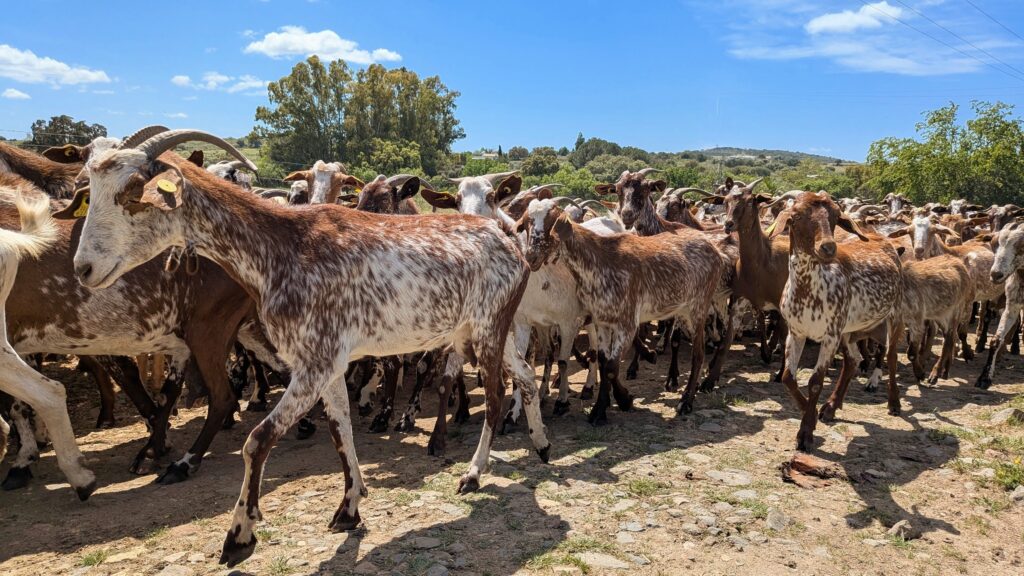
Spain's rural traditions cannot survive on nostalgia alone. Photo credit: Pat Moore/Shutterstock
If we asked a 19-year-old that he could spend his days playing on his PlayStation or looking after 200 goats, most of us could probably guess which one would choose. But David Tomé is not like most 19-year-olds, while many young people are looking towards university, office jobs and life in the cities, this young man from Málaga has chosen a very different path, and he is building his entire future around it.
David has gone from buying his first goat at just 12 years old to running a herd of around 200 animals in the Málaga countryside. He has no family farming business to inherit and no long-established career behind him. He simply decided that this was what he wanted to do, and perhaps that makes his story about much more than one teenager and his goats.
From one goat to 200
Spain desperately needs young people willing to take on the country’s farms and livestock traditions as an ageing generation of farmers and rural workers approaches retirement. At a time when keeping those traditions alive is becoming increasingly difficult, David is proof that some young people are still prepared to choose the countryside, even when there are plenty of easier options elsewhere.
David, from Torrox, first became interested in goats when he was just 12. While other children were more interested in spending their free time playing, he bought his first goat and began learning how to look after it. By 16, he had his own small farm. This year, he took the next major step. In August, he moved to Corumbela, a small village in the Axarquía, where he now lives alongside his herd of around 200 goats.
It was not a family tradition that pushed him into the profession. His family initially worried about his decision because they knew how demanding life as a livestock farmer can be, but they eventually respected the path he had chosen. David, however, seems to have known for years that this was where he wanted to be. He has said that, as a child, he would rather go out with goats and a goatherd than go to the park. While some people might be drawn to motorbikes or other hobbies, goats were what caught his attention. Now they are his livelihood.
No days off for 200 goats
There is nothing particularly glamorous about running a herd of this size. The animals need feeding and caring for every day, regardless of whether David feels like getting out of bed, whether it is a weekend or whether he has other plans. His daily work includes feeding the goats, providing straw, milking and dealing with the constant jobs involved in keeping such a large herd healthy.
There are no traditional days off because the animals cannot simply be left without care. Yet David does not describe that as a sacrifice. For him, it is the life he has chosen. His unusual career has also attracted attention online, where people have told him that he is an example to other young people because he continued working towards what he wanted despite being different from those around him. He has described himself as something of an odd one out because there are so few people his age choosing this profession.
Spain needs young farmers
That makes David’s story particularly interesting in a country where agriculture and livestock farming face a serious generational problem. Spain’s Ministry of Agriculture has warned that around two out of every three holders of agricultural holdings will reach retirement age by 2030, while only about 9% of farmers are currently under 41. The problem is not simply that young people are moving away from rural areas. There are still young people interested in countryside living, and some rural municipalities have actually recorded population growth.
The bigger challenge is ensuring that there are enough young people willing and able to take over farms, livestock operations and the knowledge that comes with them. Agriculture requires land, investment, equipment and years of practical experience. For somebody starting from scratch, the barriers can be considerable. That is why David’s decision stands out. He did not inherit a farm and decide to continue the family business. He saw a way of life he wanted and started building towards it himself.
From bricklayer to shepherd
David is not the only young person choosing a rural life over a more conventional career. Marcus, a 25-year-old shepherd, made his own dramatic change after leaving his job as a bricklayer to become responsible for a flock of around 1,400 sheep. His work takes him high into the Alps, where he spends the summer months looking after the animals as they move through traditional mountain grazing routes between Italy and Austria.
He can spend weeks living in a mountain hut at more than 2,400 metres above sea level, accompanied by his dog and responsible for keeping track of the enormous flock. It is an exhausting job, but it is also part of a centuries-old tradition of moving livestock between seasonal grazing grounds. Marcus has chosen to make that his career rather than leave the mountains behind for a more conventional job. And that is the connection between his story and David’s. Neither young man was simply handed a rural lifestyle and told to continue it. They chose it.
There may still be hope for Spain’s countryside
Spain’s rural traditions cannot survive on nostalgia alone. Someone has to milk the goats, tend the sheep, maintain the farms and pass the practical knowledge of one generation to the next.For years, there have been concerns about what will happen when older farmers and livestock keepers retire without somebody ready to take over. That makes young people like David particularly important. His ambition does not stop at 200 goats, either. He hopes to eventually increase his herd to around 300 animals, establish a small cheese factory and develop his farm for ecotourism, giving visitors the chance to see his animals and experience rural life for themselves.
There is no guarantee that he will succeed. Farming and livestock are difficult businesses, and the challenges facing Spain’s countryside are not going to disappear because one 19-year-old has decided to give it a go. But perhaps that is not the point. At a time when Spain needs a new generation to keep its rural economy and traditions alive, David is showing that being young does not automatically mean wanting to leave the countryside behind. Sometimes, it means choosing 200 goats instead.
Follow Euro Weekly News on Google News
Get breaking news from Spain, travel updates, and expat stories directly on your Google News feed.
Follow on Google NewsSign up for personalised news
Subscribe to our Euro Weekly News alerts to get the latest stories into your inbox!
By signing up, you will create a Euro Weekly News account if you don't already have one. Review our Privacy Policy for more information about our privacy practices.



Molly Grace
Molly is a British journalist and author who has lived in Spain for over 25 years. With a background in animal welfare, equestrian science, and veterinary nursing, she brings curiosity, humour, and a sharp investigative eye to her work. At Euro Weekly News, Molly explores the intersections of nature, culture, and community - drawing on her deep local knowledge and passion for stories that reflect life in Spain from the ground up.
Comments