The pets nobody chooses: Spain’s shelters are running out of people willing to take them home
By Molly Grace • Published: 22 Sep 2026 • 17:56 • 3 minutes read
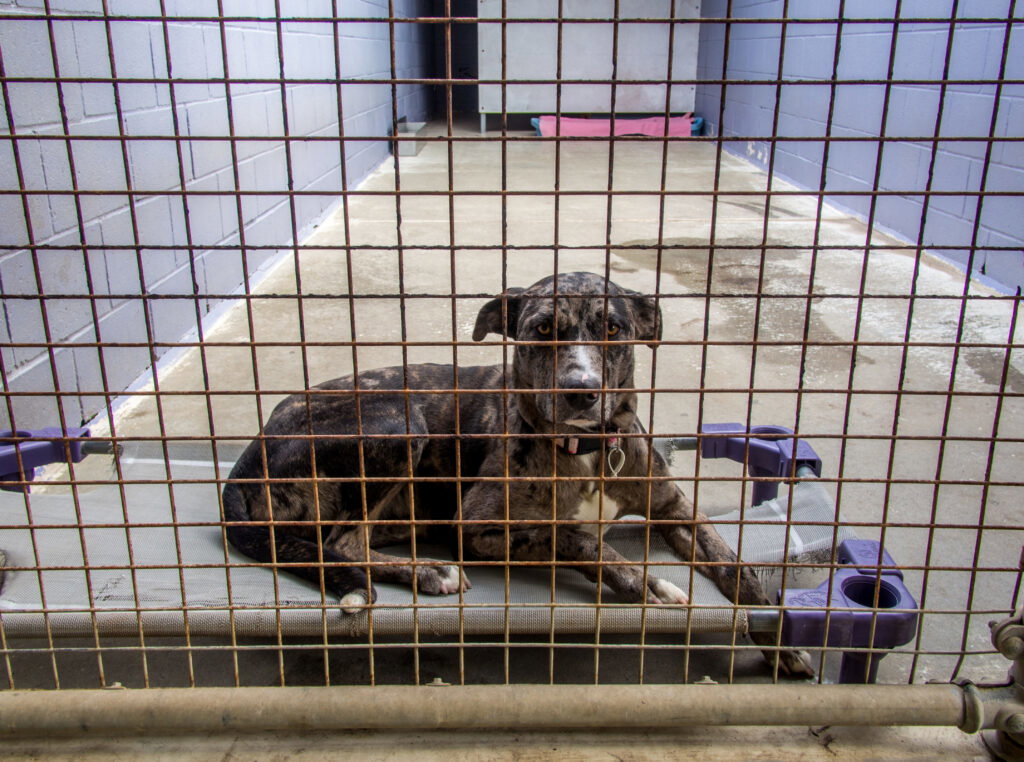
35% of families interested in adopting ultimately did not go through with it. Photo credit: Tibor M/Shutterstock
If you have ever walked past a rescue centre and wondered how there can still be so many dogs and cats waiting for homes when so many people say they would love to have a pet, Spain’s latest figures give a pretty uncomfortable answer. Hundreds of thousands of animals are still arriving at shelters, but the number finding new families has fallen to its lowest level since the pandemic.
And that means the dogs and cats who do not get chosen are spending much longer waiting for somebody to take them home. The figures come from Fundación Affinity’s 2026 edition of its annual ‘Él Nunca Lo Haría’ study, which examines abandonment, loss and adoption in Spain using data from 2025.
285,720 dogs and cats entered shelters
A total of 285,720 dogs and cats entered public and private shelters across Spain during 2025. That included 169,268 dogs and 116,452 cats. The figure was slightly lower than in 2024, but Fundación Affinity says the change is not significant enough to indicate a real improvement. Instead, abandonment and loss have essentially remained stuck at a high level. Adoptions, meanwhile, have gone in the opposite direction.
Around 120,000 animals found new homes, equivalent to about 42% of those entering shelters. That leaves roughly 165,700 animals that were not adopted during the period covered by the figures. For dogs, around 72,000 were adopted, 18% fewer than in 2024 and the lowest figure since the pandemic, when approximately 79,000 dogs were adopted. Cat adoptions also fell, with around 48,000 cats finding homes, down 14% on the previous year.
Why are people deciding not to adopt?
One of the most revealing figures concerns people who had already decided that they wanted to adopt. In 2025, 35% of families interested in adopting ultimately did not go through with it. The two main reasons were not finding the size of animal they wanted and not accepting the conditions attached to adoption. That helps explain why some dogs and cats can remain in shelters for months while others are quickly chosen.
Puppies spend an average of 2.7 months in shelters, compared with 12.8 months for adult and senior dogs. For cats, kittens stay an average of 3.3 months, while adult and senior cats remain for 13.2 months. Behaviour problems are now the biggest factor associated with prolonged stays, identified by 77.6% of animal protection organisations. Other barriers include potentially dangerous breeds, chronic illness, large size and advanced age.
Why are animals ending up in shelters?
The latest figures do not support the idea that Spain is suddenly experiencing a new surge in abandonment. Instead, the number of dogs and cats entering shelters has remained broadly stagnant, with the 2026 study describing the situation as a continuing problem rather than a significant improvement or deterioration.
Among known reasons for animals being abandoned, unwanted litters account for 15.3%, followed by loss of interest in the animal at 14%, moving home at 11.9%, the end of hunting season at 10.5% and behaviour problems at 9.8%. Cats are particularly affected by unwanted litters, with 44.1% of cats entering shelters during the second four months of the year, coinciding with the main reproductive period.
How many are put to sleep?
The 2026 study reports that 4.8% of dogs and 16.3% of cats entering shelters during 2025 died or were euthanised. It does not separate deaths from euthanasia, so those figures cannot accurately be described as the percentage of animals that were put to sleep. What the figures make clear is that falling adoptions have consequences beyond a longer wait for a new family.
Adult and older animals are already spending around a year in shelters on average, while organisations are continuing to take in hundreds of thousands of animals. And when only around four in every ten animals entering shelters are adopted, every empty kennel or cat enclosure is important, because another animal is likely to be waiting for that space and for it’s forever home.
Follow Euro Weekly News on Google News
Get breaking news from Spain, travel updates, and expat stories directly on your Google News feed.
Follow on Google NewsSign up for personalised news
Subscribe to our Euro Weekly News alerts to get the latest stories into your inbox!
By signing up, you will create a Euro Weekly News account if you don't already have one. Review our Privacy Policy for more information about our privacy practices.





Molly Grace
Molly is a British journalist and author who has lived in Spain for over 25 years. With a background in animal welfare, equestrian science, and veterinary nursing, she brings curiosity, humour, and a sharp investigative eye to her work. At Euro Weekly News, Molly explores the intersections of nature, culture, and community - drawing on her deep local knowledge and passion for stories that reflect life in Spain from the ground up.
Comments