223 endangered goats and their cheese are keeping one small Spanish village alive
By Harry Dennis • Published: 24 Sep 2026 • 18:12 • 2 minutes read
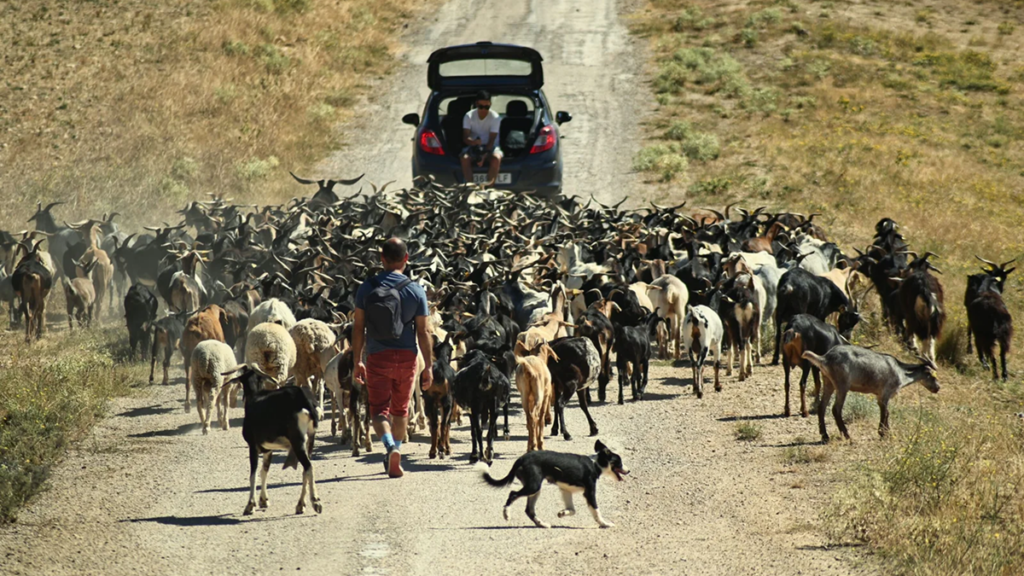
Rodrigo González Garrido herds his Verata goats along a track near Villalba de la Sierra. Credit: Quesería La Cabra Tira Al Monte
Rodrigo González Garrido swapped a forestry career for 223 goats and a cheese vat, and it’s working: his dairy has brought a shepherd’s family to settle in the village for good. The Verata is one of Spain’s most endangered native breeds, and cheese might be what saves it.
A forestry engineer who went back to herding goats
González Garrido finished a degree in forestry engineering in 2007, right as Spain’s economy fell into recession. Rather than chase engineering work, he went home to Villalba de la Sierra, a small town in the Serranía de Cuenca (the mountainous district south of Cuenca city), and took over the family’s goat herd.
In 2017 he turned that herd into something bigger, launching a dairy called La cabra tira al monte (the goat heads for the mountain) after winning a business grant from the Cuenca provincial government. It’s now the only cheese dairy left in the Serranía district.
Spain’s Verata goats have fallen to under 6,600 animals
The Verata is a native Spanish breed that once grazed by the hundred thousand around La Vera, in Cáceres province. Spain’s agriculture ministry now lists it among the country’s officially endangered native breeds, and the numbers show why: from around 100,000 animals in 1986 to just 6,554 by 2024.
González Garrido’s flock, 223 goats managed entirely through open grazing rather than intensive farming, is now one of the breed’s larger surviving herds. He makes four different cheeses from their milk, sold on to restaurants in Cuenca city and, by his own account, selling out every time.
The cheese bringing a family back to the village
The dairy isn’t a one-man operation. González Garrido employs a second shepherd, who moved to Villalba de la Sierra with his partner and four children after training through a shepherding scheme run with the Castilla-La Mancha regional government.
For a region that has spent decades emptying out, as young people leave for the cities and villages lose the population needed to keep schools, shops and services running, one working family choosing to stay is a step forward in the direction of repopulating these areas.
Grazing helps clear the mountain, and can help prevent wildfires
There’s a wider case for keeping herds like this on the land. Goats grazing the undergrowth reduce the dry vegetation that lets wildfires spread, which is why Castilla-La Mancha’s regional government is now offering grants to farmers for controlled grazing specifically to cut fire risk, a tool already being tried further south in Alicante. Villalba de la Sierra itself has had forest fires break out nearby in recent years.
For now, the cheeses made by Rodrigo stay mostly local, sold on to restaurants around Cuenca city rather than shipped nationwide. But if the model keeps working, it offers another rare option as to how Spain can keep its rural villages and its vanishing wildlife from declining, making both work together.
Follow Euro Weekly News on Google News
Get breaking news from Spain, travel updates, and expat stories directly on your Google News feed.
Follow on Google NewsSign up for personalised news
Subscribe to our Euro Weekly News alerts to get the latest stories into your inbox!
By signing up, you will create a Euro Weekly News account if you don't already have one. Review our Privacy Policy for more information about our privacy practices.





Harry Dennis
Born in the UK and raised on the Cádiz coast, Harry brings his background in design, music, and photography to his writing for Euro Weekly News, sharing stories that celebrate culture and lifestyle across Spain and beyond.
Comments