British drug dealer swaps cocaine for Pokémon cards in bizarre barter deal
By Molly Grace • Published: 24 Sep 2026 • 23:04 • 3 minutes read
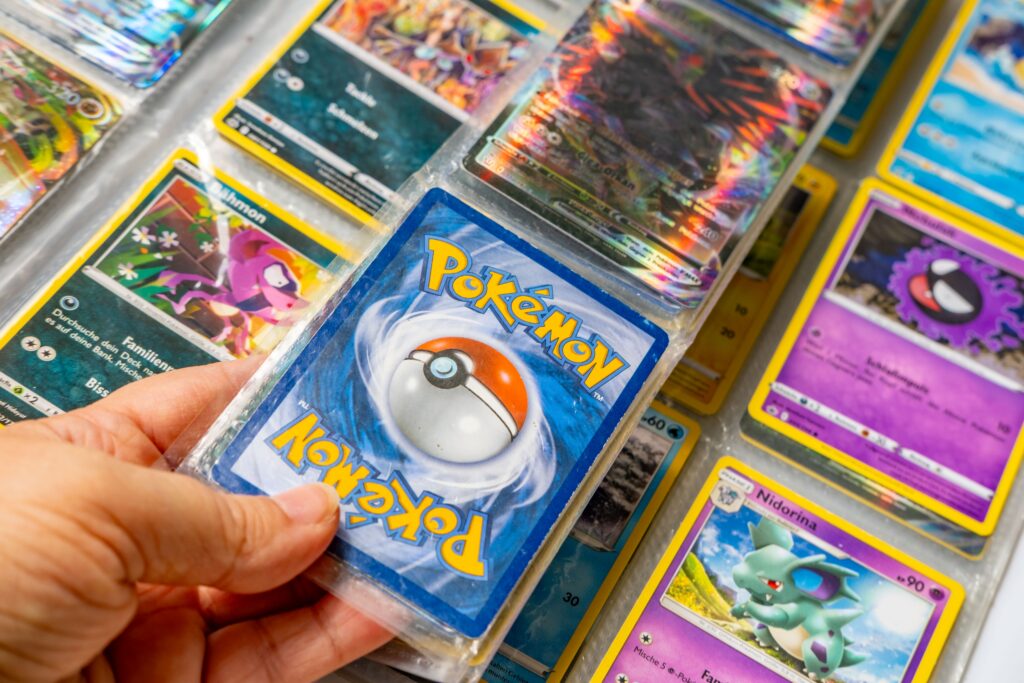
Children have been swapping Pokémon cards for decades. Photo credit:Kittyfly / Shutterstock.com
There was a time when money was not the only way to buy something or settle a debt. Before bank cards, online transfers and the joy of discovering that your direct debit has mysteriously gone up again, people traded what they had for what they needed. A few vegetables could become a loaf of bread. Milk could be swapped for eggs. A piece of cloth might be exchanged for food.
It was simple: if both sides thought the deal was fair, the trade was done. Fast-forward a few hundred years and apparently we have come full circle. Only now, instead of milk for vegetables, someone is accepting Pikachu and Charizard.
Pokémon cards become an unlikely currency
A 26-year-old British drug dealer has been jailed after some of his customers apparently settled their debts with Pokémon trading cards. Jack Young-Larter, from London Road in Maidstone, Kent, was sentenced to three years and four months at Maidstone Crown Court on Thursday, September 17, after pleading guilty to supplying cocaine and cannabis and possessing criminal property.
Kent Police discovered that his customers had paid him in several ways, including cash and bank transfers. Messages found on his phones also showed Pokémon cards being used as payment. Officers found a collection of rare cards at his home which they described as having a high monetary value. Around £2,000 in cash was also seized. Neither the money nor the cards will be returned to him. Both were subject to a Deprivation Order because of their connection to his criminal activity.
Why are Pokémon cards worth so much?
For anyone who remembers Pokémon cards as something children swapped in the playground, using them to pay a drug dealer might sound like a particularly strange choice of currency. But some Pokémon cards really can be worth serious money. Not every card is valuable. Prices depend on factors including rarity, condition, the particular set or edition and demand from collectors.
The Pokémon Company says the secondary-market value of its cards is determined by demand within the Pokémon community. Its sets contain different levels of rarity, with some cards considerably harder to find than others. That scarcity matters. A card produced in huge numbers is unlikely to command a fortune, while a rare card in excellent condition can attract collectors prepared to pay substantially more.
Childhood favourites become collector gold
Older cards can be particularly desirable when they have survived in good condition. Popular Pokémon such as Charizard and Pikachu have enormous collector followings, while unusual artwork, limited releases and particular printing characteristics can make individual cards even more sought after. Then there is nostalgia.
Pokémon has been around for decades, so some of the children who once spent their pocket money on booster packs are now adults with money of their own to spend on the cards they grew up with. What once looked like a children’s hobby has developed into a serious collector’s market, giving some cards a value far beyond their original price.
From playground swaps to drug debts
There is something rather fitting about the way the cards were apparently being used, handing over one card in exchange for another. The whole system depends on both sides deciding that the trade is fair. Young-Larter’s customers simply appear to have taken that idea somewhere considerably less innocent. Instead of swapping a duplicate card for one missing from their collection, they could use cards to settle a debt.
It is an oddly modern version of an ancient idea. Bartering existed long before wallets, bank accounts and contactless payments. People exchanged goods directly because they needed something another person had. The difference is that a sack of potatoes has fairly obvious uses. A Pokémon card only has financial value if somebody else is willing to pay for it. In the collector market, apparently, that is more than enough.
Police uncover drug operation
The Pokémon cards were only part of what officers discovered when Kent Police searched Young-Larter’s home on May 1. They found nearly 110 grams of cannabis, more than 25 grams of cocaine, scales, empty deal bags and two mobile phones. Police examined the phones and found messages relating to the marketing and supply of cocaine and cannabis. He was sentenced to three years and four months in prison, while the cash and Pokémon cards were confiscated under the Deprivation Order.
The cards may have started life as something children collected and swapped at school. Now, over twenty years later, some have become valuable enough to trade for serious amounts of money. Young-Larter’s customers apparently recognised that value too, once, it was trading food for different items. Now, apparently, it can be Pokémon cards for cocaine. Somewhere along the way, the barter system took a very strange turn.
Follow Euro Weekly News on Google News
Get breaking news from Spain, travel updates, and expat stories directly on your Google News feed.
Follow on Google NewsSign up for personalised news
Subscribe to our Euro Weekly News alerts to get the latest stories into your inbox!
By signing up, you will create a Euro Weekly News account if you don't already have one. Review our Privacy Policy for more information about our privacy practices.



Molly Grace
Molly is a British journalist and author who has lived in Spain for over 25 years. With a background in animal welfare, equestrian science, and veterinary nursing, she brings curiosity, humour, and a sharp investigative eye to her work. At Euro Weekly News, Molly explores the intersections of nature, culture, and community - drawing on her deep local knowledge and passion for stories that reflect life in Spain from the ground up.
Comments