Spain banned circus lions and tigers, but other animals are still performing
By Harry Dennis • Published: 01 Oct 2026 • 19:45 • 2 minutes read
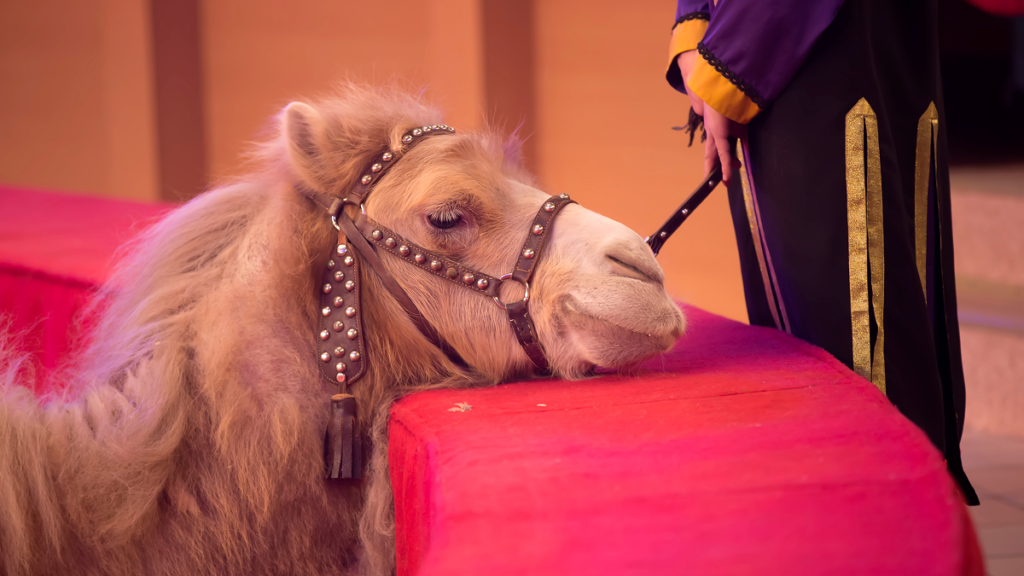
Spain's circus ban covers wild animals, but others can still perform. Credit: SviatlanaLaza / Shutterstock
Buying circus tickets for the children or grandchildren this winter? Spain’s ban on wild animals doesn’t mean every show is animal-free. Horses, llamas and camels can still appear, and a disputed Christmas circus in Valencia has raised questions about whether they should.
Does Spain’s circus ban cover every animal?
Spain’s national animal welfare law, passed in March 2023, prohibits wild species in circus performances, and circus owners were given a transition period that ended in March 2024. Using wild species in circus shows is classed as a very serious infringement, carrying fines of between €50,001 and €200,000.
Domestic species are not covered by that blanket prohibition, although regional and municipal restrictions may go further. Welfare obligations still apply though: the national law also prohibits animal performances that cause anguish, pain or suffering.
Valencia’s Christmas circus brought animals back
Valencia authorised animals at its Circ de Nadal, or Christmas circus, in December 2025 after changes to regional legislation. Animal welfare charity FAADA said this marked the return of animals to an authorised circus show after around a decade without them in the Valencian Community. The organisation listed equids, cattle, llamas, camels and birds among the animals participating. Permission did not extend to wild species such as pythons, boas or crocodiles.
Prominent animal protection and advocacy organisations FAADA, ANDA and AnimaNaturalis criticised the decision, arguing that circus entertainment should rely entirely on human performers. They also highlighted opposition from the Valencian circus professionals’ association, APCCV, which considered the authorisation a backward step for the sector.
A limping camel prompted a formal complaint
The controversy extended beyond the question of which species could legally perform. In January, Qué! reported that a video shared by activists had exceeded 500,000 views. The activists alleged that animals were pushed towards the performance area and that handlers used whips. They also relayed a spectator’s account of a camel struggling to walk. The newspaper reported that the circus’s programme allowed for changes for organisational or animal welfare reasons. That general notice preceded the subsequent formal complaint.
On April 8, AnimaNaturalis, AAP Primadomus, ANDA and FAADA, announced a joint complaint to Valencia City Council over alleged mistreatment of the camel.
They said recordings from December 2025 and January 2026 showed the animal continuing to perform despite a visible limp. The organisations requested protective measures and the opening of sanction proceedings. Their allegations should not be confused with a finding by the authorities that an offence occurred.
Should domestic animals still perform?
For the charities, the concern is also the life behind the ring. They argue that transport, confinement and training can compromise animals’ welfare even when the species is legally permitted.
The Valencia dispute leaves families with two separate questions: whether an animal can legally appear, and whether they even want to support a show that uses animals.
Spain’s wild-animal ban does not guarantee an animal-free show, and permission to use domestic animals does not remove the obligation to protect their welfare.
Follow Euro Weekly News on Google News
Get breaking news from Spain, travel updates, and expat stories directly on your Google News feed.
Follow on Google NewsSign up for personalised news
Subscribe to our Euro Weekly News alerts to get the latest stories into your inbox!
By signing up, you will create a Euro Weekly News account if you don't already have one. Review our Privacy Policy for more information about our privacy practices.





Harry Dennis
Born in the UK and raised on the Cádiz coast, Harry brings his background in design, music, and photography to his writing for Euro Weekly News, sharing stories that celebrate culture and lifestyle across Spain and beyond.
Comments