A schoolchild crowns the tower Tarragona had never finished before
By Adam Woodward • Published: 06 Oct 2026 • 10:10 • 3 minutes read
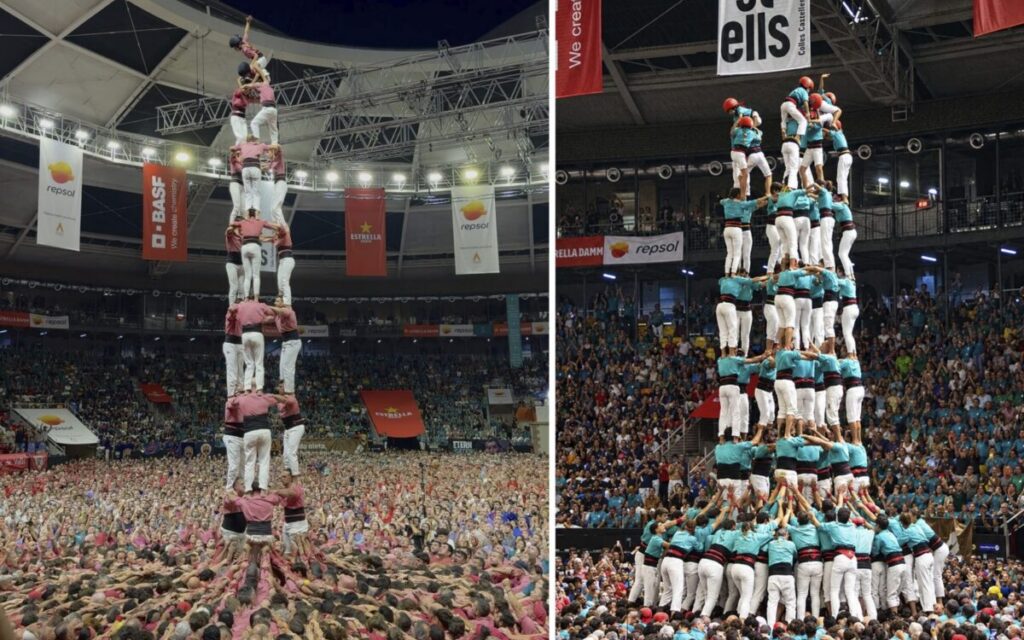
Tarragona's human-tower contest. Credit: @collavella / @Verds X
Somewhere near the top of a nine-storey human tower in Tarragona on Sunday night, the person who mattered most was the smallest in the ring. A child in a helmet scrambled up the last shoulders, raised one arm, and a structure nobody had ever finished was complete. Getting that child down again, in one piece, was the part the arena was holding its breath for.
That crown won the weekend for Castellers de Vilafranca, a team from the wine town of Vilafranca del Penedes, in green shirts. It was their 14th title at the Concurs de Castells, Catalonia’s big human-tower contest, held every two years in the old bullring. A rival side from Valls, in pink, pushed them until late and finished second. A Tarragona team took third.
Why the top is a child
Newcomers usually ask the same thing. Why send a child up there at all? Weight is the plain answer. Adults build the base and the trunk. Only a light body can take the last few levels without pulling the whole tower over. The climber at the very top, often of primary-school age, is called the enxaneta. One raised arm means the tower is crowned. A helmet is standard. Parents in the team have usually watched that child train for years.
Falls still happen. One did on Sunday, a tangle of shirts caught by the packed crowd at the bottom, which exists for that reason. Coming down in order is what turns a dare into a result. Angel Grau, who leads the Vilafranca team, was blunt once his side had won. “We are the best colla in the world, never doubt it,” he said, in comments carried by Catalan News.
A town custom, not a stunt show
Castells grew out of an 18th-century dance, the Ball de Valencians, which took root around Valls and turned into a contest between towns. Pau Casals, the cellist, backed the first Tarragona competition in 1932. It settled into a regular every-other-year event in the 1980s. UNESCO added human towers to its heritage list in 2010. The listing is a formal way of saying the skill stays inside the team, passed on by practice, from parents to children.
Most of the year there is no trophy. A team builds in the square in front of the town hall, during the local festa, and anyone can lock arms in the base. This October weekend is the exception. Forty-two teams took part, from a first session in Torredembarra to the final twelve in Tarragona on Sunday 4 October. A written table gives each shape a price, and the winner can take up to €16,000. One well-known team, from Terrassa, still refuses to enter, on the view that the custom should not be reduced to points.
Euro Weekly News looked ahead to the contest’s return in 2024. What changed this time was the tower itself: nine people on a level, nine levels high, finished and taken down for the first time. Shirt colour is how you tell the towns apart. Green meant Vilafranca. Pink meant Valls. A sash at the waist is what the climber grips on the way up, including the child on the last step.
If you only know the clip
A phone video makes the child look like the shock. In the ring, that child is the point. Families treat the top as a trust, not a trick. A bad step belongs to everyone underneath. A clean descent is the cheer.
Readers who want the related custom, over the regional border, can follow Valencia’s muixerangues: the Marina Alta group raised towers at Poblet this summer, and Gandia is gathering groups again for its intangible-heritage days. Another Catalan night that still belongs to the street is the Dance of the Dead in Verges.
Visitors adding a coast stay will find the Costa Dorada’s long sandy beaches a short ride from the ring. The next contest is not until 2028. Until then the picture that stays with you is the same one: a helmet, a raised arm, and a crowd that will not breathe out until that child is back on the ground.
Follow Euro Weekly News on Google News
Get breaking news from Spain, travel updates, and expat stories directly on your Google News feed.
Follow on Google NewsSign up for personalised news
Subscribe to our Euro Weekly News alerts to get the latest stories into your inbox!
By signing up, you will create a Euro Weekly News account if you don't already have one. Review our Privacy Policy for more information about our privacy practices.


Adam Woodward
Adam is a writer who has lived in Spain for over 25 years. With a background in English teaching and a passion for music, food, and the arts, he brings a rich personal perspective to his work at Euro Weekly News. As a father of three with deep roots in Spanish life, Adam writes engaging stories that explore culture, lifestyle, and the everyday experiences that shape communities across Spain.
Comments