Woman injured after wild boar suddenly charges while she walks in northern Spain
By Adam Woodward • Updated: 06 Oct 2026 • 11:19 • 3 minutes read
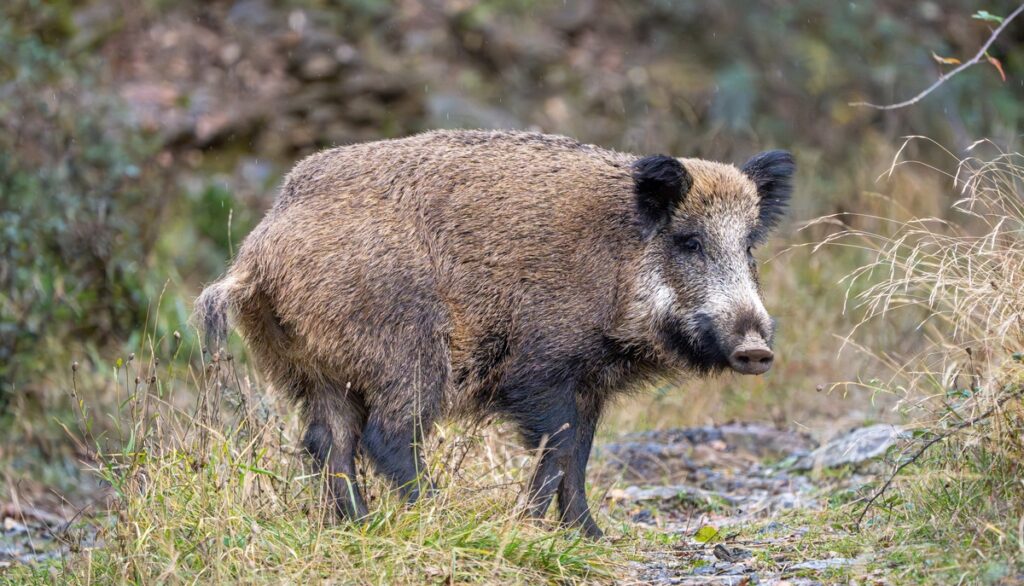
Ever more common wild boar. Credit: Kike.garcia.85 - Shutterstock
A 67-year-old woman has been injured after a wild boar suddenly charged at her while she was walking in northern Spain, with the incident highlighting the growing problems caused by the animals in several parts of the country.
The woman was attacked at around 10am on Sunday, October 4, near Karakate in Soraluze, Gipuzkoa. She knows the area well and was walking along the road between the town and Mount Karakate when the animal suddenly came out of dense vegetation and trees.
Wild boar knocks woman to the ground
The animal lunged at the woman and knocked her to the ground, causing injuries to several parts of her body with its tusks. Fortunately, the boar stopped attacking and the woman was able to get back on her feet and call for help herself. Emergency services took her to Donostia Hospital, where she was recovering from her injuries and was reported to be out of danger.
Local speculation initially suggested the animal could have been disturbed by a roe deer hunting drive taking place in the area that morning. However, the hunt was actually being held in a different valley around four or five kilometres away. Soraluze council and forest rangers said there did not appear to be a connection between the hunt and the attack, although they could not completely rule one out.
Wild boar causing problems across Spain
Incidents involving wild boar are not restricted to the Basque Country. Growing populations are creating problems in many parts of Spain, from roads and farmland to urban and residential areas. Spain’s Ministry of Agriculture says wild boar populations have shown a maintained a massive increase over the past decade, resulting in high population densities and growing sanitary, ecological and social problems.
Madrid is one region dealing with the issue. Authorities estimate there could be between 35,000 and 40,000 wild boar in the region and have expanded temporary hunting-control measures to 13 areas because of the risks created by the animals.
Those risks include damage to crops and infrastructure, road accidents and the possibility of transmitting diseases such as tuberculosis, brucellosis and African swine fever to livestock. Barcelona and its surrounding areas have also had a long-running problem with wild boar entering urban areas, particularly around the Collserola hills. Animals have become accustomed to finding food close to people, creating risks of aggressive encounters and road collisions.
Wild boar are a major road danger
For drivers, collisions are arguably one of the biggest everyday problems. The DGT’s own data provides a useful independent perspective. In 2024, it recorded 36,087 road incidents involving animals on Spanish roads covered by its statistics, with wild boar involved in 15,049 — about 42 per cent. Castilla y Leon, Catalonia and Galicia recorded more than 55 per cent of all accidents involving animals.
Government road-safety information has also identified the wild boar as the most common species involved in vehicle collisions with animals, accounting for 42 per cent of such incidents in its analysis. Galicia, Castilla y Leon and Castilla-La Mancha are among the worst-affected regions.
Galicia provides an indication of how serious the problem can become. A Coruña province recorded 1,509 collisions with wild boar in 2024, with 21 crashes causing injuries to 29 people.
Autumn is particularly important for drivers, with October and November among the months when animal-related collisions are most common.
African swine fever adds another concern
Wild boar have also become central to Spain’s fight against African swine fever (ASF). The disease does not infect people, but it can have serious consequences for domestic pigs and the Spanish pork industry. Spain recorded its first wild-boar cases since 1995 in Catalonia, with infected animals found in the Barcelona area.
Catalonia has consequently established infected and high-risk zones covering numerous small towns around Barcelona and has introduced restrictions and surveillance measures to limit the spread of the virus.
Elsewhere, authorities are taking precautions before the disease arrives. Andalucia declared a temporary hunting emergency for wild boar and feral pigs for the 2026-27 season, citing population growth, agricultural and environmental damage, road-safety risks and the need to reduce the risk of African swine fever spreading into the region.
Out walking in boar country
For walkers, the lesson from the Soraluze attack is simple: wild boar normally tend to avoid people, but encounters can become dangerous when animals feel threatened, surprised or cornered.
Drivers face a different problem. A boar can appear from side verges with very little warning, particularly around dawn, dusk and at night, making sudden swerving potentially more dangerous than slowing down and maintaining control of the vehicle.
Follow Euro Weekly News on Google News
Get breaking news from Spain, travel updates, and expat stories directly on your Google News feed.
Follow on Google NewsSign up for personalised news
Subscribe to our Euro Weekly News alerts to get the latest stories into your inbox!
By signing up, you will create a Euro Weekly News account if you don't already have one. Review our Privacy Policy for more information about our privacy practices.



Adam Woodward
Adam is a writer who has lived in Spain for over 25 years. With a background in English teaching and a passion for music, food, and the arts, he brings a rich personal perspective to his work at Euro Weekly News. As a father of three with deep roots in Spanish life, Adam writes engaging stories that explore culture, lifestyle, and the everyday experiences that shape communities across Spain.
Comments