Robots now clearing cigarette butts from Spanish beaches, and they’re heading for the streets next
By Harry Dennis • Published: 13 Oct 2026 • 12:10 • 3 minutes read
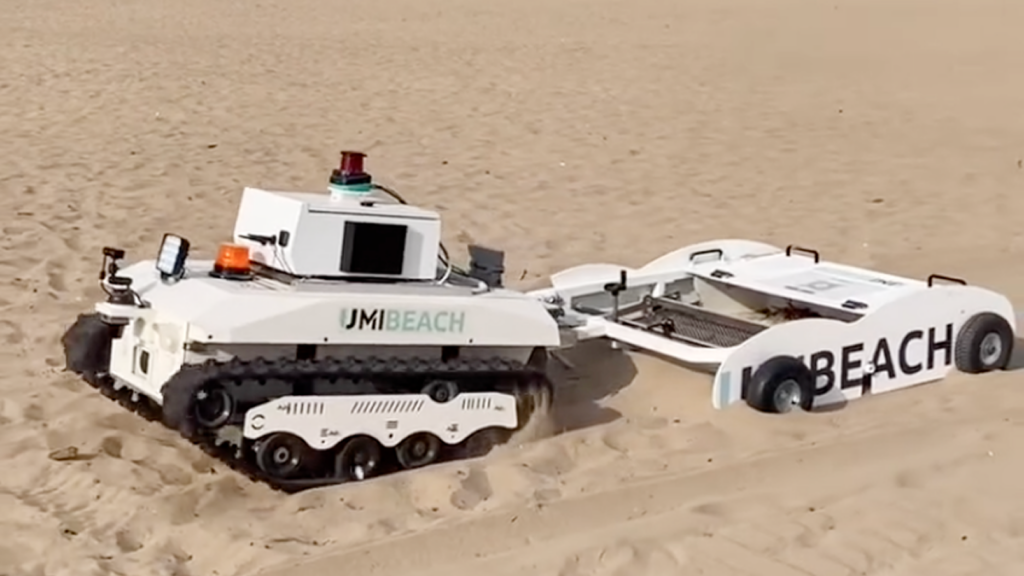
Umibots’ beach robots sift the top 10 centimetres of sand for cigarette butts. Credit: umibots_robotic / Instagram
Self-driving robots that sift cigarette butts out of the sand have been working on Santander’s beaches since summer 2025, steering around sunbathers as they go. Their Valencian maker now plans to send them onto city streets and into fire-prone woodland, with forest trials due in Madrid this winter.
Robots already at work on Santander and Valencia beaches
Visitors to El Sardinero in Santander have been sharing the sand with these machines since summer 2025, when the city’s beach cleaning contractors added them to their daily rounds. They work across eight of the city’s 13 beaches as part of a four-year, €6.8 million cleaning contract run by FCC Medio Ambiente and Ingesan, with each robot costing around €50,000.
The same model was first trialled at Valencia’s Malvarrosa beach in summer 2024 through the city council’s sandbox scheme (rules that let new technology be tested in real public spaces), and the beach version is also working in Las Palmas de Gran Canaria.
The company behind them, Valencia-based Umibots, started out building robots that moved parts around car factories. However, founder Clodo González said it was the cigarette butts he kept finding next to his beach towel that pushed him to point the technology at the sand instead.
How the robots find a cigarette butt in the sand
González calls them “industrial Roombas”, and the idea is much the same as the robot vacuum at home. A technician takes the machine to the beach and loads its route from a mobile phone, then it gets on with the job while the worker empties bins or deals with other spots.
The robot scoops up the top 10 centimetres of sand and runs it through a sieve with holes smaller than five millimetres, fine enough to catch butts. The clean sand goes straight back onto the beach as the rubbish is kept in a tank on board.
Finding its way is the tricky part, as an open beach has none of the walls a home robot relies on, which González compared to “sending a robot to the Moon”. So the machines use high-precision GPS, while a laser system spots obstacles almost 40 metres away and stops the robot if someone steps in front of it. Sunbathers don’t need to move either, as González told Cadena SER the robots work around anyone lying on the sand and come back once the spot is free.
The DANA mud of Albal was their toughest test
The machines faced a far messier job after the deadly October 2024 DANA flooded towns across Valencia. In Albal, one of the worst-hit towns, the first street robot spent between six and eight months clearing mud. “We had a lot of doubts about whether the robot could cope in such extreme situations, and it passed every test,” González said. The street version has since been trialled in Valencia’s Plaza de la Reina under the same council scheme.
Next stop is fire-prone scrubland around Madrid
González insists the machines aren’t there to replace cleaning crews, describing the robot as the “best friend” of those workers rather than an enemy. People will still be needed to remove bags, empty the tanks and reach the corners the robots can’t, he said.
Now the company wants to take the same base machine into the countryside, fitting it with different tools to clear scrubland and cut wildfire risk. González said the project uses satellite images and artificial intelligence to spot vegetation and decide which areas to tackle first, with the first forest trials planned in Madrid in December and January.
Spain’s beach smoking ban isn’t law yet
The robots are arriving as Spain moves towards banning smoking on beaches altogether. Plenty of smokers still seem to think it’s ok to leave a cigarette butt in the sand, but may not be aware that a single filter can contaminate up to 10 litres of seawater.
The Council of Ministers approved a bill on Tuesday July 21 that would ban smoking and vaping on sea and river beaches as well as bar terraces. However, with the new snap election being called for in November, these new laws are very much still up in the air and it remains unknown whether they will be passed after the new government is formed.
Until then, the rules depend on where you lay your towel, as some councils, including Calpe, already enforce their own smoke-free beaches. So it’s worth checking the signs at the beach entrance before lighting up.
Follow Euro Weekly News on Google News
Get breaking news from Spain, travel updates, and expat stories directly on your Google News feed.
Follow on Google NewsSign up for personalised news
Subscribe to our Euro Weekly News alerts to get the latest stories into your inbox!
By signing up, you will create a Euro Weekly News account if you don't already have one. Review our Privacy Policy for more information about our privacy practices.





Harry Dennis
Born in the UK and raised on the Cádiz coast, Harry brings his background in design, music, and photography to his writing for Euro Weekly News, sharing stories that celebrate culture and lifestyle across Spain and beyond.
Comments