Mont Blanc just grew nearly two metres — despite a record-hot Alpine summer
By Lucy Ramnought • Published: 15 Oct 2026 • 15:03 • 2 minutes read
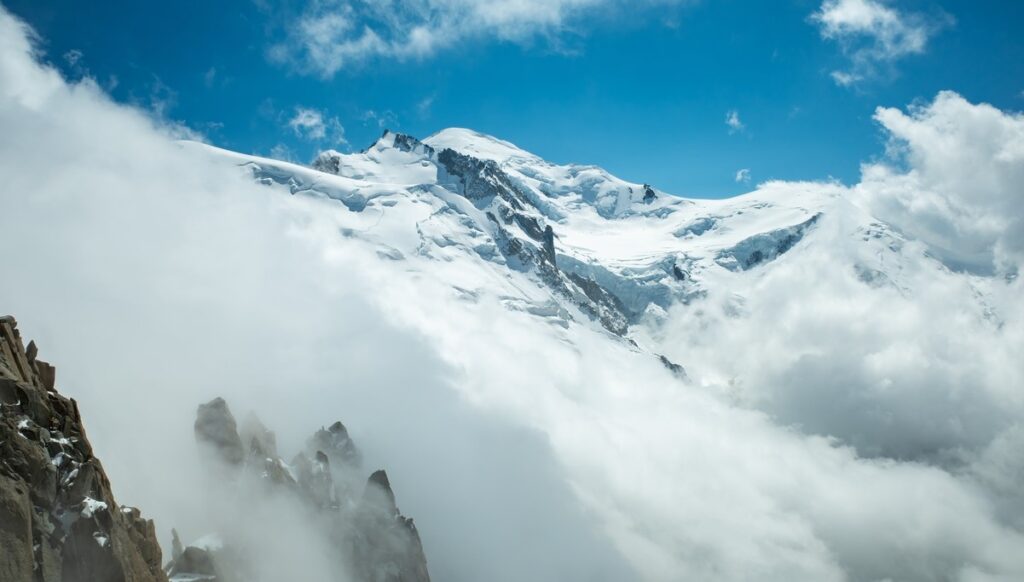
Mont Blanc grows Credit: Himekate/shutterstock
A new official survey puts Western Europe’s highest peak at 4,807.47 metres, but experts say a taller summit does not mean the mountain is immune to climate change.
Standing tall with snow
Mont Blanc now stands at 4,807.47 metres above sea level, according to French surveyors from the Haute-Savoie chamber who announced the latest official results on Wednesday, October 14. Western Europe’s highest peak has gained 1.88 metres since its last official reading in 2023. However, experts stress that this gain reflects shifts in its top layer of snow and ice rather than a change in the rocky mountain beneath.
How the surveyors measured the mountain
A team of surveyors, mountain guides, and scientists made the early-morning climb on September 17, hauling nearly 30 kilograms of specialised gear to the top along with their regular climbing equipment.
To pinpoint the peak, the team used high-precision satellite positioning tools, where they also flew a drone that took more than 1,300 aerial images to build a 3D model of the snow cap, while ground-penetrating radar scanned the layers of ice to check the solid rock underneath.
Why the height keeps changing
Mont Blanc’s official altitude depends on the thickness of the snow and ice covering its rocky summit. Snowfall, precipitation, wind, the redistribution of snow, temperatures, sunshine, and weather in the months before measurement can all alter the result.
Surveyors have been tracking these changes regularly since 2001, when the summit measured 4,810.40 metres. Official campaigns are run every two to three years, giving scientists a long-term record of how the top of the mountain behaves over time.
A gain, but not a long term trend
While Mont Blanc is nearly 1.9 metres taller than it was in 2023, last year’s reading was higher still, meaning the summit lost about 1.3 metres over the past year.
Because of these constant swings, experts caution against using any single height reading as proof of broader climate change, and that individual measurements mean little on their own; instead, scientists focus on trends across decades of data.
What does this mean for the alps
Glaciologist Luc Moreau said Mont Blanc’s summit has not yet been substantially altered by climate change. Research by glaciologists in Grenoble has found that ice at the summit rarely melts, with its thickness changing by only a few metres across the 20th century.
Straddling the border between France’s Haute-Savoie region and Italy’s Aosta Valley, Mont Blanc remains the tallest peak in Western Europe. Interestingly, its current height of 4,807.47 metres is remarkably close to the calculations made back in the 1890s by surveying pioneers Joseph and Henri Vallot.
Follow Euro Weekly News on Google News
Get breaking news from Spain, travel updates, and expat stories directly on your Google News feed.
Follow on Google NewsSign up for personalised news
Subscribe to our Euro Weekly News alerts to get the latest stories into your inbox!
By signing up, you will create a Euro Weekly News account if you don't already have one. Review our Privacy Policy for more information about our privacy practices.



Lucy Ramnought
Lucy Ramnought is a local news writer and mother of 4 from the UK who has lived in the Costa Del Sol for just over 4 years. With a background in content writing and social media for various companies, and with vast experience in PA and project management, Lucy is committed to producing accurate, engaging and reliable stories to her work at Euro Weekly News.
Comments