Mont Blanc rescue row: Should reckless climbers really get a free helicopter?
By Adam Woodward • Updated: 15 Aug 2026 • 12:31 • 4 minutes read
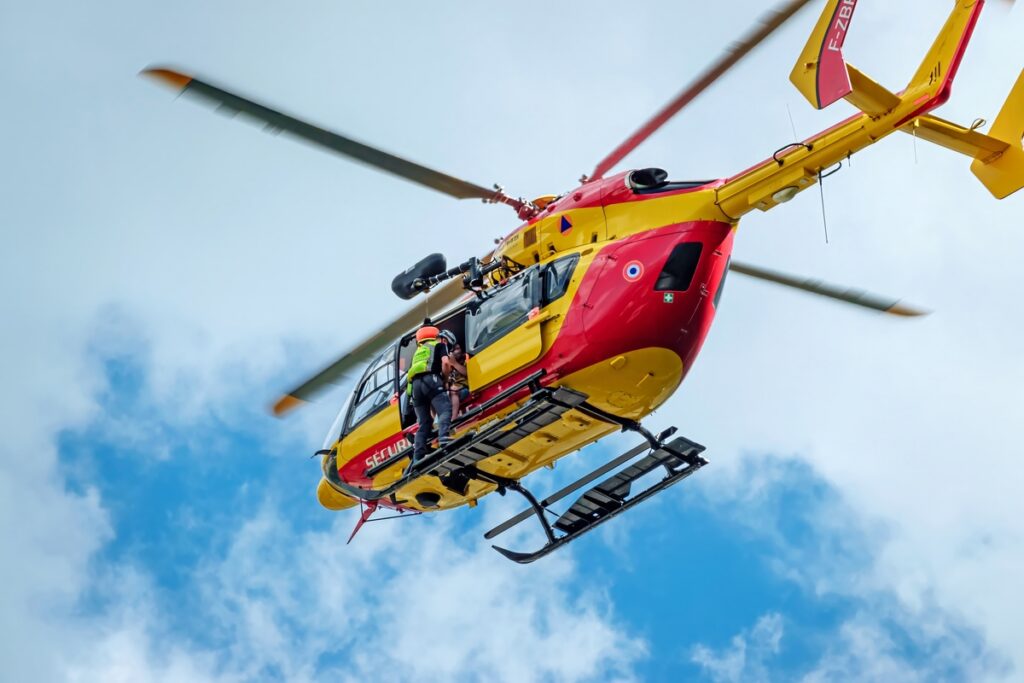
Helicopter rescue over Mont Blanc. Credit: LHO Photography - Shutterstock
A row has erupted over 32 climbers stranded high on Mont Blanc that has reignited a much bigger question for mountain lovers across Europe: should taxpayers have to pay when people knowingly put themselves at risk?
The controversy began after 32 mountaineers found themselves at the Goûter Refuge, around 3,835 metres above sea level on the French side of Mont Blanc. Rockfalls had made the Grand Couloir, one of the most dangerous sections of the normal French route, particularly hazardous. Guides from Saint-Gervais, Chamonix and Courmayeur, as well as the Office of High Mountain, had advised people against attempting the ascent.
Jean-Marc Peillex, mayor of Saint-Gervais, then ordered the Goûter and Tête Rousse refuges to close on August 11 because of the danger. By then, however, the 32 climbers were already at the Goûter Refuge.
Next morning, they asked to be evacuated by a French Civil Security or Gendarmerie helicopter because they did not want to cross the Grand Couloir on the descent. Public rescue services said “no” and refused to intervene. Some climbers walked down, while others paid for a private helicopter, reportedly costing €95 each to take them to Tête Rousse.
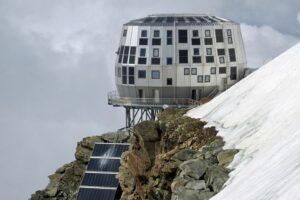
Credit: Coronium – wiki CC
Did the climbers really ignore the warnings?
Mayor Peillex has been scathing about the group. His argument is straightforward: climbers had been warned about the rockfall danger, saw videos of falling rocks circulating online and nevertheless continued towards the Goûter. In his account, anybody who deliberately climbs into a dangerous area knowing they will eventually have to come back down cannot then expect the taxpayer to pay for a free helicopter.
Peillex described the situation as an example of why France should rethink its approach to mountain rescues and said public resources should be reserved for genuine emergencies.
Yet that is not the whole story
Charles Van der Elst, president of the French Alpine Club, has challenged the mayor’s interpretation. His criticism centres on the fact that the 32 mountaineers had already reached the refuge before the closure order was announced. That distinction matters. Calling people reckless for ignoring a closure is very different from saying they were caught above a dangerous section of mountain when authorities subsequently closed the route.
Nobody appears to have suffered a medical emergency, and rescuers judged that the conditions had become calm enough for people to descend normally on foot. Still, crossing a rockfall zone is hardly comparable to walking down an ordinary hiking trail.
How much does mountain rescue actually cost?
France’s wider mountain rescue debate gives some eye-opening figures. A report from France’s Court of Auditors published earlier this year estimated the full cost of mountain rescue at around €107 million in 2024, with the figure potentially closer to €110 million depending on how costs are counted.
Almost 10,000 mountain rescue operations were carried out that year, producing an average cost of at least €10,780 per intervention. Around 43 per cent of the overall cost was attributed to aerial resources, including helicopters.
Costs have also risen sharply. The Court of Auditors calculated that the overall cost of the system increased by roughly 55 per cent between 2012 and 2024, while spending on aerial resources increased by an extraordinary 141 per cent.
Those figures make the Mont Blanc argument rather more interesting. A €95 private helicopter ride may not sound like much when compared with a €10,780 average rescue operation. Yet multiply thousands of helicopter interventions across France, and the bill quickly becomes a very large one for the public purse.
Should climbers pay when they take unnecessary risks?
France currently has a long-standing tradition of free mountain rescue. That principle exists for a good reason. Somebody suffering an accident should not hesitate to call for help because they are frightened about receiving a huge bill afterwards.
Delaying an emergency call could turn a survivable accident into a fatal one. France’s Senate has also warned about exactly that problem, saying that charging people could encourage injured or frightened people to wait before seeking help. A blanket charging system would therefore be difficult.
Someone who breaks a leg after slipping on a perfectly sensible hike should not necessarily be treated like somebody who climbs past a clearly marked closure, ignores official warnings and then demands an airlift.
One possible answer is a system based on recklessness rather than simply being unlucky. People who knowingly breach a closure or ignore an official prohibition could potentially face some form of contribution towards the rescue. Proper insurance could also form part of the solution.
Was the Saint-Gervais mayor right?
In this particular case, there is a strong argument that he was right to refuse a free helicopter. No injuries had been reported. The climbers were safely inside the refuge, and the PGHM mountain rescue service considered that conditions allowed them to descend without public intervention.
Crucially, the mayor did not simply leave them stranded. A private helicopter was arranged and paid for by the climbers who chose to use it, while others walked down.
Questions remain, however, about whether the climbers should really be described as irresponsible. Their €95 helicopter taxi ride has opened up a much bigger question: when does personal freedom on the mountain become a bill for everybody else?
Follow Euro Weekly News on Google News
Get breaking news from Spain, travel updates, and expat stories directly on your Google News feed.
Follow on Google NewsSign up for personalised news
Subscribe to our Euro Weekly News alerts to get the latest stories into your inbox!
By signing up, you will create a Euro Weekly News account if you don't already have one. Review our Privacy Policy for more information about our privacy practices.



Adam Woodward
Adam is a writer who has lived in Spain for over 25 years. With a background in English teaching and a passion for music, food, and the arts, he brings a rich personal perspective to his work at Euro Weekly News. As a father of three with deep roots in Spanish life, Adam writes engaging stories that explore culture, lifestyle, and the everyday experiences that shape communities across Spain.
Comments