Keeping a law office secure without hiring a single techie
By Nicola EWN • Updated: 23 Oct 2026 • 10:24 • 4 minutes read

Credit: Peoplesimages/Shutterstock.com
Picture this. It is 7 a.m. before a major hearing and your case files refuse to open. The screen just blinks. For plenty of attorneys that scene stops being a bad dream and turns into a very real morning.
A legal practice runs on tight deadlines and court dates. It also runs on secrets that must stay secret. Technology promised to make all of that lighter. Too often it does the opposite.
Where legal work meets technology
The right managed IT services for law firms quietly guard confidential records while handing attorneys back the hours they would rather spend on actual cases. In plain terms this model moves technology work off a lawyer’s desk and onto a specialised partner.
What falls under that umbrella? Infrastructure sits there. So do cybersecurity and cloud services. Help desk support rounds it out. A dedicated team works in the background so nobody in the firm ever opens a server cabinet.
Compare it to hiring a locksmith for a whole building. Doors lock. Keys work. You never had to learn the trade yourself.
The headaches nobody warned you about
Lawyers touch sensitive client information by the hour. A single leaked file breaks trust that took years to build. It can invite real penalties too.
Old laptops freeze mid draft. Connections drop during trial prep. These little annoyances pile up until a whole afternoon vanishes.
The usual suspects look like this:
- Security holes that leave records open to breaches
- Downtime that stops billable work cold
- Growth that technology cannot keep up with
- Compliance rules tied to strict data protection laws
A partner built for regulated work
Eighteen years of IT work across regulated industries can sit behind a serious legal engagement. That is the kind of depth Andersen brings when it oversees infrastructure, applications, security and cloud operations through a dedicated team for law firms. Such experience matters most for practices leaning on specialised legal applications.
Case management lives in those tools. So does document handling. Client communication runs through them every day. When confidentiality carries legal weight this track record stops being a nice extra. It becomes the whole point.
When the filing cabinet moves to the cloud
Think back to the locked metal cabinet in the corner. One drawer held a career’s worth of paper. That era faded fast.
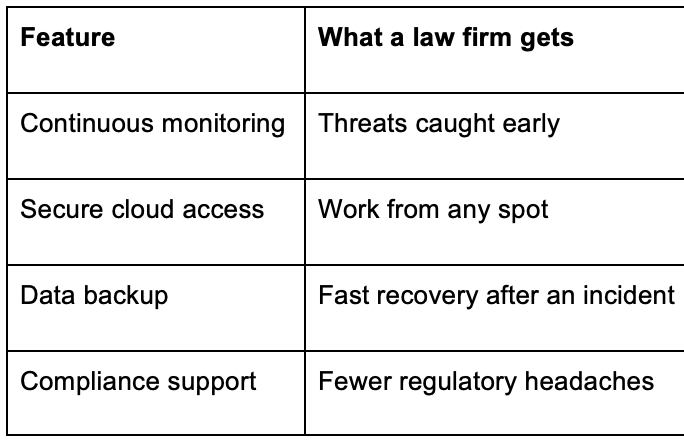
Attorneys now want case records in a courtroom. They want them at a kitchen table. They want them on a delayed train. A secure cloud environment lets attorneys reach case files and financial records from wherever they happen to stand.
There is a quieter benefit too. A flood no longer wipes out an entire archive. Neither does a fire. The files simply live somewhere safer than a shelf.
A guard that never clocks out
Cyber threats keep strange hours. So, the defence cannot nod off either. Watching systems around the clock catches trouble while it is still small.
Proactive protection shields sensitive client data from breaches. The aim stays blunt. Stop the intruder at the door, long before records are in danger.
Results you can point to
Promises fade. Numbers stick. A capable partner leaves proof you can see on a report.
Strong managed IT lifts data security first. Downtime shrinks next. Productivity climbs as the firm stops fighting its own tools. Costs grow steady and easy to forecast.
That word steady earns a second look. No more jaw dropping repair invoice out of nowhere. A fixed monthly figure lets partners plan a budget and sleep at night.
A clear road into the partnership
So where does a firm even begin? A structured methodology for outsourcing technology work gets built around one promise. Every engagement should deliver measurable outcomes and lasting stability.
Guesswork drops away. Each step stacks toward a setup shaped around the practice. The practice never bends to fit someone else’s template.
Here is a small scene worth imagining. A tiny firm once bled whole hours to crashing software in the middle of discovery. Swap that chaos for a planned rollout. The same lawyers pour energy into clients instead of rebooting machines.
Picking a partner worth keeping
Not every tech company grasps legal work. Generalists stumble the moment they meet confidentiality rules. Ethical duties that belong to law alone trip them up as well.
Run through these before you sign a thing:
- What real experience does the provider hold with law firms?
- Are permissions handed out as scoped credentials instead of shared passwords?
- How does the provider keep you aligned with data protection laws?
- Can the setup stretch as the practice grows?
A fitting partner delivers IT solutions built for law firms and regulated industries. Data security tightens. Legal operations run smoother.
Growing without the growing pains
A two attorney office and a fifty person practice live in different worlds. Managed services worth the money stretch and shrink to match.
Growth ought to feel like a win. It should never feel like a threat. When technology scales without drama, opening a branch turns into a simple decision. Adding staff does too.
Why this choice echoes for years
Tech mistakes inside a law firm leave marks. One breach bruises a reputation. It drains cash. It rattles the clients who once trusted you blindly.
The sharpest practices treat IT as a weapon rather than a chore. They partner early. They protect with care. They let specialists shoulder the technical load.
Conclusion
Legal work asks for focus and precision. It demands total discretion on top of both. Managed IT hands firms the room to deliver all three without sinking under technical weight.
A dependable partner watches your data. It steadies your spending. It keeps the practice alive through any storm. The real question stopped being whether to invest. Now it is only how soon you begin.
FAQ
Can a solo attorney lean on managed IT services or does this only suit big firms?
A solo lawyer still gains solid security and predictable costs without adding headcount. The model fits practices of any size.
What becomes of my case files if the internet drops right in the middle of a trial?
Secure cloud setups with proper backup let attorneys claw back access quickly. Vital records stay within reach.
How do managed IT services respect a conflict wall between two clients?
Centrally managed permissions with scoped credentials fence off file access. That backs the confidentiality walls sensitive matters demand.
If outsiders run my IT, could strangers read privileged client messages?
A reputable partner locks down access with strict controls. Compliance measures shield privileged material from unwanted eyes.
Does moving to a managed partner throw my active cases into chaos?
A structured methodology walks the switch through step by step. It keeps daily legal operations steady the whole way.
Follow Euro Weekly News on Google News
Get breaking news from Spain, travel updates, and expat stories directly on your Google News feed.
Follow on Google NewsSign up for personalised news
Subscribe to our Euro Weekly News alerts to get the latest stories into your inbox!
By signing up, you will create a Euro Weekly News account if you don't already have one. Review our Privacy Policy for more information about our privacy practices.





Nicola EWN
Nicola is a member of the editorial team specialising in features, digital content and online publishing. With broad experience across media and communications, she works across feature articles, editorial content and digital platforms, managing content across a range of subjects.
Comments