Rare lion cubs born: Estepona park welcomes two Atlas lions
By Adam Woodward • Published: 23 Oct 2026 • 17:47 • 1 minute read
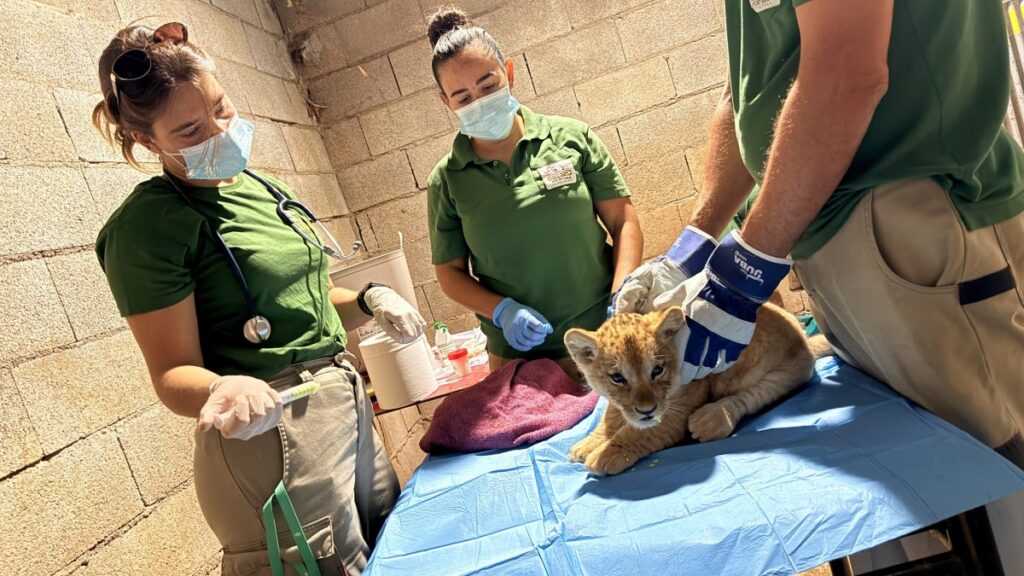
2 lion cubs born in Estepona. Credit: Selwo
Two rare Atlas lion cubs have been born at Selwo Aventura wildlife park in Estepona, giving conservationists fresh hope for a subspecies that has been extinct in the wild since the 1950s.
The cubs, born towards the end of summer, are the offspring of Ghizléne and Tayo, two lions brought to the Costa del Sol from European zoos as part of an international breeding programme.
Both cubs are reported to be in excellent health and weigh around eight kilos each. They have passed their first veterinary examinations, received identification microchips and been dewormed.
Rare Atlas lions born on the Costa del Sol
Their mother, Ghizléne, arrived at Selwo Aventura from Plzeň Zoo in the Czech Republic in spring 2025. Their father, Tayo, came from Hanover Zoo in Germany and has a pedigree recorded as 100 per cent Atlas lion.
The birth forms part of the European Endangered Species Programme (EEP), which coordinates breeding between participating zoos to help preserve threatened animals and maintain genetic diversity.
During their first weeks, the cubs stayed in their enclosure under their mother’s care, with the park’s conservation team monitoring their development.
The young lions opened their eyes about a week after birth. Staff have also taken hair samples to establish their genetic profiles, an important step in registering them with the European breeding programme.
Could Atlas lions ever return to the wild?
Also known as Barbary lions, Atlas lions once lived across North Africa, particularly around the Atlas Mountains. Hunting and other human pressures contributed to their disappearance from the wild during the 20th century.
Their survival now depends on captive populations, including animals managed through breeding programmes in Europe and Morocco.
Selwo Aventura says the cubs are expected to take their first steps into the park’s outdoor meadow in the coming days, giving visitors an opportunity to watch them. Visitors can find further details about the park’s animal collection and conservation work.
Their mother is expected to continue nursing them until they are between seven and ten months old.
Although their birth is an encouraging development, any future return of Atlas lions to their original habitat would depend on further conservation work and suitable conditions in the wild.
Follow Euro Weekly News on Google News
Get breaking news from Spain, travel updates, and expat stories directly on your Google News feed.
Follow on Google NewsSign up for personalised news
Subscribe to our Euro Weekly News alerts to get the latest stories into your inbox!
By signing up, you will create a Euro Weekly News account if you don't already have one. Review our Privacy Policy for more information about our privacy practices.
Adam Woodward
Adam is a writer who has lived in Spain for over 25 years. With a background in English teaching and a passion for music, food, and the arts, he brings a rich personal perspective to his work at Euro Weekly News. As a father of three with deep roots in Spanish life, Adam writes engaging stories that explore culture, lifestyle, and the everyday experiences that shape communities across Spain.
Comments