Poppy pride: What Remembrance Day means to Brits abroad in 2026
By Adam Woodward • Updated: 30 Oct 2026 • 12:05 • 3 minutes read
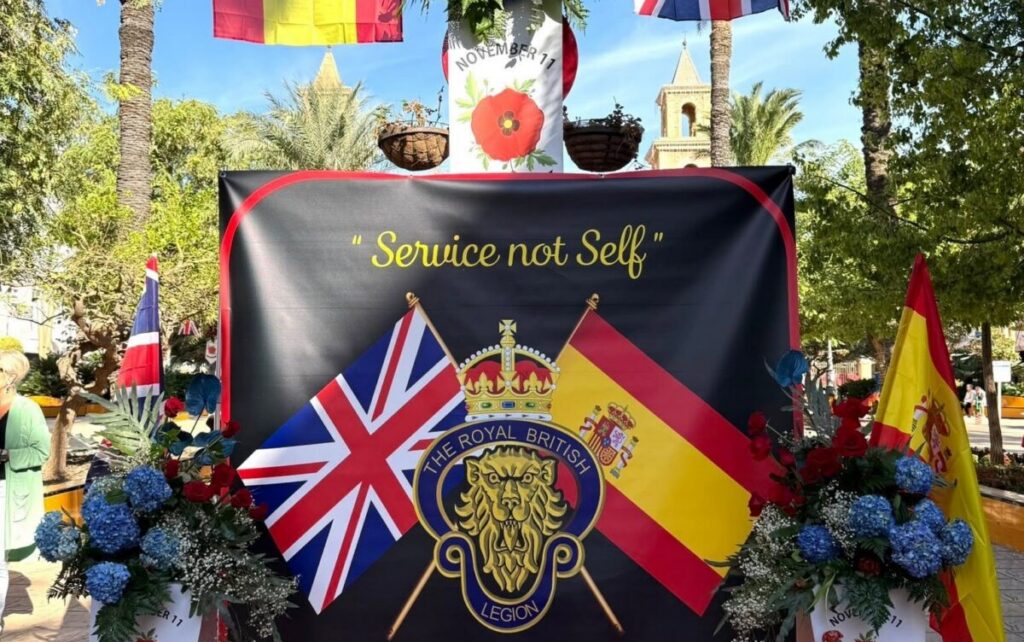
Remembrance in Spain. Credit: Royal British Legion Spain - North Branch.
British people who have made Spain their home often see Remembrance Day as more than a poppy, a two-minute silence or an annual ceremony. It is a chance to reflect on family history, national identity and the sacrifices of earlier generations.
Living thousands of kilometres from the UK does not automatically loosen those ties. Many British residents on the Costa del Sol, Costa Blanca and elsewhere feel a continuing connection to the traditions they grew up with and to the people whose efforts helped shape their lives.
For some, the link is deeply personal. For others, it is a reminder that moving abroad does not mean leaving their heritage behind.
Remembering the sacrifices that shaped our lives
Diana, born in Spain to a British father and Spanish mother, sees Remembrance Day as a moment to acknowledge both sides of her heritage.
“I feel thankful. I was born in Spain. My dad is British, and mum Spanish. I feel I am part British and extremely proud to be of both nationalities.”
Family members in Britain whom she loves and regularly visits keep that connection strong.
“Britain is part of me and I am proud of my heritage and the history. If it hadn’t been for my great grandad and the efforts of him and others to defend Britain, I wouldn’t be here now.”
Her words capture a personal reason for remembrance. The sacrifices of previous generations are not simply part of Britain’s history; they are linked to her own family’s story. Living in Spain has not diminished that connection.
Why being British still matters after Brexit
Alec has lived in Spain for 20 years. After Brexit, uncertainty about his residency status made him consider changing his nationality to Spanish. Having spent so long in the country, he thought it might be practical. In the end, he could not bring himself to do it.
“Why? Because I am British. I’m not Spanish, and no passport is ever going to change that. I can’t pretend I am no longer a Brit. Just listen to my accent!”
He also thought about his family and Spanish friends.
“I couldn’t do that to my family, and not to my Spanish friends. I can’t pretend to be something I am not. It’s so important to remember the sacrifices that people made to keep Britain safe.”
His experience shows how national identity can remain important for people who have spent much of their adult lives abroad. Home can mean the country where someone has built their life, the place where family lives, or the country whose history has shaped their sense of self. Those connections do not always fit neatly into a single nationality. The continuing impact of Brexit on British residents is explored in our article on ten years of Brexit and the cost for Britons in Spain.
Why the poppy still matters to British expats
Don sees wearing a poppy as a straightforward way to show respect.
“I am proud to wear a poppy. It’s not just a contribution to the efforts of the Royal British Legion, which are so important, but it’s a mark of respect to all those who have done their bit, or those who gave their lives for us.”
The red poppy has become one of the most recognisable symbols of remembrance in Britain. For many British residents overseas, wearing one is a way to continue a familiar tradition while living far from home.
The Royal British Legion’s Poppy Appeal raises money to support serving personnel, veterans and their families. The organisation also explains the history and meaning of the red poppy, which has united generations in remembering those who served and sacrificed.
Local branches and volunteers also play an important role in Spain. The Royal British Legion’s Spain South district supports branches and fundraising activities throughout southern Spain.
Remembrance brings British communities together
Services across Spain give British residents an opportunity to gather, remember loved ones and honour those who died in war. These occasions can be particularly meaningful for people who have lived abroad for many years, providing a familiar connection to Britain while bringing together neighbours, friends, veterans and families.
Recent examples include the Benidorm Poppy Appeal tribute to British veterans and the Royal British Legion’s Remembrance march in Mijas.
For those with British and Spanish connections, these occasions offer a chance to live fully in Spain without forgetting the history and heritage that came before.
What does Remembrance Day mean to you?
Diana, Alec and Don each have their own reasons for remembering, but their words share a common theme: gratitude for the sacrifices made by previous generations.
Whether through family memories, a determination to keep their British identity or the simple act of wearing a poppy, Remembrance Day continues to hold meaning for British residents who have made Spain their home.
But what does Remembrance Day mean to you? Do you wear a poppy while living in Spain? Perhaps you have a family connection to the Armed Forces, or simply feel it is important to remember those who made the ultimate sacrifice.
We would love to hear your stories. Leave a comment below and tell us why wearing a poppy and remembering the fallen is important to you.
Follow Euro Weekly News on Google News
Get breaking news from Spain, travel updates, and expat stories directly on your Google News feed.
Follow on Google NewsSign up for personalised news
Subscribe to our Euro Weekly News alerts to get the latest stories into your inbox!
By signing up, you will create a Euro Weekly News account if you don't already have one. Review our Privacy Policy for more information about our privacy practices.


Adam Woodward
Adam is a writer who has lived in Spain for over 25 years. With a background in English teaching and a passion for music, food, and the arts, he brings a rich personal perspective to his work at Euro Weekly News. As a father of three with deep roots in Spanish life, Adam writes engaging stories that explore culture, lifestyle, and the everyday experiences that shape communities across Spain.
Comments