Archaeologists haul 30kg stone from Norwegian seabed that could be the world’s oldest anchor
By Harry Dennis • Published: 03 Nov 2026 • 11:25 • 3 minutes read
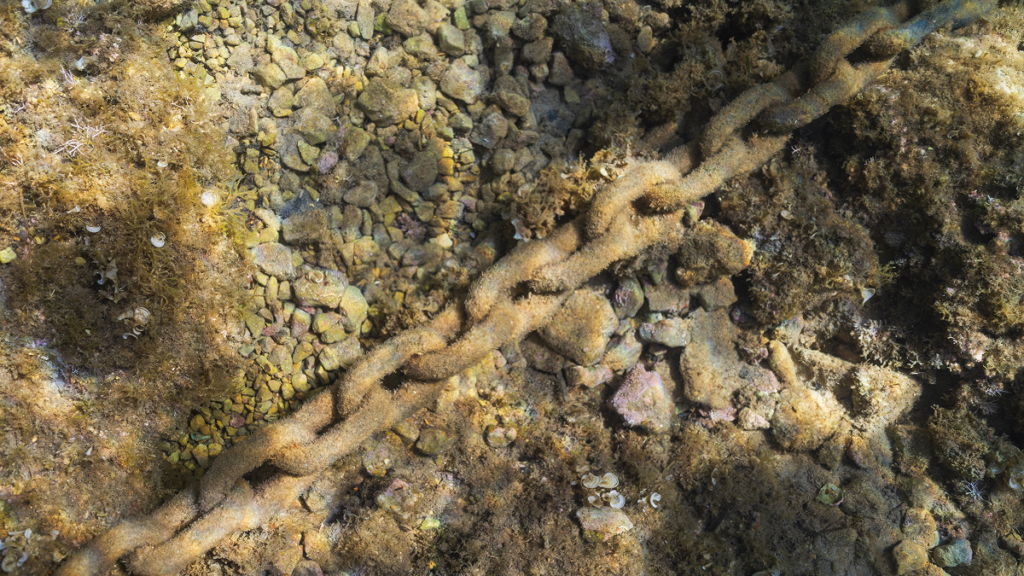
Stone Age axe-makers may have left the world’s oldest anchor on Norway’s seabed. Credit: Dmitri T / Shutterstock
A grooved lump of rock, far too heavy to be a fishing net weight, has been lifted from 20 metres down off Norway, and archaeologists think a Stone Age crew used it to hold their boat steady. If they’re right, it would be older than any securely dated stone anchor.
A grooved stone was sitting on a heap of quarry waste
Archaeologists exploring a Stone Age quarry off western Norway spotted something unusual in 2025, lying on a pile of waste rock 20 metres below the surface: a stone with a groove running all the way around it.
Earlier this autumn, the team went back, tied a rope around that groove and hauled it up. It weighs more than 30kg, and Arild Skjæveland Vivås of the Stavanger Maritime Museum said it “seemed very well balanced” as it came up. His colleague Leif Inge Åstveit, from the University Museum of Bergen, said he’s “absolutely convinced” it’s an anchor. The groove would have let a crew tie a rope on without it slipping off, and given where the stone was lying, he said he has no doubt.
If he’s right, it would be the oldest anchor ever found in Norway and possibly the world. The oldest securely dated stone anchors come from the Bronze Age and were found in the Mediterranean, which makes a find in a Stone Age quarry so much farther north all the more striking.
Why a Stone Age crew would need an anchor
The quarry sits on Hespriholmen, a tiny islet about five kilometres out in open sea, where strong currents and waves make life hard for any boat. People still paddled out there between 5,000 and 9,000 years ago to cut greenstone, a hard rock they shaped into axes that have turned up from the Sognefjord to Agder.
Archaeologists think those axes were handed over as gifts and status symbols, which meant a lot of heavy stone had to be moved by boat. Hein Bjerck, an emeritus professor at the NTNU University Museum who wasn’t involved and has only seen photos, called the anchor idea likely. Stone Age boats didn’t normally carry anchors, he said, because settlements sat on beaches, but a crew loading blocks at Hespriholmen would have needed a way to stay put.
The team has also found huge hammerstones brought over from the mainland, with Vivås saying none of them had seen any so large. An estimate from 1987 put the amount of greenstone quarried at about 430 cubic metres, roughly 30 to 40 large truckloads, although the researchers now believe the real figure is considerably higher.
Spain’s own seabed is hiding ancient history too
There’s a deep-water time capsule off the Costa Brava as well. A Roman trading ship that sank about 2,000 years ago lies at roughly 46 metres between Palafrugell and Palamós, and it was carrying salted fish and fish paste in amphorae (clay storage jars) from Andalucía towards southern France.
Catalan heritage officials said in April that the wreck, known as Illes Formigues II, was set to become the first underwater archaeological site in Cataluña with top-level protection, with fishing banned or heavily restricted around it. The protected area covers 92,000 square metres, and the ship itself was about 22 metres long.
Nobody has dated the stone itself yet
There’s still some uncertainty around the ‘anchor’. The stone’s age comes from where it was found, in the waste heap of an early Stone Age quarry, rather than from any test on the stone itself. Vivås has been clear that the find has to be published and peer-reviewed before anyone can say anything for certain.
Then there’s the question of the boat. Åstveit thinks skin boats, like those made by the Inuit farther north, would have managed the crossing, and a raft may have too. Logboats are known from Stone Age Denmark but none have turned up in Norway from that time, and he doubts a simple one would have coped. The stone alone can’t show which type of boat used it or how it was tied on.
The team has used underwater mapping technology from the Norwegian company NORBIT to build 3D models of the site, and it’s still working out how much stone was quarried.
Follow Euro Weekly News on Google News
Get breaking news from Spain, travel updates, and expat stories directly on your Google News feed.
Follow on Google NewsSign up for personalised news
Subscribe to our Euro Weekly News alerts to get the latest stories into your inbox!
By signing up, you will create a Euro Weekly News account if you don't already have one. Review our Privacy Policy for more information about our privacy practices.




Harry Dennis
Born in the UK and raised on the Cádiz coast, Harry brings a creative eye to his writing, sharing stories that celebrate culture and lifestyle across Spain and beyond.
Comments