Italian diver thought it was a rock, then saw hundreds of Roman jars from 2,000 years ago
By Harry Dennis • Published: 10 Aug 2026 • 14:58 • 2 minutes read
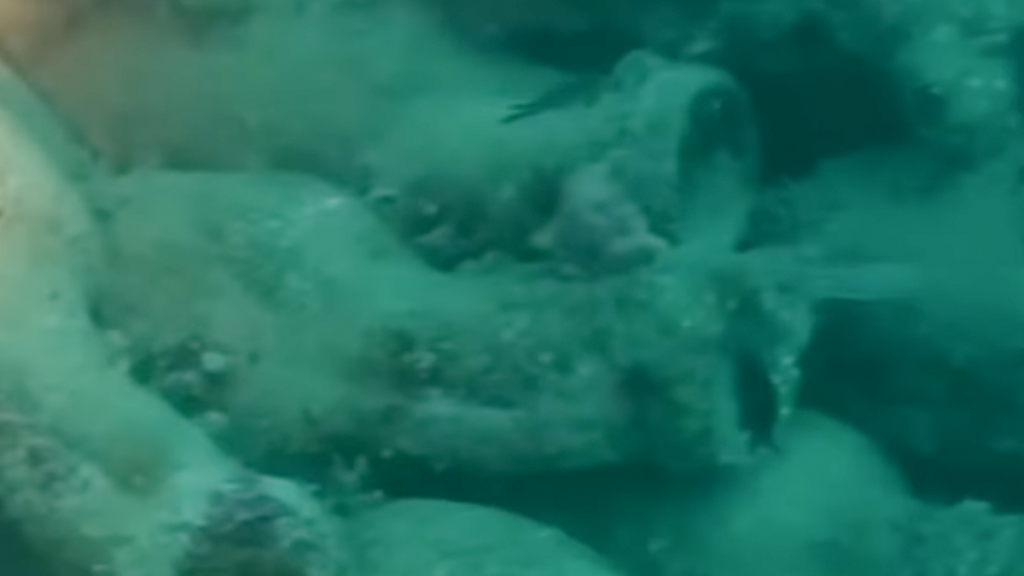
Hundreds of Roman-era amphorae lie around the newly identified wreck off Sicily. Credit: Giacomo De Mola / Instagram
Giacomo De Mola had gone out to scan fishing grounds before a competition, not to hunt for antiquities. But his accidental find, 46 metres below the surface off western Sicily, could help experts piece together one of the Mediterranean’s ancient wine routes.
The dive that turned a training day into a historical discovery
Giacomo De Mola, a competitive spearfisher and freediver, was surveying the seabed off Mazara del Vallo with Igor Bisulli while preparing for an Italian spearfishing competition. A shape on their boat’s seabed scanner appeared and looked to be an ordinary rocky formation. There was something about it, however, that persuaded De Mola to go down and take a closer look. He drew a breath and descended through poor visibility towards a dark mass 46 metres below the surface. As he moved closer, its outline began to separate into individual objects.
They were amphorae. Hundreds of storage and transport jars. “My heart stopped,” De Mola recalled in his account of the discovery. “They weren’t just rocks.”
After resurfacing, he told Bisulli what was below and the find was reported to Sicily’s Superintendency of the Sea, the regional authority responsible for underwater archaeology.
Official inspection confirms a Roman-era wreck
Italy’s Ministry of Culture announced the discovery on August 8, saying the wreck had been located around three miles from Mazara del Vallo on Sicily’s western coast. Officials have provisionally dated it to between the second and first centuries BC, placing it in the final centuries of the Roman Republic. The seabed holds hundreds of amphorae, predominantly of the Dressel 1A type, together with two lead anchor stocks and another lead structure. The ministry has not yet disclosed how much of the ship’s wooden hull has survived beneath the cargo and marine growth. A joint inspection was carried out by Sicily’s Superintendency of the Sea, Carabinieri divers from Messina and the Carabinieri’s Palermo cultural heritage protection unit, supported by a patrol boat from Trapani. Culture Minister Alessandro Giuli described it as “one of the most important underwater archaeological discoveries of recent years”.
Why the jars point towards an ancient wine route
Amphorae were the shipping containers of the ancient Mediterranean. The two-handled ceramic vessels carried wine, olive oil, sauces and other goods between ports.
Dressel 1A amphorae are particularly associated with the trade in Italian wine during the late Roman Republic. Historic England research dates production of the form from around 130 BC to the middle of the first century BC, broadly matching the ministry’s initial estimate for the wreck.
Wine is therefore the leading possibility for the cargo, but officials have not announced residue testing. The exact contents of the jars, where they were made and the ship’s intended destination remain unconfirmed.
That’s what makes an undisturbed collection of cargo so valuable. Comparing the jars’ shapes, clay and any surviving residues could help archaeologists reconstruct the vessel’s route and identify the communities trading across this part of the Mediterranean more than 2,000 years ago.
Sicily will now document and protect the site
The Superintendency of the Sea will now conduct further documentation and research to reconstruct the archaeological context and decide what protection the site requires. Authorities have not yet announced plans to raise the wreck or recover the jars. At a depth of 46 metres, any excavation or removal would require a large and very carefully managed specialist operation.
The next investigations will attempt to narrow the date and establish more about which ship could have carried the discovered cargo and its final journey. What first appeared as a rock on a fishing scanner has left archaeologists with an entire Roman trade story to decipher.
Follow Euro Weekly News on Google News
Get breaking news from Spain, travel updates, and expat stories directly on your Google News feed.
Follow on Google NewsSign up for personalised news
Subscribe to our Euro Weekly News alerts to get the latest stories into your inbox!
By signing up, you will create a Euro Weekly News account if you don't already have one. Review our Privacy Policy for more information about our privacy practices.


Harry Dennis
Born in the UK and raised on the Cádiz coast, Harry brings his background in design, music, and photography to his writing for Euro Weekly News, sharing stories that celebrate culture and lifestyle across Spain and beyond.
Comments