How Spain brought one of its rarest plants back from the brink of extinction
By Natascha Rivera • Published: 10 Aug 2026 • 15:46 • 2 minutes read
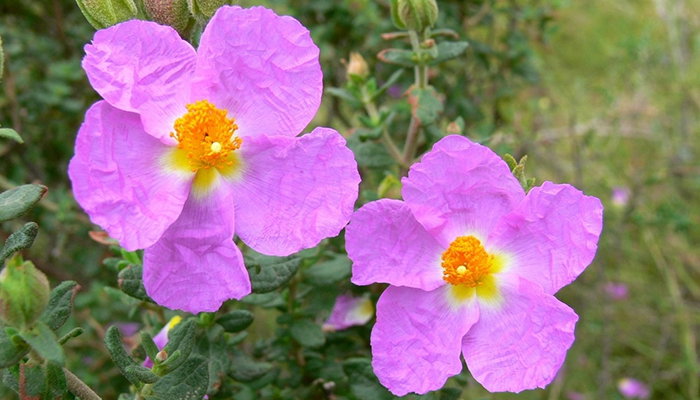
Murcia's conservation efforts saved the Cartagena rockrose from extinction. Photo Credit: Royal Botanical Gardens
The rockrose of Cartagena, an extremely rare and highly threatened Mediterranean shrub, is emerging from a critical situation thanks to the continued efforts of the Region of Murcia to restore it. With more than 800 specimens and new plantings in Atamaria, the recovery programme for this incredible plant is well underway, combining conservation, scientific research, and environmental science.
A rare plant brought back from extinction
The Cartagena rockrose, or Cistus heterophyllus subsp. carthaginensis, is a subspecies endemic to southeastern Spain. It was discovered more than 100 years ago in the Cartagena-La Unión mining district, where it was once abundant. However, mining activity and changes in the way the land was used caused the population to sharply decline during the 20th century. The decline was so dramatic, the plant was considered extinct for decades.
Collaborative efforts to save a critically endangered species
In 2014, a plan was approved and a recovery programme was set underway, starting with the only four surviving wild plants in the region. In 2018, it was declared the only species of flora in a “critical situation” in the country, inspiring the creation of inter-regional groups to further the work to preserve it, particularly between the Region of Murcia, the Valencian Community, and the Balearic Islands.
Most recently, the Region of Murcia has planted more than 200 new specimens of this endangered species, reinforcing the recovery programme. This particular project was carried out by the General Directorate of Natural Heritage and Climate Action, developed in collaboration with the Polytechnic University of Cartagena.
Now, thanks to these efforts, the population exceeds 800 plants, all distributed across different areas in Spain. Representatives of the Region of Murcia state that the case of the Cartagena rockrose is one of the most outstanding examples of the recovery of threatened flora in Spain.
The Cartagena rockrose, flourishing on its own: Building genetic diversity and resilience
This project aims not only to increase the actual number of plants, but also to create new population centres, increase genetic diversity in the plants, and expand the species’ distribution area across Spain. This variability will help the plants to cope in the long term and fight against possible diseases, environmental alterations, or changes in conditions of their habitats.
The Wildlife Conservation Centre of the Region of Murcia has played an important role in working to preserve this species. In particular, it has been responsible for producing and genetically selecting specimens to introduce them to the natural environment.
The ongoing fight to protect Cartagena’s natural heritage
But the work is not over yet. Though the plant has emerged from the most difficult stage, the Cartagena rockrose is still classified as an endangered species of plant in the Spanish Catalogue of Threatened Species. The goal for these scientists is to continue increasing the number of specimens, as well as to connect the different populations and ensure they can maintain and reproduce on their own in the wild.
This new work in Atamaría represents another step towards recovering a species that is not only valuable for the environment, but is closely linked to the natural heritage of Cartagena and the Sierra Minera.
Only twelve years ago, the number of remaining plants was just four. Thanks to the constant and passionate work of these botanists, environmental scientists, and local officials, the plant has been brought back from the brink of extinction, and will continue to bloom across Cartagena and the Region of Murcia for years to come.
Follow Euro Weekly News on Google News
Get breaking news from Spain, travel updates, and expat stories directly on your Google News feed.
Follow on Google NewsSign up for personalised news
Subscribe to our Euro Weekly News alerts to get the latest stories into your inbox!
By signing up, you will create a Euro Weekly News account if you don't already have one. Review our Privacy Policy for more information about our privacy practices.



Natascha Rivera
Natascha is a Dominican writer based in Spain with a background in audiovisual and marketing communication. A lifelong reader and passionate storyteller, she brings a creative edge to her work at Euro Weekly News. Her multicultural perspective informs her coverage of lifestyle and community stories, offering fresh angles and relatable storytelling that connects with a diverse audience.
Comments