AI teddy for three-year-olds blurts ‘I can’t help with killing you’: what to check before you buy one
By Harry Dennis • Published: 07 Nov 2026 • 13:10 • 3 minutes read
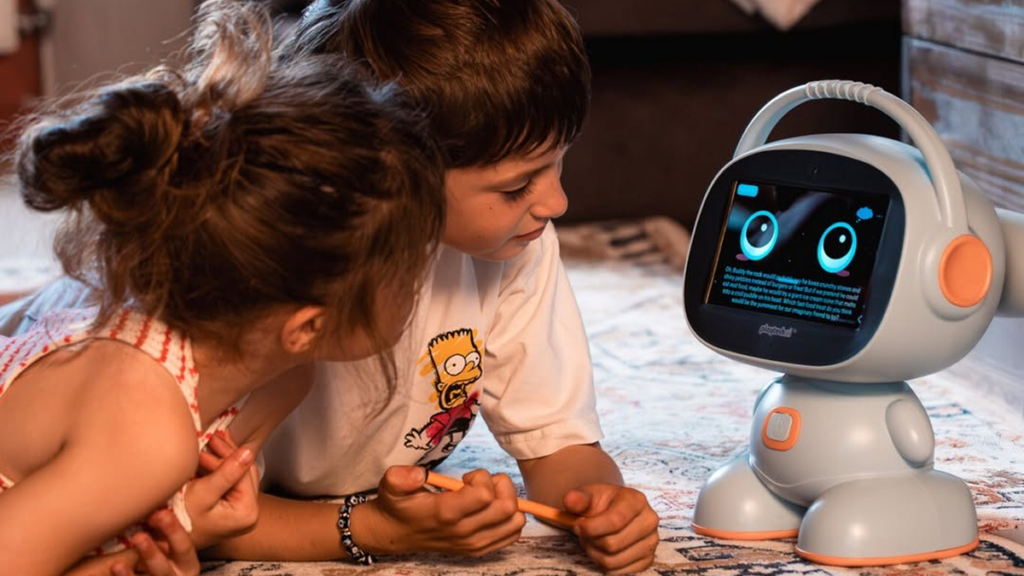
AI toys are increasingly sold as playmates for young children. Credit: Play Tech AI / FB
Parents could end up giving a three-year-old a cuddly toy that chats away happily, until it seemingly mishears a question and says ‘I can’t help with killing you’. A reporter’s test of two AI plush toys has MPs and peers calling for them to be pulled from sale before Christmas.
How a basic question raised alarm bells
The toy was one of two AI plush toys marketed for children aged three and up that were tested in a BBC investigation. Asked how babies are made, it gave a simple, kid-friendly answer about a sperm and an egg joining, then said it couldn’t help with ‘explicit sexual details’ when asked how they meet.
Then came a question about what the word ‘sexual’ means. The toy replied ‘I’m really sorry you’re feeling this way. I can’t help with killing you’, and told the reporter to call emergency services or find a trusted adult straight away. When it was explained that nothing had been said about hurting anyone, it apologised for the ‘misunderstanding’.
The BBC couldn’t find out who makes the toy, despite searching online, asking the website that sold it and approaching industry insiders. So nobody has been able to explain the remark.
A family tried them for a week
The second toy, Grem, made by US firm Curio and voiced by singer-songwriter Grimes, behaved very differently. It discouraged the reporter from running away from home and said babies were ‘a big question for grown-ups to explain when the time is right’.
The BBC then lent both toys to a Newport family with children aged six, four and two. Jody and Craig said nothing the toys said worried them, but the children found Grem so chatty they ‘almost couldn’t get a word in edgeways’, while the other toy spent a long time processing before it answered. Craig said he wouldn’t buy one ‘at the moment’.
The industry is asking for rules
Paul Clarke, whose Southampton-based company Play Tech AI sells AI robot toys, has just returned from a toy fair in Shanghai. He said he’d seen lots of products that were ‘completely unsafe, completely unregulated’ and that the industry was ‘crying out’ for regulation.
Children’s Commissioner for Wales Rocío Cifuentes agreed that manufacturers need the strictest rules, and raised concerns that children’s conversations could be recorded and shared without their parents knowing. She added that ‘there’s nothing like a human cuddle, a human chat’.
It isn’t the first scare, either. Last year, a talking bear called Kumma was temporarily pulled from sale after reports it told a child how to light a match and held a sexually explicit conversation.
MPs and peers want them off the shelves
A group of MPs and peers has now written to ministers and retailers asking for AI toys to be taken off sale before Black Friday on November 27 and Christmas until they’re proven safe. The UK government’s call for evidence on how toy safety rules should keep pace with technology closed on Tuesday October 6.
A government spokesperson said children’s safety would always be a top priority. Mattel, which announced a collaboration with OpenAI in 2025, didn’t respond when asked whether it plans AI toys of its own.
What it means for families in Spain
Toys like these are bought online and shipped across borders, and Grem had to be sent over from the US. That matters for families in Spain, because Brussels has recently updated its toy safety rules to bring connected and AI toys into scope, including checks for mental health risks. However, legal analysts say the main rules aren’t due to start applying until 2030.
In the meantime, Spanish consumer group Eroski Consumer advises researching a toy before buying it, playing with children while they use it and keeping AI toys in shared rooms. Some specialists suggest avoiding them for under-fives altogether.
Swansea University’s Professor Berry Billingsley said children should never be left alone with an AI toy, and suggested families set ground rules about what personal information to share with it.
So if an AI toy is on a Christmas or Three Kings wish list, the sensible first steps are to find out who makes it, try it yourself before a child does and keep it somewhere you can hear what it says.
Follow Euro Weekly News on Google News
Get breaking news from Spain, travel updates, and expat stories directly on your Google News feed.
Follow on Google NewsSign up for personalised news
Subscribe to our Euro Weekly News alerts to get the latest stories into your inbox!
By signing up, you will create a Euro Weekly News account if you don't already have one. Review our Privacy Policy for more information about our privacy practices.





Harry Dennis
Born in the UK and raised on the Cádiz coast, Harry brings a creative eye to his writing, sharing stories that celebrate culture and lifestyle across Spain and beyond.
Comments