Spain strike warning: Can wages be docked if you cannot get to work on November 11?
By Adam Woodward • Published: 09 Nov 2026 • 8:28 • 3 minutes read
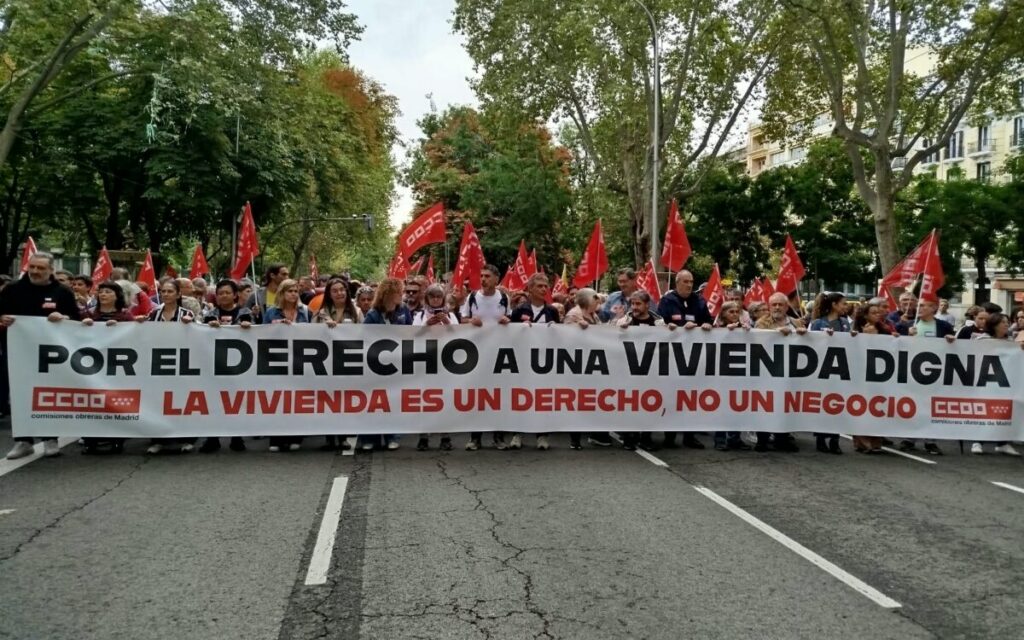
General strike and protests for better housing possibilities. Credit: CCOO
Workers throughout Spain are being warned that they could lose pay if they cannot reach their workplace during Wednesday’s November 11 general strike, even if they have no intention of taking part in the industrial action.
The nationwide 24-hour strike is expected to disrupt public transport and road travel, creating difficulties for employees trying to get to work. However, Spanish employment rules make an important distinction between workers who voluntarily join the strike and those who want to work but cannot get there.
According to national broadcaster RTVE’s explanation of workers’ rights during the November 11 strike, employees who are prevented from reaching their workplace because of strike-related disruption are not automatically entitled to paid time off.
What happens if you cannot get to work?
Workers are expected to make “reasonable efforts” to reach their workplace, including considering alternative travel arrangements and allowing extra time for their journey. However, an unavoidable delay caused by transport disruption should not automatically result in disciplinary action.
Employees who find themselves unable to get to work should:
- Contact their employer immediately: Explain the situation and keep the employer informed about any delays.
- Collect evidence: Request written confirmation of cancelled or delayed trains, buses or other public transport.
- Keep screenshots: Motorists can save evidence of traffic congestion, road closures and delays using official traffic information or navigation applications.
- Discuss alternatives: Where possible, employees can agree with their employer to recover missed hours or make other arrangements.
Employees who are unsure about their wider workplace protections can also delve into our guide to job contracts and employment rights in Spain.
Can your employer deduct your wages?
Potentially, yes. Although an employer should not punish someone for an unavoidable delay caused by circumstances beyond their control, the company can deduct the proportional amount of salary corresponding to the time the employee has not worked.
Recovering the missed hours or arranging alternative working hours may be possible, depending on the employer and the circumstances. In some circumstances, working from home could also be an option for some employees, but it is not an automatic right simply because a general strike has been called.
The European Employment Services guide to working conditions in Spain explains the wider employment rules, including those governing industrial action and workers’ protections.
Not being able to work is different from joining the strike
Understanding the difference is particularly important for employees who have no intention of participating in Wednesday’s action.
| Situation | What workers need to know |
|---|---|
| Voluntarily joining the strike | Employees have a constitutional right to strike, without employer permission. |
| Unable to reach work | Employees should notify their employer and provide evidence of the disruption. |
| Arriving late | Unavoidable delays should not automatically result in disciplinary action, although missed hours may be deducted from pay. |
| Designated minimum services | Employees officially assigned to essential minimum services must do all they can to attend work. |
Workers who exercise their legal right to strike cannot be dismissed or disciplined simply for doing so. Not in an ‘official’ strike. However, they will lose their wages for the strike period, including the proportional amount of extra salary payments and weekly rest.
Our previous guide to the different types of employment contracts in Spain provides further information about the rights and protections available to employees.
Why are workers striking across Spain?
Wednesday’s action has been called by trade unions including CCOO and UGT, together with other organisations, over housing affordability, wages and the rising cost of living. The UGT’s official explanation of the November 11 general strike sets out the demands for better access to affordable housing, improved salaries and stronger employment and social rights.
Campaigners argue that ordinary workers are struggling to afford accommodation as rents and property prices increase faster than many household incomes. Demands also include better purchasing power, improved working conditions and measures to tackle insecure employment.
The November 11 stoppage is scheduled to last 24 hours, with minimum services established in essential sectors to maintain necessary public provision. The official Spanish Government notice published in the BOE confirms the nationwide strike arrangements and essential service requirements.
For employees planning to work on Wednesday, the advice is straightforward: check transport arrangements in advance, allow extra time for journeys and keep evidence of any disruption that prevents them from reaching their workplace.
And don’t forget schools and doctors’ appointments
Wednesday’s general strike could also affect schools, nurseries and healthcare services across Spain, so parents and patients should prepare for possible disruption.
Schools are not automatically closing, but lessons, school meals, nursery provision and school transport could be affected if teachers and support staff join the industrial action. Parents should check directly with their children’s school to confirm whether normal arrangements are in place.
Doctors’ surgeries and health centres may (and most likely will) also operate with reduced staffing, meaning routine GP appointments and non-urgent treatments could be delayed or cancelled. Hospitals will maintain essential services, including emergency departments, intensive care and urgent medical treatment.
Anyone with a routine medical appointment on November 11 should contact their health centre or hospital to check whether it is going ahead.
The arrangements vary between Spain’s autonomous communities, so there is no single set of minimum staffing levels covering the entire country.
Follow Euro Weekly News on Google News
Get breaking news from Spain, travel updates, and expat stories directly on your Google News feed.
Follow on Google NewsSign up for personalised news
Subscribe to our Euro Weekly News alerts to get the latest stories into your inbox!
By signing up, you will create a Euro Weekly News account if you don't already have one. Review our Privacy Policy for more information about our privacy practices.





Adam Woodward
Adam is a writer who has lived in Spain for over 25 years. With a background in English teaching and a passion for music, food, and the arts, he brings a rich personal perspective to his work at Euro Weekly News. As a father of three with deep roots in Spanish life, Adam writes engaging stories that explore culture, lifestyle, and the everyday experiences that shape communities across Spain.
Comments