Spain hit by yet another train derailment as Madrid railway line is shut
By Molly Grace • Published: 15 Nov 2026 • 23:18 • 2 minutes read
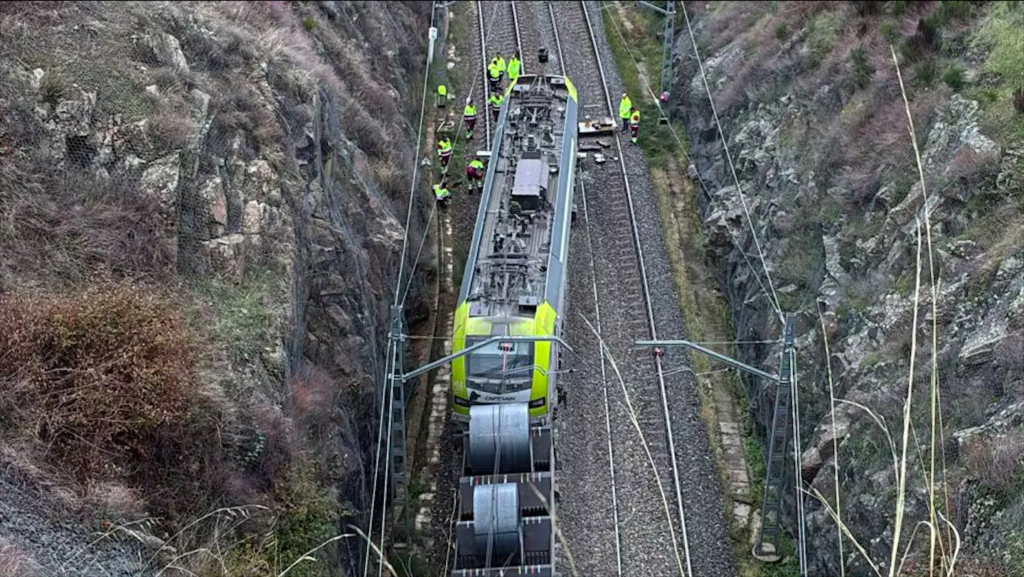
Renfe arranged replacement buses between El Escorial and Robledo de Chavela. Photo credit: @revol_es on X
It seems Spain still hasn’t had its fair share of train accidents, with another derailment adding to an already alarming year for the country’s railway network. Just when passengers might have hoped the worst was behind them, a freight locomotive has come off the tracks in Madrid, leaving its driver injured and forcing travellers between Madrid and Ávila to abandon their normal train journeys.
The latest incident happened in the early hours of Sunday, November 15, near Zarzalejo, between Robledo de Chavela and Zarzalejo. Although no passengers were aboard the freight train, the derailment has caused disruption to regional rail services, with replacement buses being put in place. It comes just weeks after the deadly accident in Urda, Toledo, and January’s disaster in Adamuz, Córdoba, which together claimed 115 lives. The latest derailment was not a passenger train accident, and there is currently no evidence linking its cause to either of those tragedies.
Landslide suspected after heavy rain
The train belonged to freight operator Captrain and was travelling along the conventional Madrid-Hendaya railway line when the locomotive left the tracks at around 3:39am. Initial information points to a movement of earth following heavy rainfall in recent days.
A section of the embankment may have collapsed as the train passed, although investigators are still assessing the condition of the railway and the circumstances surrounding the derailment. The train consisted of 17 wagons carrying electrical coils. According to reports, only the locomotive was affected. The driver, a 33-year-old man and the only person aboard, suffered back pain and was taken by emergency services to Puerta de Hierro Hospital in Majadahonda. His injuries were described as minor and his condition was not considered serious.
Passengers forced onto replacement buses
The derailment led to the suspension of rail traffic between Robledo de Chavela and Zarzalejo, affecting Media Distancia services connecting Madrid and Ávila, as well as services using the affected section of the line. Renfe arranged replacement buses between El Escorial and Robledo de Chavela, with an intermediate stop in Zarzalejo, to help passengers complete their journeys.
By 03:00pm, the derailed locomotive had been put back on the tracks, but trains were still unable to pass through the affected section. Adif technicians continued inspecting the infrastructure to establish whether the track had suffered damage. No confirmed time for the resumption of normal services had been announced, leaving passengers advised to check for updates before travelling.
Another blow for Spain’s railway network
The derailment comes at a particularly difficult time for Spain’s railways, with the fatal accidents at Adamuz and Urda prompting renewed demands from railway workers for improved safety measures. A nationwide Renfe workers’ strike is scheduled for 17 November, with unions calling for greater guarantees over railway safety following the recent tragedies.
The Madrid incident had far less serious consequences, but the interruption has added another problem for passengers already facing uncertainty across parts of the country’s rail network. For those travelling between Madrid and Ávila, their main concern now is getting to their destination while the affected stretch remains closed
Follow Euro Weekly News on Google News
Get breaking news from Spain, travel updates, and expat stories directly on your Google News feed.
Follow on Google NewsSign up for personalised news
Subscribe to our Euro Weekly News alerts to get the latest stories into your inbox!
By signing up, you will create a Euro Weekly News account if you don't already have one. Review our Privacy Policy for more information about our privacy practices.



Molly Grace
Molly is a British journalist and author who has lived in Spain for over 25 years. With a background in animal welfare, equestrian science, and veterinary nursing, she brings curiosity, humour, and a sharp investigative eye to her work. At Euro Weekly News, Molly explores the intersections of nature, culture, and community - drawing on her deep local knowledge and passion for stories that reflect life in Spain from the ground up.
Comments