Deadly disease has wiped out a third of Puglia’s olive trees. How Italian farmers are fighting back
By Lucy Ramnought • Published: 19 Nov 2026 • 15:06 • 2 minutes read
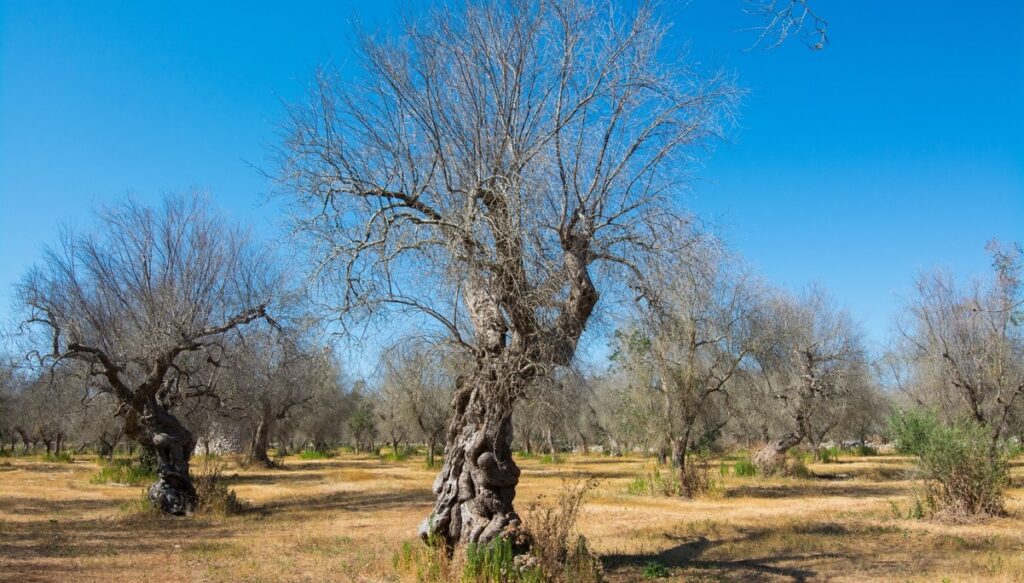
Xylella fastidiosa killing the olive trees Credit: Lucky Team Studio/shutterstock
Picture a glorious olive tree that has watched over a family farm for centuries, now marked with a red sign showing the disease has arrived. This heartbreaking sight is common in southern Italy, and some farmers are turning to an unexpected fruit to keep their land alive.
Xylella fastidiosa: the bacterium with no known cure
Scientists first found Xylella fastidiosa in Puglia in October 2013, the first detection in the European Union. It has since killed a third of the region’s 60 million olive trees, many of them centuries old, in an area that once produced almost half of Italy’s olive oil. The bacterium colonises the xylem, the tissue that carries water and nutrients, and in olive trees it can cause rapid drying out and death.
Olive mills went bankrupt and tourists stayed away. Farming organisation Coldiretti puts the damage at around €1bn.
Avocados give Salento farmers a fresh start
Hass, Bacon and Fuerte are the new stars of the Salento countryside. Between Calimera and Vernole, in the province of Lecce, these avocado varieties are ready for harvest in mid-November.
Planting began at the Tommasi farm in 2017. Almost ten years on, each tree produces between 70 and 100 fruits, and another 700 were planted last April.
Experts at the University of Bari estimate that 23,885 hectares of olive groves in affected areas could suit avocados. Around 4,000 hectares of Puglia are already thought to be devoted to tropical crops. Warmer weather is part of the reason: Coldiretti Puglia, using Copernicus data, reports that Italy’s temperature in the first ten months of 2026 ran 2.11 degrees above the 1991-2020 average, the highest January to October value in the national data series.
Water worries many neighbours will recognise
Anyone who has lived through a dry Mediterranean summer will understand the concern. An adult avocado tree can need up to 220 litres a day in a record-breaking summer. Researchers calculate that one kilogram of fruit takes an average of 1,981 litres, counting rainwater, irrigation and the water needed to dilute pollutants. Olive trees, by contrast, cope well with long dry spells.
Puglia ended its water emergency on June 30 2026 after a rainy winter and spring, yet four reservoirs in the Capitanata area held less than 30 per cent of their authorised capacity in early October. Farming in Salento depends on underground water, where falling aquifers and seawater intrusion are already documented. Avocados dislike salty water and poorly draining soil, so more thirsty orchards could mean greater pressure on wells and competition with household supplies.
A disease that isn’t just Italy’s problem
Xylella has also been found in France, Spain and Portugal. The European Food Safety Authority has recorded it in 727 plant species, and affected crops include almonds, citrus and vines, although not every species is equally vulnerable.
This year brought fresh outbreaks in Italy. In Calabria, seven olive trees in Taurianova tested positive, the first case in that region, while in Basilicata the bacterium was found on an almond tree in the Matera area. Emergency measures are in place in both areas. Under EU rules, Xylella is a quarantine pest, and the general response to a new outbreak is eradication.
Growing again, with eyes wide open
Avocados are not a cure-all. Trees take years to bear fruit, need careful investment and can be damaged by winter cold snaps. Choosing a crop will depend on water, soil quality and resilience to extreme weather, not temperature alone. For Salento’s farming families, though, replanting is a chance to stay on the land they love.
Follow Euro Weekly News on Google News
Get breaking news from Spain, travel updates, and expat stories directly on your Google News feed.
Follow on Google NewsSign up for personalised news
Subscribe to our Euro Weekly News alerts to get the latest stories into your inbox!
By signing up, you will create a Euro Weekly News account if you don't already have one. Review our Privacy Policy for more information about our privacy practices.


Lucy Ramnought
Lucy Ramnought is a local news writer and mother of 4 from the UK who has lived in the Costa Del Sol for just over 4 years. With a background in content writing and social media for various companies, and with vast experience in PA and project management, Lucy is committed to producing accurate, engaging and reliable stories to her work at Euro Weekly News.
Comments