West Nile Virus in Andalucia: Cases, Transmission Risks, and Why the Region Is Vulnerable
By Dr Marcus Stephan • Published: 19 Nov 2026 • 9:42 • 6 minutes read
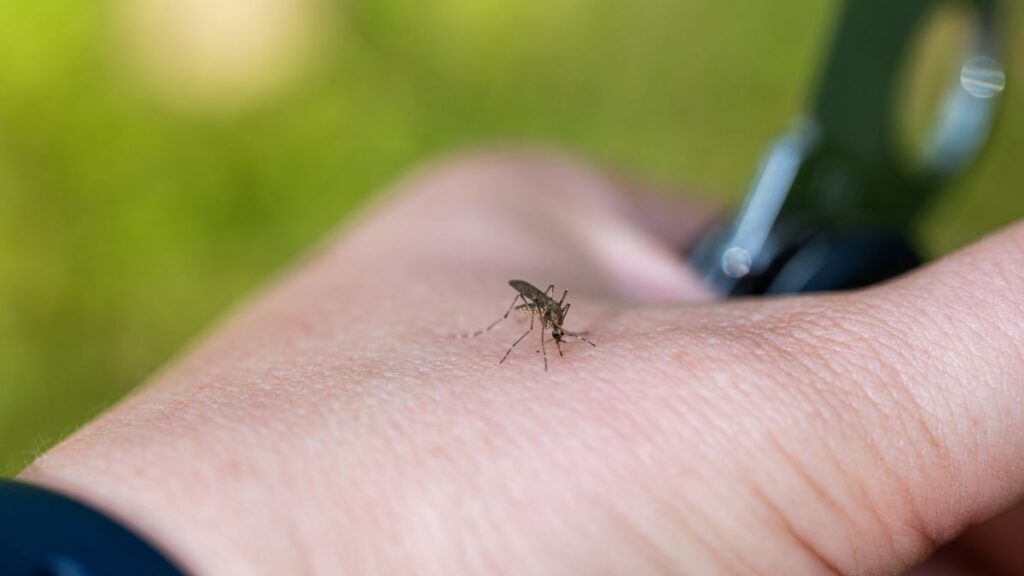
Common Culex mosquitoes serve as the primary vector transmitting West Nile virus from infected wild birds to humans. Credit: Vaida.abd/Shutterstock
West Nile virus has returned to the forefront of public health concerns in southern Spain, with regional health authorities confirming 80 human infections and six fatalities across Andalucia during the 2026 mosquito season. Although the total number of infections may appear modest, the severity of the disease – particularly acute neurological complications among older adults – makes this an issue that deserves considerably more public attention. Transmitted by native Culex mosquitoes via avian hosts, understanding environmental risk factors across Andalucian wetlands is critical for prevention.
West Nile virus has once again made headlines in southern Spain, with six people having died and 80 confirmed human infections recorded in Andalucia during the 2026 mosquito season. Although the numbers might appear relatively small, the seriousness of the disease, particularly among older people, makes this an issue that deserves considerably more public attention.
The latest death, confirmed by the Junta de Andalucía on 6 November, was an 88-year-old woman from La Rambla in Córdoba who had been receiving hospital treatment since October. She had developed a serious neurological complication associated with the infection.
Of the 80 confirmed cases this year, 43 were classified as mild and 37 as serious. Forty-one patients required hospital admission, and three remained in hospital at the time of the latest report.
So, what exactly is West Nile virus, where does it come from, and why are we hearing so much about it?
Avian Hosts and Vector Transmission: How West Nile Virus Cycles
West Nile virus is not new. It was first identified in 1937 in the West Nile district of Uganda, from where it takes its name. For many years it was largely associated with Africa, the Middle East and parts of Asia. However, it has gradually spread into Europe and the Americas, becoming an increasingly recognised public health problem.
The virus belongs to a family of viruses transmitted by insects, known as arboviruses. Its natural hosts are birds, which play an important role in maintaining the infection in the environment.
The transmission cycle is relatively straightforward:
- A mosquito bites an infected bird and picks up the virus.
- Once infected, that mosquito can subsequently transmit the virus when it bites another bird or, occasionally, a human being or other animal.
Humans and horses are considered incidental hosts. Importantly, people do not normally develop sufficient levels of virus in their bloodstream to infect another mosquito. Consequently, the infection does not spread directly from person to person through ordinary contact.
The principal carriers in Spain are mosquitoes belonging to the Culex family, particularly Culex pipiens, commonly known as the northern house mosquito. Unlike the tiger mosquito, which has attracted considerable attention in recent years, these mosquitoes have been established in Spain for a long time.
Wetland Geography: Why Andalucia Is Particularly Vulnerable
There are several reasons why southern Spain provides favourable conditions for the virus.
Mosquitoes require water to reproduce, and Andalucia has extensive wetlands, rivers, agricultural irrigation systems and reservoirs. Areas around the Guadalquivir river basin, particularly in Sevilla and Huelva, provide an environment where mosquitoes, wild birds and other animals frequently come into contact.
Warm temperatures also encourage mosquito activity and allow the virus to multiply within the insect.
Climate change may be contributing to the problem. Longer periods of warm weather, changes in rainfall patterns and milder winters can extend the mosquito breeding season and potentially allow infected mosquito populations to survive for longer.
This does not mean that climate change alone is responsible, but it is an important factor when considering why diseases traditionally associated with tropical regions are becoming more established in parts of Europe.
During the 2026 season, 72 Andalucian municipalities were placed under some form of alert because of the detection of the virus or evidence of its circulation. Surveillance also identified infection in ten wild birds and twelve horses.
Clinical Manifestations: West Nile Fever vs. Neuroinvasive Disease
Here is perhaps the most reassuring aspect of West Nile virus: approximately 80 per cent of people infected develop no noticeable symptoms whatsoever.
Of those who do become ill, most experience what is commonly described as West Nile fever.
Symptoms can include:
- Fever and chills
- Headaches
- Muscle and joint pain
- Tiredness and weakness
- Nausea and occasionally vomiting
- Skin rashes, sometimes affecting the trunk and limbs
These symptoms generally develop between two and fourteen days after an infected mosquito bite, although the incubation period can occasionally be longer.
For most people, the illness is relatively mild and resolves without specific treatment. However, this is not always the case.
In approximately one person in 150, infection can become severe, affecting the brain and nervous system. This is known as neuroinvasive disease.
It can take several forms, including meningitis, which causes inflammation of the membranes surrounding the brain and spinal cord, and encephalitis, which involves inflammation of the brain itself.
Symptoms can include severe headaches, neck stiffness, confusion, disorientation, tremors, muscle weakness, seizures and, in particularly serious cases, paralysis or coma.
These complications can be life-threatening and may leave survivors with long-term neurological problems.
High-Risk Profiles: Age and Chronic Health Vulnerabilities
Although anyone can become infected, age is an important factor in determining the likelihood of developing serious complications.
People over 60, particularly those over 70 or 80, are considerably more vulnerable to severe illness. Those with diabetes, cancer, kidney disease, high blood pressure or weakened immune systems may also face an increased risk.
This is particularly relevant to Andalucia, where many residents and visitors are older adults.
It is worth remembering that the six people who have died this season were not necessarily representative of the average infected person. Nevertheless, the fatalities demonstrate that this is not simply another unpleasant mosquito-borne illness.
Supportive Clinical Care: Why There Is No Antiviral Cure
Unfortunately, there is currently no specific antiviral medication that reliably treats West Nile virus, nor is there an approved human vaccine available for routine use.
Treatment is therefore supportive, concentrating on managing symptoms and complications while the patient’s immune system deals with the infection.
People with mild symptoms may need little more than rest, fluids and medication to control fever and discomfort.
Those developing neurological complications may require hospital admission, sometimes including intensive care, where doctors can manage seizures, breathing difficulties and other potentially life-threatening problems.
Early medical assessment is particularly important if someone develops a high fever accompanied by severe headaches, confusion, neck stiffness or muscle weakness.
Prevention and Personal Protection: Reducing Mosquito Bites in Spain
Since there is no human vaccine, avoiding mosquito bites remains our best defence.
Fortunately, there are several relatively simple precautions that can make a difference:
- Use Effective Repellents: Apply an approved insect repellent, particularly during the evening and overnight when Culex mosquitoes are most active.
- Wear Protective Clothing: Wear loose-fitting clothing that covers the arms and legs, especially when spending time outdoors.
- Fit Window Screens: Mosquito screens on windows and doors can help prevent insects entering the home. Avoid leaving doors and windows open without protection, particularly in areas where mosquitoes are common.
- Eliminate Standing Water: Remove standing water around the home. Mosquitoes can breed in surprisingly small quantities of water, including plant saucers, buckets, discarded containers, blocked drains and garden ornaments.
- Maintain Water Features: Swimming pools and water features should be properly maintained, while animal drinking bowls and other water containers should be emptied and cleaned regularly.
The authorities also have an important responsibility. Andalucia operates a surveillance programme involving mosquito traps, laboratory testing of birds and animals, and monitoring of human infections. Where infected mosquitoes are identified, local authorities can introduce additional control measures.
The Junta has confirmed that surveillance will continue throughout the winter, even though the period of greatest mosquito activity has now passed.
Environmental Realities: A Health Challenge Andalucia Cannot Ignore
West Nile virus is unlikely to disappear from Andalucia. Indeed, the combination of climate, geography, wildlife and mosquito populations makes southern Spain particularly suitable for its continued circulation.
The six deaths recorded this year are a reminder that diseases transmitted by insects are not necessarily confined to distant tropical countries.
We should not panic, but neither should we become complacent. A few simple precautions, greater public awareness and effective mosquito surveillance can all help reduce the risk.
As with so many infectious diseases, understanding how transmission occurs is the first step towards protecting ourselves.
Sources and more information
Follow Euro Weekly News on Google News
Get breaking news from Spain, travel updates, and expat stories directly on your Google News feed.
Follow on Google NewsSign up for personalised news
Subscribe to our Euro Weekly News alerts to get the latest stories into your inbox!
By signing up, you will create a Euro Weekly News account if you don't already have one. Review our Privacy Policy for more information about our privacy practices.



Dr Marcus Stephan
With a career spanning more than 35 years in both the UK and internationally, Dr Marcus' passion lies in empowering individuals through knowledge, enabling them to care for themselves and others. He simplifies the science behind medicine by removing unnecessary jargon, explains common health conditions, and shares updates on the latest advances and developments in medicine.
Comments